U.S. Sellers: Avoid Phone Sale Scams and Get NIST 800-88 Wipe Proof
September 16, 2026
The safest way to sell a phone is cash in person at a public location, or a mail-in service that pays after inspection through platform escrow. The single biggest red flag: any buyer who insists on Zelle, Venmo Friends & Family, or asks for a verification code before paying. Confirm funds have actually settled in your bank account, and wipe the device completely, before you hand it over or ship it.
TL;DR:
- Always verify that funds have fully settled into your bank account before handing over or shipping your phone, and never rely solely on payment notifications.
- Avoid payment methods like gift cards, wire transfers, and Friends & Family P2P payments, and prefer platform checkout, PayPal Goods & Services, or cash for safer transactions.
- Recognize common scams such as fake checks, P2P reversals, verification codes, address tricks, and fake escrow sites, and verify all payment confirmations with your own bank or platform account.
- Use public, well-lit locations or reputable mail-in services with clear quotes and insurance, and do not meet in isolated areas or accept unverified payments.
- Wipe your device thoroughly by backing up data, signing out of accounts, removing SIM cards, and confirming the device is not blacklisted to prevent disputes or data leaks.
Table of Contents
- Quick Safety Checklist Before You Hand Off or Ship a Phone
- What Do the Most Common Phone Sale Scams Look Like?
- How Should Safety Rules Change by Selling Channel?
- How Do I Wipe and Prepare My Phone Before Selling It?
- What Should I Do If I Get Scammed Selling My Phone?
- Why Speed Should Never Beat Certainty When You’re Selling a Phone
- A Mail-In Option That Skips the Riskiest Part of Selling
- Report Fraud and Learn More
- Sources
- FAQ
Quick Safety Checklist Before You Hand Off or Ship a Phone
Pick your selling channel first, then commit to that channel’s payment flow from start to finish. Switching mid-deal, like moving a marketplace buyer to text messages, is exactly how scams slip past the safeguards those platforms build in.
Run through this before any money or device changes hands:
- Keep every conversation inside the marketplace app or platform messaging, not personal texts or email.
- Accept cash, platform checkout, or PayPal Goods & Services. Refuse gift cards, wire transfers, and P2P apps sent as “Friends & Family,” since those payment methods carry weaker consumer protections than card or platform-based checkout.
- Open your banking app and confirm the deposit actually posted. Don’t rely on a screenshot the buyer sends you.
- Back up your data, remove your SIM or eSIM, sign out of iCloud, Google, or Samsung accounts, and factory reset before you meet the buyer or box the phone.
- Take photos of the phone’s condition and serial number, save your message thread, and use tracked, insured postage for anything shipped.
Pro Tip: Screenshot the buyer’s payment confirmation, but never treat it as proof of payment. Only your own bank app or platform balance counts.
That last habit matters more than people think. A payment notification is just a message. It’s trivial to fake, and dozens of sellers get burned every year believing a text that says “payment sent” instead of checking their actual balance.
What Do the Most Common Phone Sale Scams Look Like?
Most phone sale scams follow one of five patterns. Recognizing the mechanics lets you shut them down before any money or device moves.
- Fake overpayment and counterfeit checks. A buyer “accidentally” sends more than the asking price, often by check, and asks you to refund the difference. The FTC warns that counterfeit checks can appear to clear within a day or two, only for the bank to reverse it weeks later, once you’ve already wired money back and shipped the phone.
- P2P instant payment reversals. Zelle, Venmo Friends & Family, and Cash App were built for splitting dinner bills with people you know, not paying strangers for merchandise. Buyers exploit this by disputing the transfer with their bank after you’ve shipped, and many seller disputes get denied outright because the app treats the transfer as authorized by the sender, not a merchant purchase gone wrong, as one analysis of Zelle marketplace scams lays out in detail.
- Verification code and Google Voice scams. A “buyer” claims they need to verify you’re real and asks you to text them a code that just landed on your phone. That code often sets up a Google Voice number in your name, which scammers then use against other victims. The FTC’s guidance is blunt on this one: never share a verification code with a buyer, ever.
- Shipping and address tricks. A buyer asks you to ship to an address that doesn’t match their billing or payment profile, or arranges a “pickup courier” that never shows. Some claim a package never arrived despite tracking showing delivery, then push for a refund.
- Fake escrow and lookalike confirmation pages. Scammers build sites that mimic real escrow services or payment confirmations, complete with a fake transaction ID. If a “payment received” page isn’t inside your own bank’s app or a platform you recognize, treat it as fiction until your actual balance says otherwise.
Roughly a competitive amount billion in reported consumer fraud losses hit Americans in a recent year, according to FTC data, and marketplace and payment scams make up a steady share of that total. The response to all five patterns is the same: verify inside your own bank or platform account, never trust a screenshot, and never share a code.
How Should Safety Rules Change by Selling Channel?
The right precautions shift depending on whether you’re meeting a stranger in a parking lot, shipping to a marketplace buyer across the country, or boxing a phone up for a trade-in company. Treating every channel the same is how sellers end up either overexposed to risk or unnecessarily paranoid about a perfectly safe transaction.
Local, in-person sales
Meet in a public place with cameras and foot traffic, not your home or theirs. Many local police departments run designated “safe exchange zones” in station parking lots specifically for this. Bring a friend if you can, and if the buyer wants to inspect the phone before paying, insist on payment first, or watch them complete it in your presence and check your balance immediately. Cash is fine for local deals; a bank-verified deposit made at a branch works too. Guidance on vetting buyers before meeting in person built for high-value private sales applies just as well to phones.
Online marketplace sales
Keep every message on the platform, even after a deal feels settled. Marketplaces like eBay and Facebook Marketplace log those conversations, and that record becomes your evidence if a dispute opens later. Insist on platform checkout or PayPal Goods & Services rather than a direct bank transfer, and take a minute to check how old the buyer’s account is and whether it has any transaction history. A brand-new profile with zero feedback pushing hard for Zelle is a pattern worth walking away from.
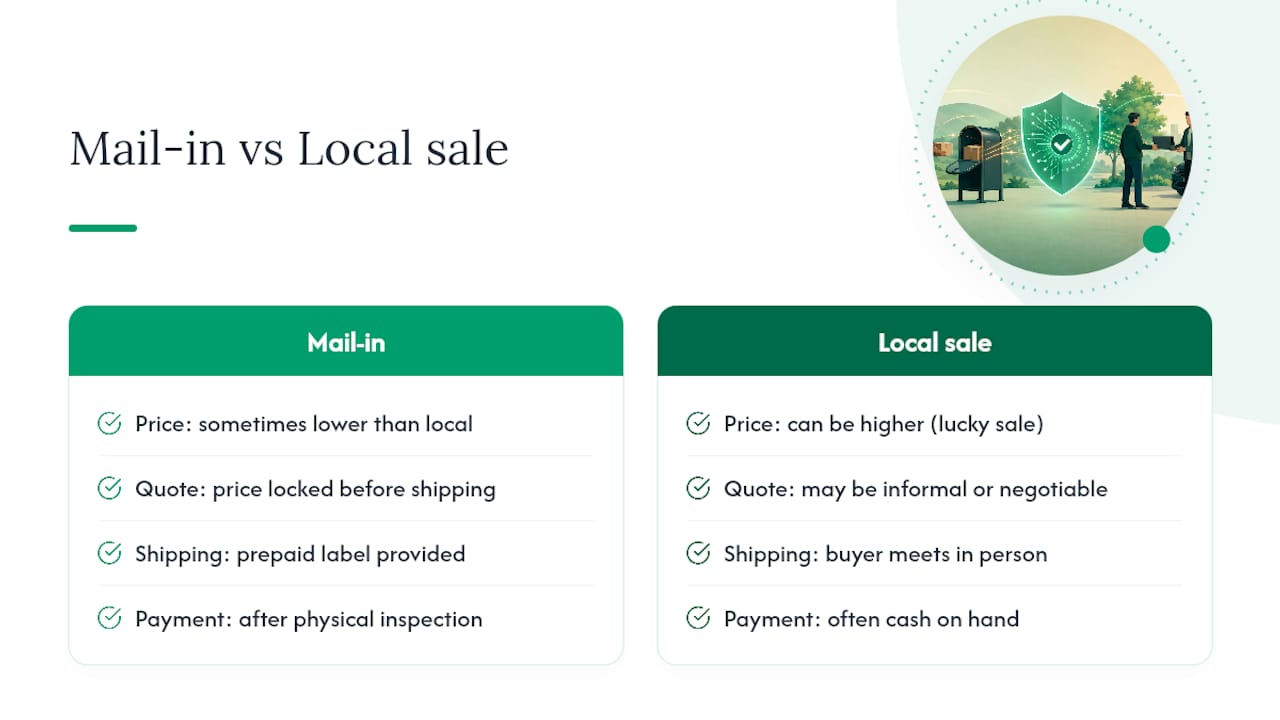
Mail-in trade-in services
Stick with services that confirm your quote, send a prepaid shipping label, and pay only after physical inspection. Reputable programs, including BuyBackBear’s phone buyback process, lock in a price before you ship and pay out the same day they inspect the device. Keep your tracking number and drop-off receipt until payment clears. Mail-in offers sometimes run a little lower than a lucky local sale, but you skip the in-person risk entirely and never have to verify a stranger’s payment app screenshot.
Pro Tip: If a local buyer offers cash but wants to meet somewhere isolated “for privacy,” treat that as a hard no. Legitimate buyers have no reason to avoid a busy parking lot.
How Do I Wipe and Prepare My Phone Before Selling It?
A half-wiped phone creates two separate problems: it leaves your personal data exposed, and it triggers Activation Lock or Factory Reset Protection disputes that can unravel a sale after the buyer already has the device in hand.
- Back up everything first. Move photos, contacts, and app data to iCloud, Google Drive, or a computer, and manually transfer any authenticator app codes (Authy, Google Authenticator) to a new device before wiping the old one.
- Sign out of every linked account. Apple ID, Google account, Samsung account, Microsoft account, whatever’s tied to the device. Skipping this step is the number one reason a factory reset still leaves Activation Lock active.
- Remove the SIM and deactivate the eSIM, then deregister the device from your carrier account if it’s listed as active hardware.
- Factory reset, then power it back on to confirm it boots straight to the welcome or setup screen. A device that still asks for your old Apple ID or Google password isn’t actually clean.
- Check the IMEI or ESN for blacklist status through your carrier or a free IMEI checker, and confirm the device is fully paid off. If it’s still on a financing plan, disclose that in your listing. A buyer who receives a blacklisted or financed phone has legitimate grounds for a dispute.
Detailed platform guidance on the wipe sequence and Activation Lock pitfalls confirms this order matters: sign out before you reset, not after. If you need device-specific walkthroughs, BuyBackBear has step-by-step guides for wiping an iPhone and factory resetting an Android phone before you sell.
What Should I Do If I Get Scammed Selling My Phone?
Move fast and document everything. Speed matters most with bank disputes and platform claims, since evidence gets harder to act on the longer you wait.
- Contact your bank immediately and open a formal dispute; write down exactly what you told them and when.
- File a report at Reportfraud so the incident gets logged with federal enforcement data.
- Report it to your state attorney general’s consumer protection office, and file a local police report if the loss was significant or involved an in-person meeting.
- Open a dispute directly with the marketplace or platform, and attach your saved messages, listing photos, and shipment tracking.
- Save every screenshot, but verify actual bank activity inside your banking app rather than trusting a payment notification alone.
Banks can take weeks to reverse fraudulent P2P transfers, and platform buyer or seller protection windows are typically time limited, so the earlier you file, the more options stay open.
Why Speed Should Never Beat Certainty When You’re Selling a Phone
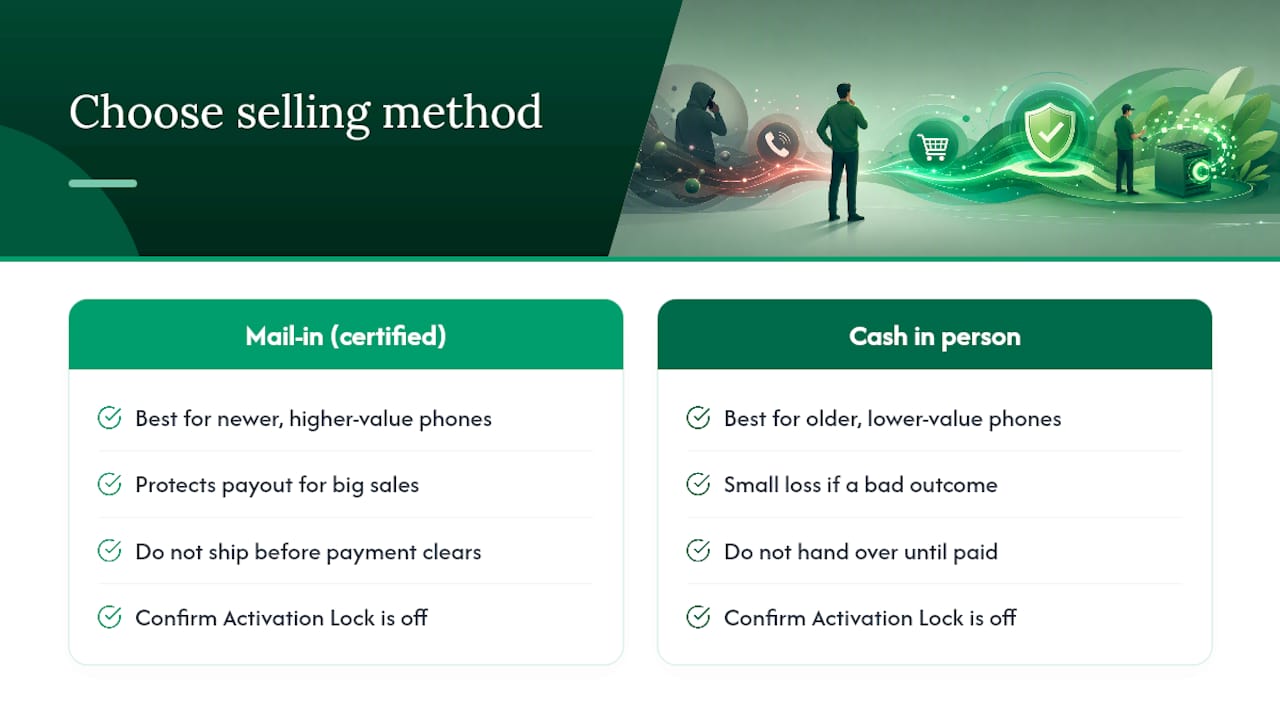
Selling a phone fast feels good right up until the payment bounces. A pattern worth trusting: certified mail-in works best for a newer, higher-value phone where the payout matters, while cash in person makes more sense for an older device where the amount at stake is small enough that a bad outcome barely stings.
The habit that actually prevents losses isn’t clever detection. It’s discipline: never ship before a payment has fully cleared in your own bank or platform account, and never hand over a device until Activation Lock is confirmed off. Sellers who chase speed over certainty are the ones who end up filing a police report over a $400 phone.
, Andy
A Mail-In Option That Skips the Riskiest Part of Selling
A mail-in service offers the alternative to meeting strangers in parking lots or gambling on a marketplace buyer’s payment app: you get a locked-in quote, ship free with a prepaid label, and get paid the same day your device passes inspection, with no in-person handoff and no pressure to accept Zelle or a personal check.
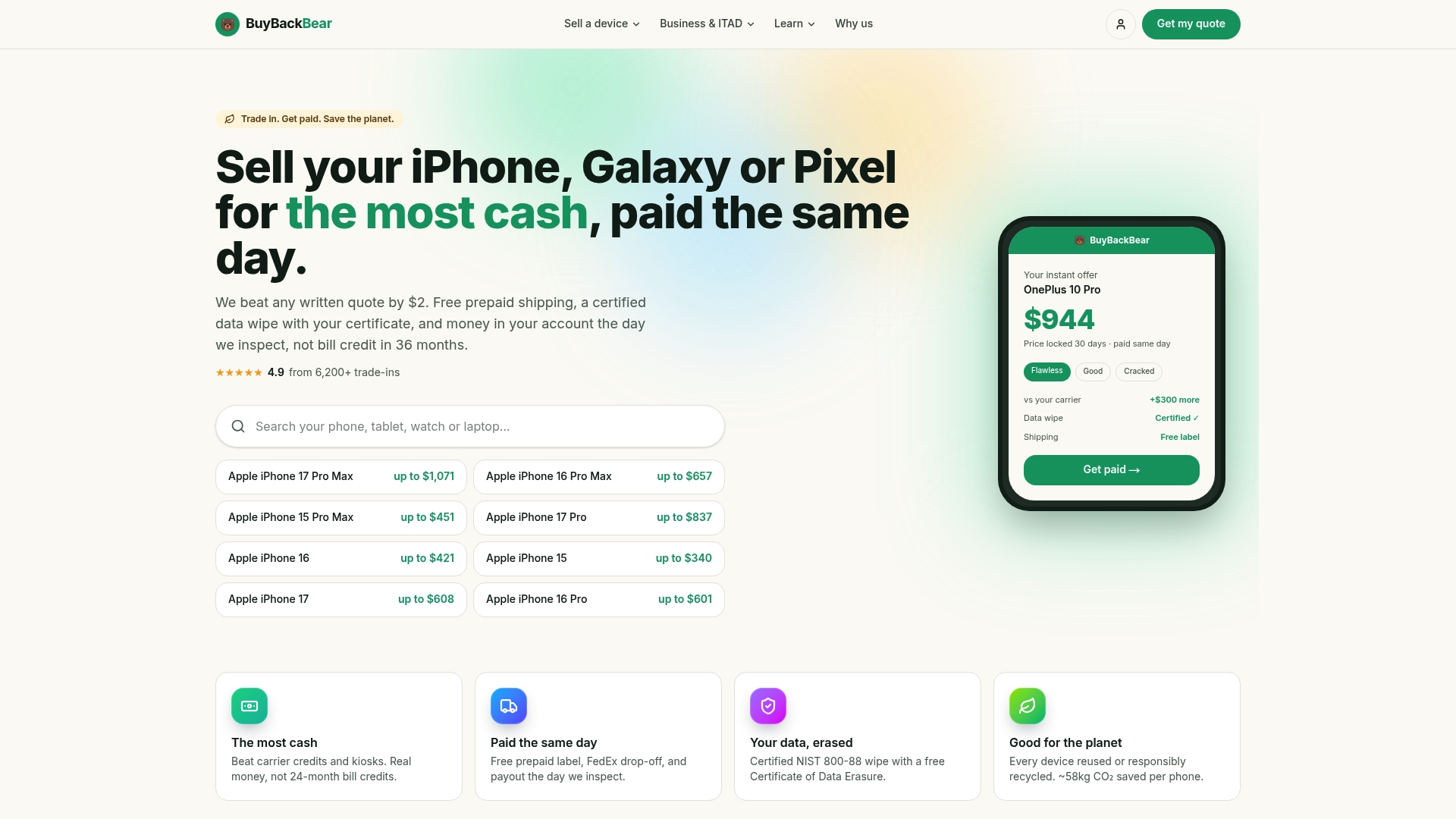
Because the entire transaction runs through a mail-in service rather than a stranger’s messaging app, the scam vectors covered throughout this guide, fake overpayment, reversed P2P transfers, verification-code phishing, simply don’t apply. Every device gets wiped to the NIST 800-88 standard with a free Certificate of Data Erasure included, so you have documented proof your personal data is gone, not just a factory reset you’re hoping worked. Still run through your own local wipe checklist before you box up the phone. That’s good practice with any buyer, mail-in or otherwise.
Get an instant quote for your phone and see the payout before you commit to shipping anything.
Report Fraud and Learn More
- Selling stuff online? Here’s how to avoid a scam (FTC)
- Report a scam directly to the FTC
- Online shopping guidance and payment protections (FTC)
- Selling safely online (Regions Bank)
This article is general information, not a substitute for advice from a qualified financial advisor. Consult a qualified financial professional about your own circumstances before acting on anything here.
Sources
- Selling stuff online? Here’s how to avoid a scam | FTC
- eBay and Marketplace Zelle scam: how ‘send me Zelle for the iPhone’ steals thousands in 2026
- How to Wipe Your Device Before Selling – Swappa Blog
- Reportfraud
FAQ
What Are the Latest Phone Scams Sellers Should Watch For?
Fake overpayment via counterfeit checks, P2P instant payment reversals through Zelle or Venmo Friends & Family, and verification-code phishing tied to Google Voice setups are currently the most common tactics targeting phone sellers.
Can a Scammer Access My Bank Account With My Phone Number?
A phone number alone usually isn’t enough, but scammers can use a stolen verification code sent to your phone to hijack accounts tied to two-factor authentication, which is why you should never share a verification code with a buyer.
What Are the Riskiest Payment Methods When Selling a Phone?
Gift cards, wire transfers, and P2P apps sent as Friends & Family carry the least buyer and seller protection; cash in person, platform checkout, and PayPal Goods & Services offer far stronger recourse if something goes wrong.
What Phone Scams Should I Specifically Avoid When Selling Online?
Avoid buyers who push for off-platform payment apps, ask you to ship to an address that doesn’t match their profile, or request a verification code before completing payment.
Is a Mail-In Trade-In Service Safer Than Selling Locally?
Mail-in services like Buybackbear remove the in-person risk entirely and pay after inspection through a locked-in quote, which makes them a lower-risk option than meeting an unverified local buyer, though the payout can occasionally be slightly lower than a well-negotiated cash sale.
Recommended
Ready to sell?
Get an instant quote, free prepaid shipping, and fast cash that beats carrier trade-in credit.
Selling your device here, at a glance
Get my instant quote →- Instant quote in about 30 seconds, price locked while you decide
- Cash by PayPal, Zelle, Venmo or check after inspection, no fees
- Free prepaid label both ways, free return shipping if you decline
- We beat any competitor's written quote by $2
- Cracked screen, broken or won't power on? Still worth real money
- Certified NIST 800-88 data wipe with an emailed certificate
- Trade-in value paid in cash, not a 24-36 month carrier bill credit
- Every model priced: unlocked or carrier-locked, any storage size