Device Photos for a Quote: Five Shots Sellers Need Before Wiping
October 12, 2026

Submit a front shot (screen on and off), a back shot, a clear photo of the serial number or IMEI, close-ups of any damage, and a photo of included accessories or the original box. These five shots cover what most buyback inspectors need to confirm your device’s condition and model without extra back-and-forth. Clear photos combined with a factory reset speed up inspection and protect your payout. Some buyback services accept devices in any condition and still run a full inspection, so sharper photos upfront mean fewer surprises later.
TL;DR:
- Pair every damage close-up with a wider location shot; include ports and accessories, plus keyboard, hinge, and underside photos for laptops.
- Use JPEG or PNG files around 1 to 3 MB, avoid heavy compression, and photograph the serial label if the device will not power on.
- Back up data, remove SIM and SD cards, and capture serial details while the device is on before resetting, which permanently erases local files.
- Save photos, the offer, tracking confirmation, and a package photo with shipping label; records can support a dispute if inspection reduces payment.
Table of Contents
- The Photo Checklist Every Inspector Expects
- How to Take Photos That Pass Inspection on the First Try
- File Format, Size, and Upload Tips for Quote Forms
- Keeping Photo Evidence in Case Your Offer Gets Adjusted
- Before You Ship: Back Up, Wipe, and Protect Your Data
- Why Five Extra Minutes of Photos Pays Off
- How buyback services turn your photos into a same-day payout
- FAQ
- Sources
The Photo Checklist Every Inspector Expects
Buyback inspectors are matching your photos against a condition grade, so the goal is coverage, not quantity. A consistent set of shots, taken in order, gets you through review faster and avoids a request for more images.
Every device needs these universal shots:
- Front with the screen on (showing it powers up) and screen off
- Back panel, flat and fully in frame
- Serial number, IMEI, or model number label, close enough to read
- Any ports, buttons, or charging points
- Close-ups of scratches, cracks, or dents, each paired with a wider shot showing where the damage sits on the device
Some devices need a few extra angles:
- Laptops: keyboard, hinge area, and the underside with any service stickers
- Earbuds: the charging case inside and out, plus the contact pins
- Smartwatches and wearables: the strap, the back sensor plate, and the screen on
Include the original box, charger, cable, or case if you still have them. Buyers often grade these as part of the overall offer, and a photo avoids any dispute over what shipped.
Aim for several photos per phone or tablet, a few more for laptops with multiple panels to check. Upload them in a logical order: front, back, serial, ports, damage, accessories. A simple naming pattern like model_serial_shot1, model_serial_shot2 keeps a batch organized if you’re submitting more than one device, which matters for anyone doing a bulk trade-in rather than a single sale.
How to Take Photos That Pass Inspection on the First Try
Good buyback photos don’t need a professional camera, just a few minutes of setup. Shoot near a window during the day or under a soft lamp; avoid direct overhead light, which creates glare on glass screens and metal backs.
A few habits make the biggest difference:
- Shoot against a plain, solid-colored background that contrasts with the device color
- Tilt the device slightly to avoid reflections on screens and camera lenses
- Rest the device on a stable surface or use a small tripod instead of handholding
- Switch your phone camera to macro mode for small scratches or cracked corners
- Take one wide shot and one close-up of the same damage so both context and detail are visible
- Shoot the same area from two slightly different angles in case one photo is blurry or washed out
A coin or a standard pen next to a defect can help show scale when a crack or dent is hard to judge from the photo alone, but skip this unless the damage is genuinely unclear in size.
Pro Tip: Take your photos right before you upload them. Lighting and battery charge can change fast, and a fresh powered-on screen shot is more convincing than one from a week earlier.
File Format, Size, and Upload Tips for Quote Forms
Most quote forms accept JPEG or PNG. Avoid heavy compression, since it can blur the exact scratch or crack an inspector needs to see clearly. Aim for a readable, high-resolution image, generally in the 1 to 3 MB range if the form allows it.
- Name files by model and shot number (for example, iphone13_front, iphone13_serial) so a batch stays easy to review
- Zip multiple images together if the upload tool accepts bulk files
- If the device won’t power on, photograph the serial or IMEI label directly, or pull an IMEI screenshot from your carrier account instead
- Skip embedding photos inside a PDF unless the form specifically asks for one; separate image files are easier for inspectors to zoom into
Keeping Photo Evidence in Case Your Offer Gets Adjusted
Save your original photos, the timestamped upload confirmation, your quoted offer, and the shipment tracking number together. The FTC and a Georgia enforcement action show that some buyback operators have lowered payments after receiving a device, which is exactly why a photo record taken before shipping matters.
Photograph the packaged device and the shipping label before you drop it off. That image, paired with your tracking number, documents the condition you shipped in.
One of the strongest defenses against a post-inspection price cut is a simple paper trail you already have on hand.
If an offer changes after inspection, pull together four things:
- Your original condition photos
- A copy of the quoted offer
- The packaging and shipping label photo
- Tracking confirmation showing delivery
Before You Ship: Back Up, Wipe, and Protect Your Data
Handle your data before you photograph anything that requires the device to be powered on. Skipping this order means redoing steps later.
- Back up photos, contacts, and files to the cloud or an external drive
- Remove the SIM card and any SD card
- Unpair the device from your watch, accounts, or linked apps
- Take your powered-on serial, IMEI, or model screenshots now, before resetting
- Factory reset the device following FTC guidance on safeguarding data before upgrading or selling a phone, since a reset permanently erases local data
- Keep any data erasure certificate the buyer provides as proof the device was wiped
Buyers that align with NIST SP 800-88 media sanitization guidance document the method used and verify it, which is the standard behind a proper certificate of data erasure. If you’re on Android or iOS and want a walkthrough, our guides on factory resetting an Android phone and wiping an iPhone before selling cover the exact steps.
Why Five Extra Minutes of Photos Pays Off

Clear photos cut down on the back-and-forth that delays payment. When an inspector can match your serial number and powered-on screen shot to the device in hand, there’s no need to pause the review and ask for more images.
Buyers that wipe devices to the NIST 800-88 standard and issue a Certificate of Data Erasure rely on the serial and model photo to generate the right paperwork. Getting it right the first time is what keeps same-day payment on schedule.
, Andy
How buyback services turn your photos into a same-day payout
Your quote photos feed directly into the sell flow: you get an instant online quote, ship free with a prepaid label, the device is inspected against your photos, and payment is made the same day the offer is confirmed.
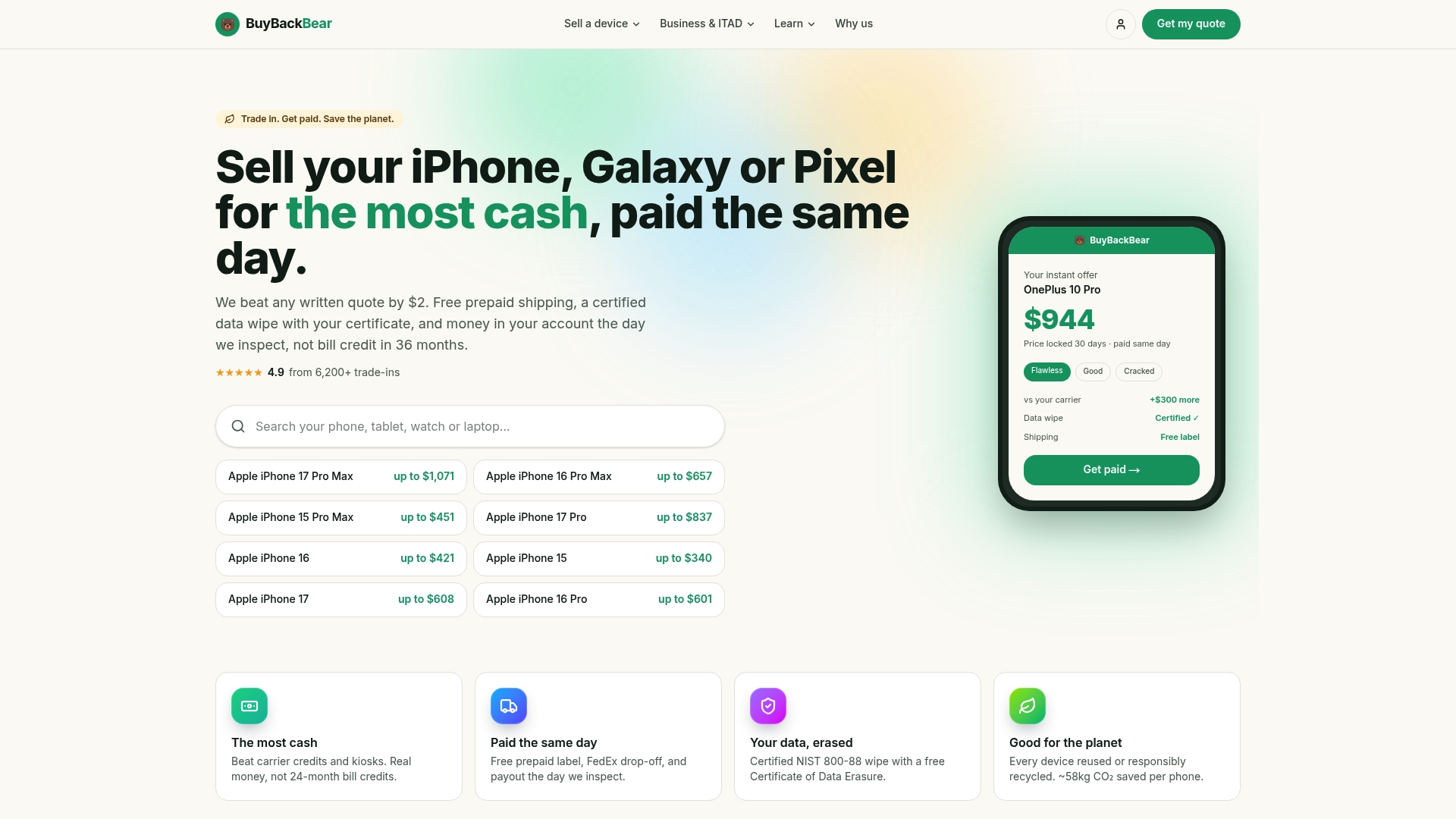
- Every device gets wiped to the NIST 800-88 standard with a free Certificate of Data Erasure
- Clear serial and powered-on screen photos help inspection match your quote without delay
- Some buyback services track competing buyback prices daily and beat any written quote by a fixed amount
Whether you’re selling a single phone or a stack of retired laptops, start with a few sharp photos and learn how to cut laptop lifecycle costs to maximize your bulk device disposition success.
FAQ
How many photos should I submit for a buyback quote?
Aim for several photos per phone or tablet, a few more for laptops with multiple panels to check.
Do I need to photograph my device before or after a factory reset?
Take any powered-on screenshots, including your serial, IMEI, or model number, before you reset the device. Back up your data first, then follow FTC guidance on resetting before selling, since a reset permanently erases local data.
What if my device is cracked or won’t turn on?
Photograph the serial or IMEI label directly on the device or its original box, and pull an IMEI screenshot from your carrier account if the screen won’t power on. Close-up shots of cracks or water damage, paired with a wider shot for context, still give inspectors what they need.
Can photos help if a buyback offer gets reduced after inspection?
Yes. Keep your original photos, the quoted offer, and your shipping tracking number together, since FTC enforcement actions show some buyback operators have lowered payments after receiving a device. A pre-shipment photo of the packaged item adds further proof of its condition when it left your hands.
What’s the difference between a factory reset and NIST-compliant data erasure?
A factory reset clears local data on the device itself, while NIST SP 800-88 sets a documented, verified sanitization standard that buyers can certify. We wipe every device to the NIST 800-88 standard and issue a free Certificate of Data Erasure as part of our inspection process.
Sources
- FTC provides tips: safeguarding data when upgrading mobile phones
- FTC, State of Georgia charge operators of electronics-buyback scheme with bilking consumers out of millions
- Guidelines for Media Sanitization (NIST SP 800-88 Rev. 1)
Recommended
Ready to sell?
Get an instant quote, free prepaid shipping, and fast cash that beats carrier trade-in credit.
Selling your device here, at a glance
Get my instant quote →- Instant quote in about 30 seconds, price locked while you decide
- Cash by PayPal, Zelle, Venmo or check after inspection, no fees
- Free prepaid label both ways, free return shipping if you decline
- We beat any competitor's written quote by $2
- Cracked screen, broken or won't power on? Still worth real money
- Certified NIST 800-88 data wipe with an emailed certificate
- Trade-in value paid in cash, not a 24-36 month carrier bill credit
- Every model priced: unlocked or carrier-locked, any storage size