62 Million Tonnes of E-Waste: What Phone Owners Must Do
October 3, 2026

Smartphone e-waste is a large and growing source of toxic pollution, and your most powerful choices are to keep devices in service longer, resell or donate them, and use certified recyclers when disposal is unavoidable. Authorities like the Global E-waste Monitor, the World Health Organization and the EPA agree that prevention and reuse matter more than recycling alone. Wiping data with NIST 800-88 standards before handoff protects you either way.
TL;DR:
- Reselling or donating functioning phones extends their life and reduces the demand for new devices, cutting down on harmful extraction and manufacturing.
- Proper data wiping with NIST 800-88 standards ensures personal information is securely destroyed before transfer or recycling.
- Certified recyclers with R2 or e-Stewards certification provide verified data destruction and environmentally responsible disposal, preventing community health risks.
- The global e-waste volume reached 62 million tonnes in 2022, with only about 22% properly recycled, leaving billions of dollars worth of recoverable materials unrecovered.
- Most phone recycling processes recover only a small fraction of rare-earth elements, making reuse and refurbishment a more environmentally friendly choice.
Table of Contents
- How much e-waste do smartphones contribute to the global total?
- What toxic materials do phones release and how do they pollute
- What health risks come from mishandled smartphone e-waste
- Why recycling alone will not fix the e-waste problem
- What should you actually do with an old phone
- What a certified buyback and recycling workflow actually looks like
- Your old phone’s second life shapes the next one built
- Ready to sell? Get a certified quote in minutes
- Sources
- FAQ
How much e-waste do smartphones contribute to the global total?
The world generated 62 million tonnes of e-waste in 2022, and only 22.3% of it was documented as properly collected and recycled. The Global E-waste Monitor projects that figure will climb to 82 million tonnes by 2030 if collection systems do not improve, a trajectory that outpaces nearly every other waste stream tracked worldwide.

Smartphones do not get their own line item in the global count. They fall under “small IT and telecommunications equipment,” a category that also includes laptops, routers and printers. That category alone generated 5 billion kilograms of waste in 2022, with roughly 22% of it formally collected and recycled. Phones are a meaningful share of that pile, given how often people upgrade compared with larger electronics.
The 2022 e-waste stream contained an estimated a competitive amount billion in recoverable resources, metals and materials that went uncollected or unrecovered. That is not abstract waste. It is copper, gold, silver and rare-earth elements sitting in landfills or informal scrapyards instead of circulating back into new devices.
The gap between generation and documented recycling is the real story here. E-waste volumes are growing faster than collection systems can handle, which means the problem compounds every year collection rates stay flat. A phone that gets a second life through resale or a certified recycling channel is one less unit adding to that gap.
What toxic materials do phones release and how do they pollute
A smartphone’s small size hides a dense mix of materials that cause outsized environmental harm once a device is crushed, burned or left to decompose. Lead, mercury, cadmium, brominated flame retardants and various rare-earth compounds show up in circuit boards, batteries and displays. Some of these persist in soil and water for decades, while others become airborne when heated or burned.
Landfilled phones can leach heavy metals into groundwater as casings crack and batteries corrode. Informal recycling operations, common in regions without regulated collection, often involve burning circuit boards to recover copper or using acid baths to extract gold. Both methods release contaminated smoke, dust and runoff into surrounding communities, turning materials that were once safely contained inside a device into airborne and waterborne pollutants.
The damage starts well before a phone reaches the trash. Mining the cobalt, lithium, tin and rare-earth metals that go into a single handset drives deforestation, water contamination near extraction sites and substantial carbon emissions from processing ore. Manufacturing a new phone from raw materials carries a far heavier environmental cost than extending the life of one already in circulation, which is part of why reuse consistently outperforms recycling on a pure environmental accounting basis.

None of this means phones are uniquely toxic among consumer electronics. It means the materials inside them demand careful handling at every stage, from mine to manufacturing floor to the moment a device finally gets retired.
What health risks come from mishandled smartphone e-waste
Unsound e-waste recycling can release more than 1,000 different chemical substances), including neurotoxicants like lead, according to the World Health Organization. People are exposed through contaminated food, water, soil and dust, as well as direct inhalation when materials are burned or processed without protective equipment.
Children and pregnant people face the highest risk. The WHO identifies this group as especially vulnerable to the neurodevelopmental, respiratory, immune and reproductive effects linked to e-waste exposure, partly because children’s developing bodies absorb and retain certain toxicants more readily than adults do. In communities near informal recycling sites, this exposure is not occasional. It is a daily feature of life for people who live, work or play near dumping and burning areas.
Informal processing, think open burning, acid leaching and manual disassembly without protection, is the point where contained hazards become community-wide exposure. The WHO has warned that these practices convert materials that were safely sealed inside a phone into airborne smoke and contaminated residue that spreads well beyond the immediate work site. Children are sometimes directly involved in this informal labor, which compounds both their exposure and the health burden they carry.
This is the strongest argument for routing old phones through certified channels rather than informal ones. A certified recycler operates under environmental and worker-safety standards that informal operations simply do not follow, which matters as much for the people handling your old phone as it does for the planet.
Why recycling alone will not fix the e-waste problem
Recycling matters, but it is the last line of defense, not the solution. E-waste generation is growing faster than documented recycling capacity, and even well-run recycling programs only recover a fraction of the rare-earth elements and specialty metals packed into a modern phone. Once a device is shredded and processed, much of that material is lost for good rather than recovered for reuse.
Reuse and refurbishment deliver a better outcome because they skip the energy and raw-material cost of building a replacement device entirely. The EPA’s own guidance on extending a phone’s useful life treats reuse as a higher priority than recycling, precisely because conserving the embedded materials and manufacturing energy already invested in a working device beats recovering a partial fraction of those materials later.
- A phone resold or donated keeps its embedded materials and manufacturing energy in active use.
- A phone sent straight to recycling only recovers a portion of its materials, and rare-earth elements are among the hardest to reclaim.
- Collection gaps mean a large share of discarded phones never reach a recycler at all, certified or otherwise.
Pro Tip: Before you recycle a working phone, check whether it still has resale or trade-in value. A device with a cracked screen or a dead battery can often still be resold or refurbished rather than scrapped.
For policymakers, this points toward investing in repairability standards and stronger collection infrastructure. For consumers, it means the first question before tossing a phone is not “where do I recycle this” but “can this still be useful to someone.”
What should you actually do with an old phone
Before you hand off any device, run through a short checklist. Remove the SIM card, sign out of your Apple ID or Google account, and back up anything you want to keep. If the phone has a damaged or swelling battery, handle it carefully. Lithium-ion batteries are a known fire hazard when thrown into household trash or ordinary recycling bins, so damaged units need a dedicated battery or e-waste drop-off point.

Data wiping is the step people skip most often, and it is the one with the highest stakes. A factory reset clears visible files but does not always meet the bar for certified data destruction. NIST 800-88 compliant wiping overwrites storage to a standard that forensic recovery tools cannot reverse, which matters if your phone ever held banking apps, photos or work email.
Once the phone is wiped, decide its next step:
- Repair it if the fix is cheap and the phone still meets your needs, a cracked screen or a new battery often costs far less than a replacement device.
- Donate it to a local program or charity if it still works but no longer fits your needs.
- Resell or trade it in if it has market value, even with cosmetic damage or a dead battery.
- Recycle it only when it has no resale or reuse value left, and only through a certified channel.
To verify a recycler or refurbisher is legitimate, check whether they hold R2 or e-Stewards certification, the two accredited standards the EPA recognizes for environmental, worker-safety and data-security practices. A program that cannot produce a verifiable data-erasure or recycling certificate on request is not one you should trust with a device that once held your personal information. If repair is your goal, services like Mobile Care USA handle phone, tablet and laptop repairs that can extend a device’s working life instead of sending it to the scrap pile.
What a certified buyback and recycling workflow actually looks like
A buyback program shows how reuse and responsible recycling work together in practice. BuyBackBear pays sellers cash for phones, tablets and laptops in any condition, flawless, cracked or dead, which keeps working devices circulating in the resale market instead of sitting in a drawer or heading straight to a landfill.
Every device BuyBackBear receives is wiped to the NIST 800-88 standard, with a free Certificate of Data Erasure issued per device. That certificate matters because it gives you proof, not just a promise, that your personal data was destroyed to a verifiable standard before the phone changes hands. Anything that cannot be resold is recycled responsibly rather than discarded.
Whichever buyer or recycler you choose, ask for the same three things: a chain-of-custody record, a data-erasure certificate and proof of recycling for anything that cannot be resold. Those three documents are the practical difference between a trustworthy program and one running on marketing claims alone.
Your old phone’s second life shapes the next one built
Every phone you resell instead of trash, and every certified recycler you choose over an informal one, sends a small signal up the chain. Manufacturers respond to demand, and demand for repairable, longer-lasting devices is one of the few levers consumers actually hold over how phones get designed. The e-waste problem will not be solved by better recycling bins alone.
It gets solved when enough buyers push back on disposable design, when warranties get longer instead of shorter, and when collection programs become as convenient as the upgrade cycle that creates the waste in the first place. Individual choices look small in isolation. At scale, they are the only mechanism that moves an entire industry.
, Andy
Ready to sell? Get a certified quote in minutes
Selling your old phone is the single most direct way to put reuse into practice instead of just reading about it. Some buyback services pay cash by various methods the same day a device is inspected, with no contract and no bill credit spread over years the way carrier trade-ins work.
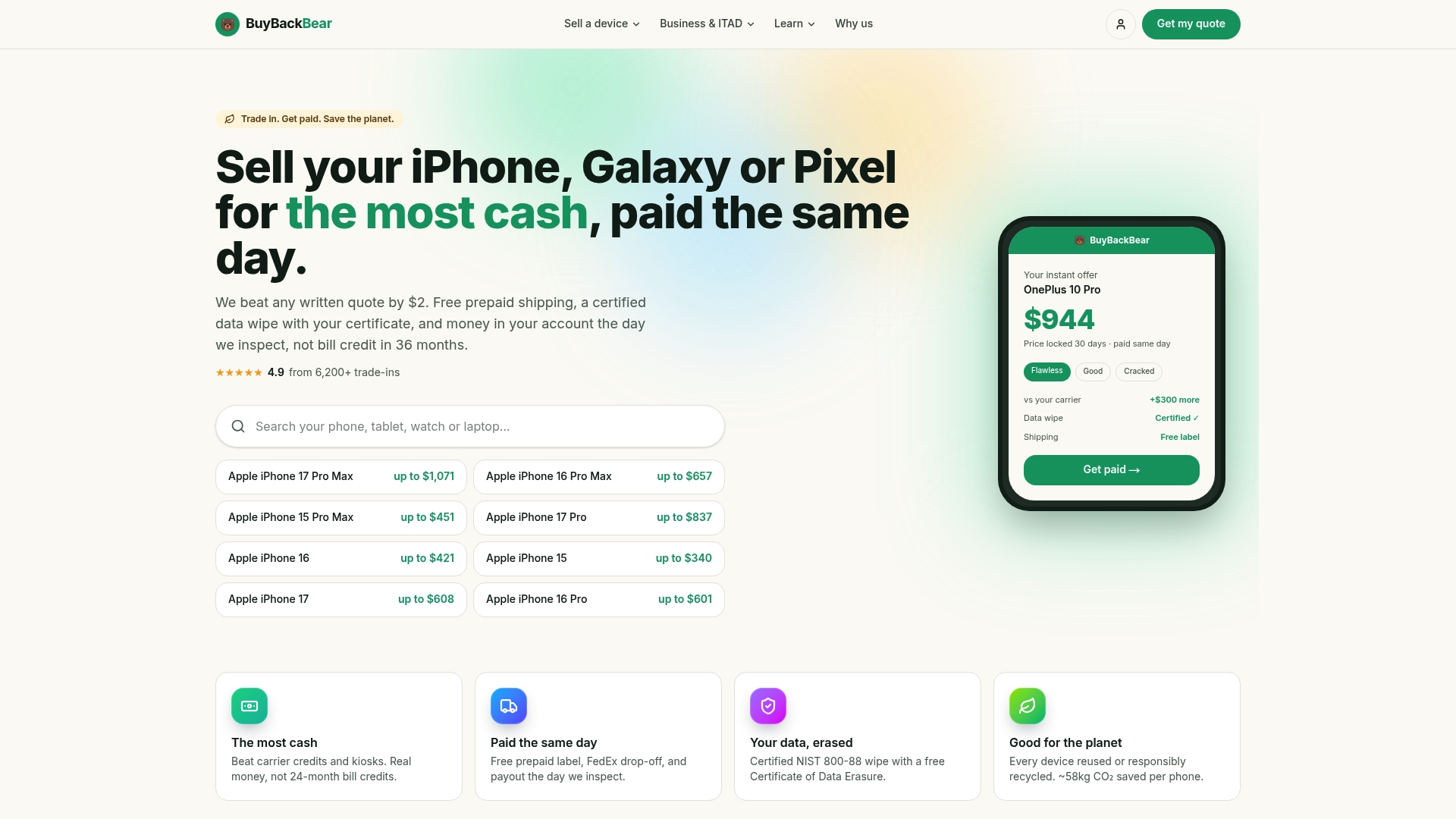
Every device gets a NIST 800-88 compliant wipe with a free Certificate of Data Erasure, and anything that cannot be resold is recycled responsibly rather than discarded. Some buyback services track competing buyback prices daily and offer to beat any written quote by a small amount.
| Step | What happens |
|---|---|
| 1 | Get an instant online quote |
| 2 | Ship free with a prepaid label |
| 3 | BuyBackBear inspects and confirms your offer |
| 4 | You get paid the same day |
Get your instant quote and see what your old phone, tablet or laptop is worth today.
This article is general information, not a substitute for advice from a qualified doctor. Consult a qualified healthcare professional about your own circumstances before acting on anything here.
Sources
FAQ
Is EMF radiation from phones harmful to your health?
Major health authorities have not established that the low-level radiofrequency energy phones emit causes harm at typical exposure levels. The WHO’s e-waste concerns focus on chemical exposure from improper disposal and recycling, not radiofrequency emissions from normal phone use.
Which smartphone brand gets hacked the most?
No authoritative source in this article tracks hacking rates by phone brand, so a reliable answer is not available here. Regardless of brand, wiping your device to a certified standard like NIST 800-88 before resale or recycling is the best protection against data exposure.
Should you throw away an old smartphone?
No. The EPA recommends maximizing a phone’s useful life through donation, resale or certified recycling instead of discarding it, since recovering materials from one million phones includes 35,274 pounds of copper, 772 pounds of silver, 75 pounds of gold and 33 pounds of palladium. Throwing a phone in household trash also risks a lithium-ion battery fire hazard and wastes recoverable materials.
Are smartphones dirtier than toilets in terms of germs?
This article’s sources do not cover bacterial contamination comparisons between phones and toilets, so no sourced answer is available here. The environmental and health concerns addressed by the WHO and EPA relate to chemical exposure from e-waste disposal, not surface bacteria.
Can you sell a smartphone with a cracked screen or dead battery?
Yes, buyback services typically accept phones in any condition, including cracked screens or batteries that no longer hold a charge. BuyBackBear pays cash for devices that are flawless, damaged or completely dead, and recycles responsibly anything that cannot be resold.
Recommended
Ready to sell?
Get an instant quote, free prepaid shipping, and fast cash that beats carrier trade-in credit.
Selling your device here, at a glance
Get my instant quote →- Instant quote in about 30 seconds, price locked while you decide
- Cash by PayPal, Zelle, Venmo or check after inspection, no fees
- Free prepaid label both ways, free return shipping if you decline
- We beat any competitor's written quote by $2
- Cracked screen, broken or won't power on? Still worth real money
- Certified NIST 800-88 data wipe with an emailed certificate
- Trade-in value paid in cash, not a 24-36 month carrier bill credit
- Every model priced: unlocked or carrier-locked, any storage size