Skip the Scrub: Earbuds Resale Hygiene or Sell Without Cleaning
September 21, 2026
Used earbuds are safe to buy or resell once the ear tips are replaced and the casing is disinfected properly, but you should walk away from anything showing mold, dampness, or corrosion. Buyers should ask sellers for new tips or plan to sanitize immediately on arrival. Sellers should clean thoroughly and document that cleaning in the listing. If you’d rather skip the work entirely, professional refurbishers already follow set protocols for this.
TL;DR:
- Replacing ear tips and disinfecting the casing with alcohol are essential steps to reduce microbial risk in used earbuds, but avoid mold, dampness, or corrosion.
- Cleaning silicone tips involves soaking in warm, soapy water, while the speaker mesh should be brushed carefully outward to prevent damage.
- Trapped moisture near charging contacts can cause corrosion, making full drying after cleaning crucial for device longevity and hygiene.
- Sharing used earbuds can transfer bacteria and fungi, especially if the ear canal skin is scratched or irritated, so proper cleaning lowers infection risk.
- Professional buyback services inspect and clean earbuds, allowing sellers to skip DIY hygiene and reducing health concerns for buyers.
Table of Contents
- Earbuds Resale Hygiene Checklist for Buyers and Sellers
- How to Disinfect Earbuds Without Wrecking Them
- When Used Earbuds Are a Health or Device Risk
- Which Earbud Parts to Replace and How Often
- How to Prep Earbuds for Resale
- The Low-Effort Route: Selling to a Professional Buyback Service
- Weighing the Ick Factor Against the Upside
- Sell Your Earbuds for Cash Without Touching a Cleaning Cloth
- Sources
- FAQ
Earbuds Resale Hygiene Checklist for Buyers and Sellers
The fastest way to judge earbuds resale hygiene is to run through a short checklist before you buy, list, or ship anything. Buyers get to decide in seconds whether to proceed; sellers get a quick way to raise their odds of a sale.
If you’re buying:
- Ask whether the ear tips are new or already replaced. If not, plan to buy your own set before first use.
- Request close-up photos of the speaker mesh. Dark spots, discoloration, or gunk in the mesh are dealbreakers.
- Refuse anything described as smelling musty, feeling damp, or showing rust on the charging contacts.
- Sanitize the casing yourself the moment the package arrives, even if the seller claims it’s already clean.
If you’re selling:
- Replace the ear tips with a new set before photographing or listing the item.
- Wipe down the casing and charging case with a proper disinfecting method (covered in detail below).
- Let everything dry completely, ideally overnight, before sealing it for shipment.
- Take clear photos of the cleaned mesh and new tips, and write a one-line note describing your cleaning method.
Listings that mention new tips and a specific cleaning method (an alcohol wipe, a soap soak) consistently read as more trustworthy than ones that just say “gently used.” That small disclosure does more for buyer confidence than any amount of marketing language.
How to Disinfect Earbuds Without Wrecking Them
Cleaning earbuds is less about scrubbing hard and more about using the right material in the right spot. Get this wrong and you either damage the speaker driver or leave bacteria exactly where they were.
Start with what to use and what to avoid. Removable silicone ear tips can go straight into warm, soapy water for a real soak, which alcohol can’t match for lifting built-up earwax. Foam tips are the exception: alcohol breaks down foam and certain finishes, so stick to a damp cloth or replace foam tips outright rather than risk crumbling them. Keep cotton swabs away from the speaker mesh; they tend to push wax and debris deeper into the driver instead of lifting it out.
Here’s the order that actually works:
- Remove the ear tips. Twist and pull gently. Set them aside for a separate soak.
- Soak silicone tips in warm, soapy water for a few minutes, then rinse and let them air dry fully before reattaching.
- Brush the speaker mesh outward, away from the driver, using a soft-bristled brush or a clean, dry toothbrush. Never push inward.
- Wipe the casing and charging contacts with your alcohol-dampened microfiber cloth, working in small sections rather than one heavy pass.
- Let everything air dry completely before reassembling or placing earbuds back in the charging case. Even a small amount of trapped moisture near the charging pins can cause corrosion over time.
This sequence lines up with general cleaning guidance from Soundcore, which specifically flags charging ports and speaker mesh as the two places where moisture does the most damage. It’s also consistent with what shows up in professional audio circles: one repair specialist told Tom’s Guide that aggressive, infrequent “deep cleans” are often what ruins earbuds in the first place, not everyday wear. Small, frequent wipe-downs beat one intense scrub session every few months.
A few mistakes come up over and over. Never spray or drip liquid directly onto or into the earbuds; always apply it to the cloth first. Never use a metal pin, paperclip, or sharp tool to dig debris out of the mesh. That’s the fastest way to puncture the protective screen sitting over the driver, and once that screen is punctured, sound quality and water resistance both take a hit. Skip toothpicks too. They feel precise but they’re just another way to jam debris further in rather than out.
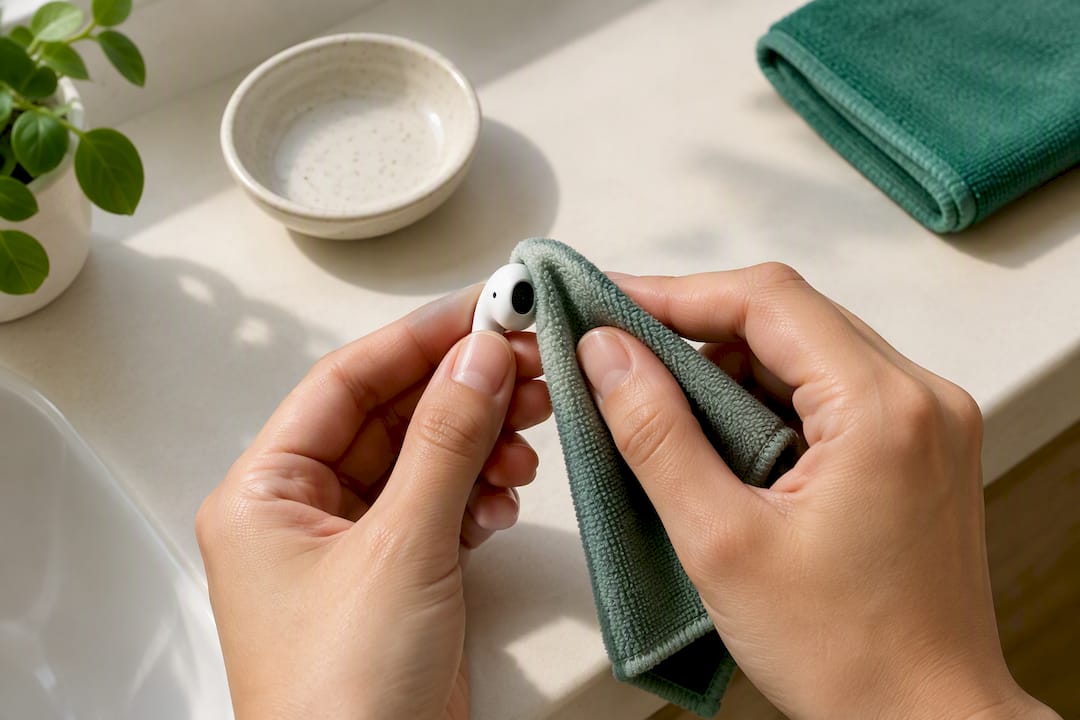
Pro Tip: Clean earbuds in short sessions after most uses rather than saving it up for one deep clean a month. A quick 30-second wipe of the mesh and casing does more for long-term hygiene than an occasional heavy scrub, and it’s much gentler on the components.
When Used Earbuds Are a Health or Device Risk
Sharing or reusing someone else’s earbuds does carry a real, if generally modest, infection risk. Ear infections themselves aren’t contagious in the way a cold is, but the bacteria and fungi that cause them absolutely can travel from one ear canal to another. According to Ohio State’s Wexner Medical Center, sharing earbuds can transfer microbes that lead to external ear canal infections, and that risk climbs sharply if the skin inside your ear canal is already scratched or irritated.
Sharing earbuds can effectively double the microbial population in your ears, and researchers have found staph bacteria and, occasionally, yeast on used earbuds, with risk rising alongside moisture, skin breaks, or long wear time, according to Starkey’s hearing health blog.
That’s a meaningful reason to treat “gently used” earbuds the same way you’d treat a used razor. Not automatically dangerous, but not something to use straight out of the box either.
Watch for these red flags before you buy, and don’t argue yourself out of walking away if you see one:
- Visible mold or dark fuzzy growth anywhere on the tips or casing
- A persistent musty or sour smell that doesn’t fade after airing out
- Any wetness or moisture trapped inside the charging case or earbud housing
- Corroded or greenish charging contacts
- Torn or degraded speaker mesh
- Ear tips that are clearly the original owner’s and haven’t been replaced
Moisture is also the biggest threat to the electronics themselves, not just your ears. Trapped condensation near the charging pins corrodes contacts over time, which is why drying fully after any cleaning matters as much for the device’s lifespan as it does for hygiene. A device with hidden internal moisture damage might work fine today and fail entirely in a month, which is a bad surprise for a buyer who paid full price for “like new” earbuds.
Which Earbud Parts to Replace and How Often
Ear tips are the single most important thing to swap on any used pair of earbuds, full stop. They sit directly in the ear canal, they’re cheap, and a fresh set eliminates most of the direct-contact hygiene concern in one move.
Silicone tips are the easiest to source. Most major brands sell replacement multi-packs for a few dollars, and generic silicone tips fit a surprising number of models if you match the stem diameter. Foam tips cost more and wear out faster since foam compresses and degrades with each use, so budget for replacing them more often if your earbuds use foam instead of silicone.
If your earbuds have a removable mesh cover or filter over the speaker driver, replace that too when it’s available; some models sell these separately and it’s an easy upgrade for a used pair.
A simple maintenance cadence keeps things clean without turning it into a chore:
- After every use: a quick wipe of the casing with a dry or barely damp cloth.
- Weekly: a light brush of the speaker mesh to clear surface debris before it builds up.
- Monthly: a full clean, including a tip soak and alcohol wipe of the casing and contacts.
How often you replace tips outright depends on use. Someone using earbuds daily for workouts should swap tips every month or so, since sweat accelerates buildup. Lighter, occasional users can often stretch that to every few months. Either way, replacing tips costs far less than dealing with an ear irritation, and it resets the hygiene clock on a used pair almost completely.
How to Prep Earbuds for Resale
Buyers scan listings for signs that a seller actually cared about hygiene, and a few extra minutes of prep work is usually the difference between a quick sale and a listing that sits ignored. Here’s the workflow that gets results:
- Remove the old tips and attach a new set. This is the single biggest trust signal you can offer, and it’s worth doing even if it costs you a few dollars.
- Clean the casing with a microfiber cloth dampened with rubbing alcohol or mild soap and water, wiping the charging case and contacts as carefully as the earbuds themselves.
- Let everything dry for a full 12 to 24 hours before packaging. Sealing damp earbuds into a bag is one of the fastest ways to trap moisture and cause the exact corrosion issue that scares buyers off.
- Photograph the results. Clear shots of the new tips, clean mesh, and undamaged contacts do more selling than any paragraph of description.
- Write one honest sentence about your cleaning method. “Wiped down with 70% isopropyl alcohol, new tips installed” reads as far more credible than “like new, barely used.”
Shipping matters just as much as cleaning. Bag the earbuds in a sealed plastic pouch, toss in a small silica gel packet if you have one, and avoid shipping materials that trap humidity. A single soggy box during a delayed shipment can undo every bit of cleaning you did.
The Low-Effort Route: Selling to a Professional Buyback Service
Not everyone wants to soak tips, brush mesh, and photograph charging contacts. That’s a fair position, and it’s exactly the gap professional buyback and refurbishment services fill. Reputable refurbishers typically inspect every unit, replace consumable parts like ear tips, and either clean and resell an item or route it to responsible recycling if it doesn’t meet resale condition. That process removes the guesswork for both sides of the transaction.
Buybackbear buys AirPods and other wearables and earbuds directly from sellers, with a workflow built around speed rather than DIY cleaning:
- Get an instant online quote for your AirPods or earbuds
- Ship free using a prepaid label, no cleaning required on your end before sending
- The device gets inspected on arrival, with any data-bearing components wiped to the NIST 800-88 standard
- Get paid the same day the inspection confirms your offer
- Anything that can’t be resold gets recycled responsibly instead of thrown away
For sellers who’d rather not deal with alcohol wipes and tip replacements, this is a straightforward way to convert old earbuds into cash without touching the hygiene side at all. For buyers, favoring earbuds that have already passed through a professional inspection and cleaning process is a reasonable way to lower risk compared to a random secondhand listing.
Weighing the Ick Factor Against the Upside
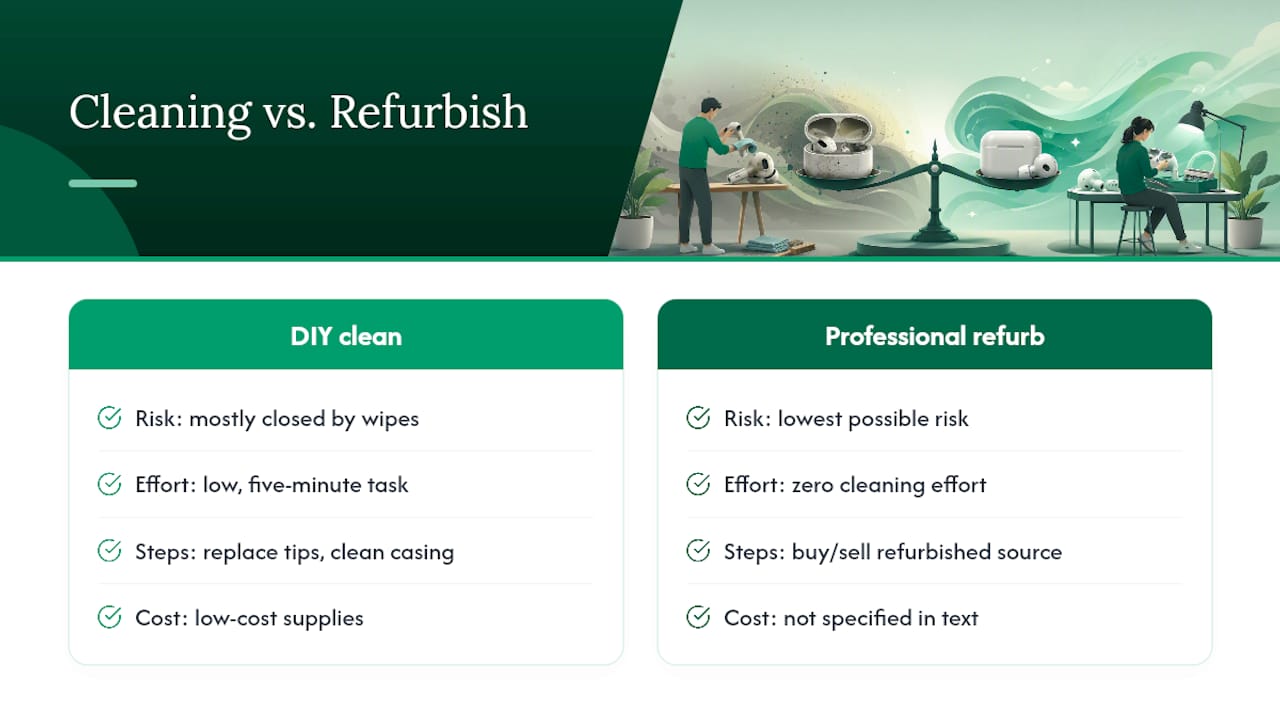
There’s a real, understandable gut reaction to putting someone else’s earbuds in your ears. That instinct isn’t irrational. But it’s also not the full picture. A handful of specific, low-cost steps, new tips and a proper alcohol wipe, close most of the gap between “used” and “as clean as new.” ENT-adjacent guidance backs this up: the actual danger comes from a combination of transferred microbes and something else going wrong, like a skin break or trapped moisture, not from used earbuds by themselves.
If you’re buying on a budget, replace the tips and clean the casing yourself, and treat it as a five-minute task rather than a deep worry. If you want the lowest possible risk with zero cleaning effort, buying from a professionally refurbished source or selling to one when you’re done with a pair is the more sensible move. Either path beats letting a perfectly good pair of earbuds sit in a drawer.
, Andy
Sell Your Earbuds for Cash Without Touching a Cleaning Cloth
Some professional services pay for earbuds and other wearables in any condition, with no deep cleaning or tip replacement required before shipping. This approach lets sellers skip the hygiene prep process described earlier, as cleaning happens after inspection.
The process runs in four steps. Get an instant online quote for your device, ship it free with a prepaid label, let the team inspect it and confirm your offer, and get paid the same day that inspection wraps up. Data-bearing devices get wiped to the NIST 800-88 standard, and anything that can’t be resold gets recycled responsibly instead of landfilled. If you’ve got old AirPods or other earbuds sitting in a drawer that you don’t want to clean up yourself, head to the sell page and get a quote in a couple of minutes.
Sources
The cleaning steps and cautions in this piece draw on manufacturer guidance from Soundcore’s earbud cleaning guide, which covers safe use of isopropyl alcohol, tip soaking, and moisture risk near charging ports. Professional cleaning technique and common mistakes come from Tom’s Guide’s reporting on audio professional advice. The medical context on infection transmission comes from Ohio State’s Wexner Medical Center, and additional findings on shared-earbud bacteria levels come from Starkey’s hearing health team. All four sources back the specific steps and warnings referenced throughout this guide.
This article is general information, not a substitute for advice from a qualified doctor. Consult a qualified healthcare professional about your own circumstances before acting on anything here.
- How to clean earbuds (Soundcore)
- Ear infection (otitis) overview (Wexner Medical Center)
- Your ‘deep clean’ is exactly what’s ruining your earbuds (Tom’s Guide)
FAQ
Is it safe to buy secondhand earbuds?
Yes, generally, as long as you replace the ear tips and disinfect the casing before use, and you avoid any pair showing mold, moisture, or corrosion. Buying from a professional refurbisher that already inspects and cleans devices lowers the risk further.
How do I disinfect my earbuds?
Wipe the hard casing with a microfiber cloth lightly dampened with 70% isopropyl alcohol or mild soap and water, and soak removable silicone tips separately in warm soapy water. Avoid alcohol on foam tips, and let everything dry fully before reassembling.
What is the 60-60 rule for earbuds?
The 60-60 rule is a listening-volume guideline, not a hygiene one: it recommends listening at no more than 60% volume for no more than 60 minutes at a stretch to protect your hearing. It doesn’t relate to cleaning or contamination, so don’t confuse it with resale hygiene advice.
Are ear infections contagious if you share earbuds?
Ear infections aren’t contagious in the traditional sense, but the bacteria and fungi that cause them can transfer between ears through shared earbuds. The risk goes up if your ear canal skin is scratched or irritated when you use someone else’s tips.
Does Buybackbear buy used AirPods and earbuds?
Yes, Buybackbear buys AirPods and other wearables, offering an instant online quote, free prepaid shipping, and same-day payment after inspection. You don’t need to clean the earbuds yourself before sending them in.
Recommended
Ready to sell?
Get an instant quote, free prepaid shipping, and fast cash that beats carrier trade-in credit.
Selling your device here, at a glance
Get my instant quote →- Instant quote in about 30 seconds, price locked while you decide
- Cash by PayPal, Zelle, Venmo or check after inspection, no fees
- Free prepaid label both ways, free return shipping if you decline
- We beat any competitor's written quote by $2
- Cracked screen, broken or won't power on? Still worth real money
- Certified NIST 800-88 data wipe with an emailed certificate
- Trade-in value paid in cash, not a 24-36 month carrier bill credit
- Every model priced: unlocked or carrier-locked, any storage size