Best eBay Alternatives for Selling in 2026: By Seller Goal
August 1, 2026

For fast cash on phones and laptops, a buyback service beats every marketplace. For clothing, niche fashion platforms outperform general listings. For rare collectibles, you need a large auction-capable marketplace. The right platform depends entirely on what you’re selling and what you value more: maximum payout or minimum hassle.
Here’s the shortlist by seller goal:
- Fast cash on electronics: Buyback services like Buybackbear, instant quotes, same-day payouts, no listing or shipping friction
- Highest upside on rare items: Large national marketplaces with auction formats, best when buyer competition drives the price up
- Local pickup on bulky goods: Local classifieds, zero listing fees and no shipping costs make them the clear winner for desktops, monitors, and furniture
- Clothing and fashion: Niche fashion platforms, category-specific audiences convert far better than general listings
- Handmade goods: Dedicated craft marketplaces, built-in buyer intent you can’t replicate on a general platform
- Luxury items: Authenticated resale platforms, buyer trust and verification justify the higher commission
- Collectibles and niche parts: Auction-capable general marketplaces, broad reach and competitive bidding push prices higher
- Bulk business devices: Buyback services with bulk disposal programs, prepaid shipping and payout within days eliminate the logistics work entirely
One number worth keeping in mind: instant-quote buyback services typically pay 25–40% less than marketplace sale prices but also eliminate listing time, buyer negotiation, shipping risk, and return disputes. For many sellers, that tradeoff is worth it.
Table of Contents
- How do the top eBay alternatives compare at a glance?
- Which platform is best for your specific item or seller type?
- Platform reviews: what each marketplace is actually like to sell on
- How do you choose the right platform for your situation?
- What does eBay still do better than most alternatives?
- When does a device buyback service make more sense than a marketplace listing?
- What’s the right call for the most common seller scenarios?
- Key Takeaways
- The platform comparison everyone gets slightly wrong
- Selling devices? Buybackbear pays same-day with zero listing hassle
- Useful sources and further reading
How do the top eBay alternatives compare at a glance?
Before reading full platform reviews, scan this table to match your situation to the right category. Every figure here is illustrative of typical fee shapes, always check the platform’s current help page before listing, since rates change.
| Platform / Category | Best for | Typical seller fees | Ease of listing | Audience & demand | Shipping vs local | Payout speed | Typical time-to-sale | Returns / seller protection |
|---|---|---|---|---|---|---|---|---|
| Major national marketplaces (Amazon, Walmart) | New/near-new goods, high-volume sellers | 8–15%+ referral fees; FBA adds more | Moderate to complex | Massive; high buyer intent | Shipping required | 1–2 weeks (Amazon) | Days to weeks | Buyer-favored; return windows can be long |
| Niche fashion platforms (Poshmark, Depop) | Clothing, shoes, accessories | 20% flat (Poshmark); 10% (Depop) | Easy | Fashion-focused; strong | Shipping standard | Days after sale | Days to weeks | Varies; buyer protection active |
| Handmade/craft marketplace (Etsy) | Handmade, vintage, digital goods | a competitive amount.20 listing + 6.5% transaction + payment fee | Easy | Buyer intent high for category | Shipping standard | Days after sale | Days to weeks | Seller-friendly but buyer protection exists |
| Luxury resale (The RealReal) | Designer clothing, watches, jewelry | Consignment cut (varies by tier) | Managed (consignment) | Affluent, authenticated buyers | Shipping/consignment | Weeks | Weeks to months | Platform-managed |
| Electronics niche (Swappa, StockX) | Phones, sneakers, streetwear | Low flat fees (Swappa); buyer-pays model | Moderate | Verified buyers; strong demand | Shipping required | Days after sale | Days | Verified listings reduce disputes |
| Local classifieds (Facebook Marketplace, OfferUp, Craigslist) | Bulky items, local-only goods | Free to low | Very easy | Local; variable | Local pickup | Immediate (cash) | Hours to days | No platform protection; seller bears risk |
| Buyback & trade-in (Buybackbear) | Phones, tablets, laptops, bulk devices | No seller fees; instant quote | Extremely easy | Direct buyer (platform) | Free prepaid shipping | Same day | Minutes to days | Guaranteed offer; no return risk |
Three things stand out from this table. Local classifieds win on net payout for anything too heavy to ship cheaply. Niche platforms consistently outperform general listings for category-specific items because the audience is already there. And buyback services are the only category where the seller faces zero return risk and a guaranteed payout.
True-net reminder: the top-line sale price is not what you take home. Subtract platform fees, shipping costs, and an honest estimate of your time at whatever your hourly rate is worth. That number is your true net. Run it before committing to any platform.
Which platform is best for your specific item or seller type?
The fastest way to pick a platform is to start with what you’re selling, not with a platform name.
Clothing and fashion sellers belong on Poshmark, Depop, or The RealReal depending on price point. Poshmark’s flat 20% commission stings on lower-priced items but its audience is enormous and already shopping. Depop skews younger and streetwear-heavy. The RealReal is the right call for authenticated designer pieces where buyer trust is the deciding factor. Niche platforms trade broad reach for category relevance, and for fashion that’s usually the better trade.

Handmade and vintage sellers should default to Etsy. Its buyer base arrives with purchase intent for exactly those categories. A small-batch designer selling one-of-a-kind pieces may find Etsy’s a competitive amount.20 listing fee and 6.5% transaction fee far cheaper than the 20% consignment cuts on fashion platforms.
Electronics sellers face the most options and the most fee complexity. For current-generation phones and laptops, a buyback service delivers speed and certainty. For older but still functional gear, Swappa’s verified-listing model and low fees often produce better net returns than a general marketplace. For truly rare or vintage electronics, an auction-capable platform with a large buyer pool is worth the extra listing effort.

Bulky household items (furniture, appliances, large monitors) almost always net more through local classifieds. Shipping costs on heavy items erode returns so severely that even a fee-free marketplace listing can leave you worse off than a local cash sale.
Collectibles and niche parts favor platforms with auction mechanics and large buyer pools. Whatnot works well for live-auction collectibles with an engaged community. Reverb is the clear choice for musical instruments and gear.
Small businesses disposing of multiple devices should skip individual marketplace listings entirely. The logistics of listing, shipping, and managing returns across ten or twenty devices is a time sink that buyback services eliminate. Bulk buyback programs handle the entire process, including certified data destruction.
Pro Tip: Before accepting any offer, convert it to cash-in-hand. Take the sale price, subtract the platform fee percentage, subtract estimated shipping, and subtract the value of your time (listing, packing, answering buyer questions). That final number is what you’re actually earning.
Platform reviews: what each marketplace is actually like to sell on
Amazon
Amazon is the right platform when you’re selling new or near-new products at volume, not one-off used items. Referral fees run 8–15% depending on category, and if you use Fulfillment by Amazon, storage and fulfillment fees stack on top. The upside is unmatched buyer traffic. The downside for individual sellers: Amazon’s return policy is buyer-friendly to a degree that can be painful for small sellers, and account suspension risk is real if metrics slip.
Walmart Marketplace
Walmart Marketplace has grown significantly as an alternative for established sellers. There are no monthly subscription fees, and referral fees are competitive with Amazon in many categories. The catch: Walmart’s approval process is selective, so it’s not a quick option for a first-time seller with a single item. Best for small businesses already selling at volume who want a second channel.
Facebook Marketplace
Free to list, enormous local reach, and zero shipping required for local pickup. Facebook Marketplace is the fastest way to move bulky items or anything where you want cash in hand today. The platform has no seller protection for local transactions, so payment verification and safe meeting locations are entirely your responsibility. Local sales eliminate shipping risk but require seller diligence on meeting locations and payment confirmation.
Mercari
Mercari charges a flat 10% selling fee and handles payment processing cleanly. It’s a solid general-purpose platform for electronics, clothing, and household goods. Listings are straightforward, and the app is genuinely easy to use. Payout arrives after the buyer confirms receipt, which adds a short delay. Seller protections are decent but buyer-initiated disputes can still hold funds temporarily.
Poshmark
Poshmark takes a flat a competitive amount.95 on sales under a solid amount% on everything above. That commission is high, but the platform’s fashion-focused audience converts well for clothing, shoes, and accessories. Poshmark handles shipping labels automatically, which removes one friction point. Time-to-sale varies widely depending on how actively you share listings within the app’s social feed.
Etsy
Etsy charges a competitive amount.20 per listing, a 6.5% transaction fee, and a payment processing fee. For handmade goods, vintage items, and digital downloads, the audience match is hard to beat. Etsy’s search algorithm rewards shops with strong reviews and complete listings, so new sellers may wait longer for their first sales. Seller protection exists but Etsy’s dispute process tends to favor buyers.
TikTok Shop
TikTok Shop is the newest major entrant and its commission structure has been evolving. The platform’s strength is discovery: products that land in the right video feed can sell out quickly. It’s best suited for sellers comfortable creating short video content and for products that photograph or demonstrate well. Logistics and return handling are still maturing compared to established platforms.
OfferUp
OfferUp blends local pickup with a shipping option. Local transactions are free; shipped items carry a seller fee. The app is clean and easy to use, and it has a built-in reputation system that helps screen buyers. For mid-size electronics and household goods, OfferUp often produces faster local sales than Craigslist because the interface is more modern.
Craigslist
No fees, no accounts required for buyers, and a massive local reach in most U.S. cities. Craigslist is still the default for large items where shipping is impractical. The trade-off is a higher rate of flaky buyers and no platform safety net whatsoever. Cash or verified payment on pickup is the only safe approach.
Depop
Depop charges a 10% selling fee and targets a younger, fashion-forward audience. It’s particularly strong for vintage clothing, streetwear, and Y2K-era pieces. Listings are Instagram-style, so good photos matter more here than on most platforms. Sellers who invest in their shop aesthetic tend to build repeat buyers.
StockX
StockX operates as an authenticated marketplace for sneakers, streetwear, electronics, and collectibles. Sellers ship to StockX for verification before the item reaches the buyer. Seller fees vary by transaction level. The authentication model removes buyer skepticism entirely, which is why high-demand sneakers and limited-edition items often sell at or above retail here. Platforms with verified-listing or buyer-pays-fee models allow sellers to keep more of the gross price, and StockX’s structure reflects that.
Swappa
Swappa focuses on used phones, laptops, tablets, and gaming gear. Listing is free; buyers pay a small fee, which means sellers keep more of the asking price. The platform requires working, clean-condition devices and enforces listing standards that reduce fraud. For current-generation electronics in good condition, Swappa often produces better net returns than general platforms.
The RealReal
The RealReal is a consignment platform for authenticated luxury goods. You ship items to The RealReal, they authenticate and photograph them, and they handle the sale. The consignment percentage varies by seller tier and item value. The upside: buyers trust the authentication, which supports higher prices. The downside: you wait weeks for a sale and the consignment cut is substantial.
Whatnot
Whatnot runs live-auction selling streams, primarily for trading cards, comics, toys, and collectibles. Sellers go live, show items, and auction them in real time. It’s engaging for the right audience and can produce strong prices for desirable items. The format requires time and comfort on camera, so it’s not for every seller.
Reverb
Reverb is the dominant marketplace for musical instruments, gear, and audio equipment. Seller fees are around 5% plus payment processing. The audience is knowledgeable and specifically shopping for gear, which means less price negotiation and faster sales for quality items. For anything music-related, Reverb outperforms every general marketplace.
Buybackbear
Buybackbear is not a marketplace in the traditional sense. It’s a direct buyback service for phones, tablets, laptops, desktops, smartwatches, and earbuds. You get an instant quote, ship the device free with a prepaid label, and receive same-day cash payment after inspection. There are no listing fees, no buyer negotiations, and no return risk. Every device gets a certified NIST 800-88 compliant data wipe with a per-device certificate, which matters significantly for business sellers disposing of company hardware. Bulk disposal programs handle multiple devices in a single transaction.
| Platform | Seller fee (typical) | Payout method | Time-to-sale |
|---|---|---|---|
| Amazon | 8–15% referral + FBA | Bank transfer | Days to weeks |
| Walmart Marketplace | 6–15% referral | Bank transfer | Days to weeks |
| Mercari | 10% | Direct deposit | Days after confirmation |
| Poshmark | 20% (or a competitive amount.95 under a competitive amount) | Check or bank | Days after delivery |
| Etsy | a competitive amount.20 + 6.5% + processing | Bank transfer | Days after sale |
| Depop | 10% | PayPal/bank | Days after sale |
| StockX | Varies by level | Bank transfer | Days after verification |
| Swappa | Free (buyer pays fee) | PayPal | Days after sale |
| Reverb | ~5% + processing | Bank transfer | Days after sale |
| Buybackbear | No seller fees | Same-day cash | Minutes to days |
How do you choose the right platform for your situation?
Work through these questions in order before you list anywhere.
- How fast do you need the money? If you need cash today or this week, a buyback service or local classified is your only realistic option. Marketplace sales routinely take days to weeks even for in-demand items.
- How rare or in-demand is your item? Common items sell faster on platforms with large audiences. Truly rare items benefit from auction mechanics that let buyer competition push the price up.
- What will shipping cost? For anything over 10–15 pounds, calculate the actual shipping cost before listing. It often eliminates the fee advantage of a “free to list” platform.
- What is your return risk tolerance? Buyer-protection-heavy platforms can hold your funds or force refunds weeks after a sale. Buyback services and local cash sales eliminate this risk entirely.
- How much is your time worth? This is the question most sellers skip.
True-net calculation example. Say you have a used iPhone in good condition. A marketplace listing might fetch a competitive offer. Subtract a 10% platform fee (a competitive amount), a competitive amount in shipping, and two hours of your time at a competitive amount/hour (a competitive amount). True net:. A buyback quote for the same phone might be a competitive amount with free shipping and no listing time. True net:. Experts recommend subtracting an estimated hourly time cost from gross proceeds to compute a real comparison, and that math often flips the decision.
Red flags to watch before committing:
- Fees that aren’t disclosed until checkout
- Payment holds longer than 7 days after delivery
- Return windows over 30 days with no seller recourse
- Platforms that allow buyer-initiated returns on electronics without requiring proof of defect
Three questions to ask before listing:
- What is the total fee as a percentage of my expected sale price?
- When exactly will I receive my money?
- What happens if the buyer opens a dispute?
What does eBay still do better than most alternatives?
eBay’s core advantage is its auction format combined with a buyer pool that no single-category platform can match. For rare items, vintage parts, niche collectibles, and anything where the right buyer will pay a premium, eBay’s bidding mechanics can produce prices that fixed-price platforms simply can’t reach.
- Largest general buyer pool in the U.S. for used goods across virtually every category
- Auction format that lets buyer competition set the price, particularly valuable for rare or hard-to-value items
- Broad category coverage, from car parts to vintage cameras to industrial equipment, eBay has active buyers where niche platforms don’t
- Established seller protections with a structured dispute process, though it still leans buyer-friendly
- Global reach for items with international demand
eBay’s broad buyer reach and auction formats can push rare-item prices higher than fixed-fee marketplaces. If you have a vintage camera body, a discontinued car part, or a first-edition collectible, eBay is worth trying first. The auction format is the mechanism that makes this work, a motivated buyer who can’t find the item elsewhere will bid it up.
For common electronics, clothing, or anything with a predictable market price, eBay’s advantages shrink considerably. The fees (typically a final value fee around 13.25% for most categories, plus payment processing) and the time investment make it less competitive against faster, lower-friction alternatives.
When does a device buyback service make more sense than a marketplace listing?
Buyback services are the practical choice when speed, low effort, and a predictable payout matter more than squeezing out every last dollar. That describes most sellers with used electronics.
Here’s a concrete comparison. A used mid-range Android phone in good condition lists on a general marketplace for a competitive amount. After a 10% platform fee (a competitive amount), a competitive amount in shipping, and roughly 90 minutes of listing, answering questions, packing, and post-sale follow-up (valued at a competitive amount/hour, that’s a competitive amount.50), the true net is a competitive amount.50. A buyback quote for the same phone might be a competitive amount with free prepaid shipping and a 10-minute quote process. True net:. The marketplace “wins” on gross price. The buyback service wins on cash in hand.
The payout gap is real but often smaller than sellers expect. Consumer Reports found that a used iPhone 7 fetched a competitive offer from buyback services versus roughly a competitive amount on marketplace listings before fees. After fees, shipping, and time, the actual gap narrows significantly.
Buybackbear’s specific advantages for device sellers:
- Instant quotes with no obligation
- Same-day cash payouts after device inspection
- Free prepaid shipping labels on every transaction
- Certified NIST 800-88 compliant data wipes with a per-device certificate, a meaningful requirement for any business disposing of company hardware
- Bulk disposal programs for businesses retiring multiple devices at once, handled in a single transaction through Buybackbear’s bulk buyback service
Pro Tip: Buyback services focus on high-liquidity devices: current-generation phones, tablets, and laptops from major brands. Obsolete hardware (printers, older cameras, dated televisions, devices with severe screen damage or liquid damage) often receives little or no offer. If your device falls into that category, a local classified or electronics recycler is the more realistic path.
What’s the right call for the most common seller scenarios?
Three profiles cover most of the sellers reading this.
- Individual with one high-value item (phone, laptop, designer bag): Run a true-net calculation comparing a buyback quote to a niche marketplace listing. For electronics, the buyback often wins on net. For fashion, a niche platform with the right audience usually wins on gross and net combined.
- Small business retiring multiple devices: Skip individual marketplace listings. The time cost alone makes it irrational. A bulk buyback program with certified data destruction handles compliance and payout in one step. Check Buybackbear’s IT equipment disposal service for a structured process.
- Seller with bulky household items: Local classifieds first. No fees, no shipping, cash on pickup. Facebook Marketplace and OfferUp are the most active local platforms in most U.S. markets.
Before committing to any platform, confirm three things: the total fee as a percentage of your expected price, the exact payout timeline, and the return policy. Those three numbers tell you more than any platform’s marketing copy.
For electronics specifically, run the true-net math before listing. The speed and certainty of a buyback quote frequently beats the gross upside of a marketplace listing once fees and time are factored in.
Key Takeaways
The single most important principle in this comparison: the platform with the highest gross sale price is rarely the one that puts the most cash in your pocket after fees, shipping, and time.
| Point | Details |
|---|---|
| Match platform to item type | Niche platforms outperform general marketplaces for fashion, handmade goods, and collectibles because the audience already has purchase intent. |
| Run the true-net calculation | Subtract platform fees, shipping, and your hourly time cost from every offer before comparing options. |
| Local classifieds win on bulky items | Zero fees and no shipping make local pickup the highest-net option for heavy or large goods. |
| Buyback services win on speed and certainty | Instant-quote services pay 25–40% less than marketplace prices on average, but eliminate listing time, return risk, and payout delays. |
| Buybackbear for electronics and bulk devices | Buybackbear offers same-day cash, free prepaid shipping, and certified NIST 800-88 data wipes, the rational choice for individuals and businesses selling phones, tablets, or laptops. |
The platform comparison everyone gets slightly wrong
Most articles on eBay alternatives for selling organize platforms by category and stop there. That’s useful, but it misses the more important question: what does the seller actually walk away with?
The gross sale price is a vanity metric. A a competitive amount marketplace listing that takes three hours to manage, costs a competitive amount in shipping, and carries a 13% platform fee nets you roughly a competitive amount. A a competitive amount buyback quote with free shipping and a 10-minute process nets you a competitive amount. The “lower” offer wins by a competitive amount.
What I find consistently underappreciated is the return risk dimension. Marketplace sellers, particularly on buyer-protection-heavy platforms, can face refund demands weeks after a sale. A buyer claims the item arrived damaged, opens a dispute, and the platform holds funds while investigating. For a small seller with limited cash flow, that’s not a minor inconvenience. It’s a real financial risk that never appears in the fee comparison tables.
The other thing worth saying plainly: eBay is still the right answer for genuinely rare items. If you have a vintage synthesizer, a discontinued camera lens, or a first-edition collectible, the auction format and buyer pool are irreplaceable. No niche platform has the same reach for items that don’t fit a clean category. But for the vast majority of sellers with common electronics, clothing, or household goods, eBay’s fees and friction are hard to justify when faster, lower-cost alternatives exist.
The honest framework: start with what you need (speed, max cash, local pickup, niche audience), run the true-net math on your top two options, and pick the one that wins on cash in hand. The platform name matters less than the number at the end of that calculation.
Selling devices? Buybackbear pays same-day with zero listing hassle
Marketplace listings make sense for rare items where buyer competition drives the price up. For phones, tablets, laptops, and other electronics, the math usually points somewhere else.
Buybackbear pays cash the same day your device is inspected, ships free with a prepaid label, and wipes every device to NIST 800-88 certified standards with a certificate per device. No listing, no buyer negotiation, no return disputes. A small business retiring ten laptops gets a single bulk transaction with full data destruction documentation. An individual selling a phone gets a quote in minutes and cash the same day.
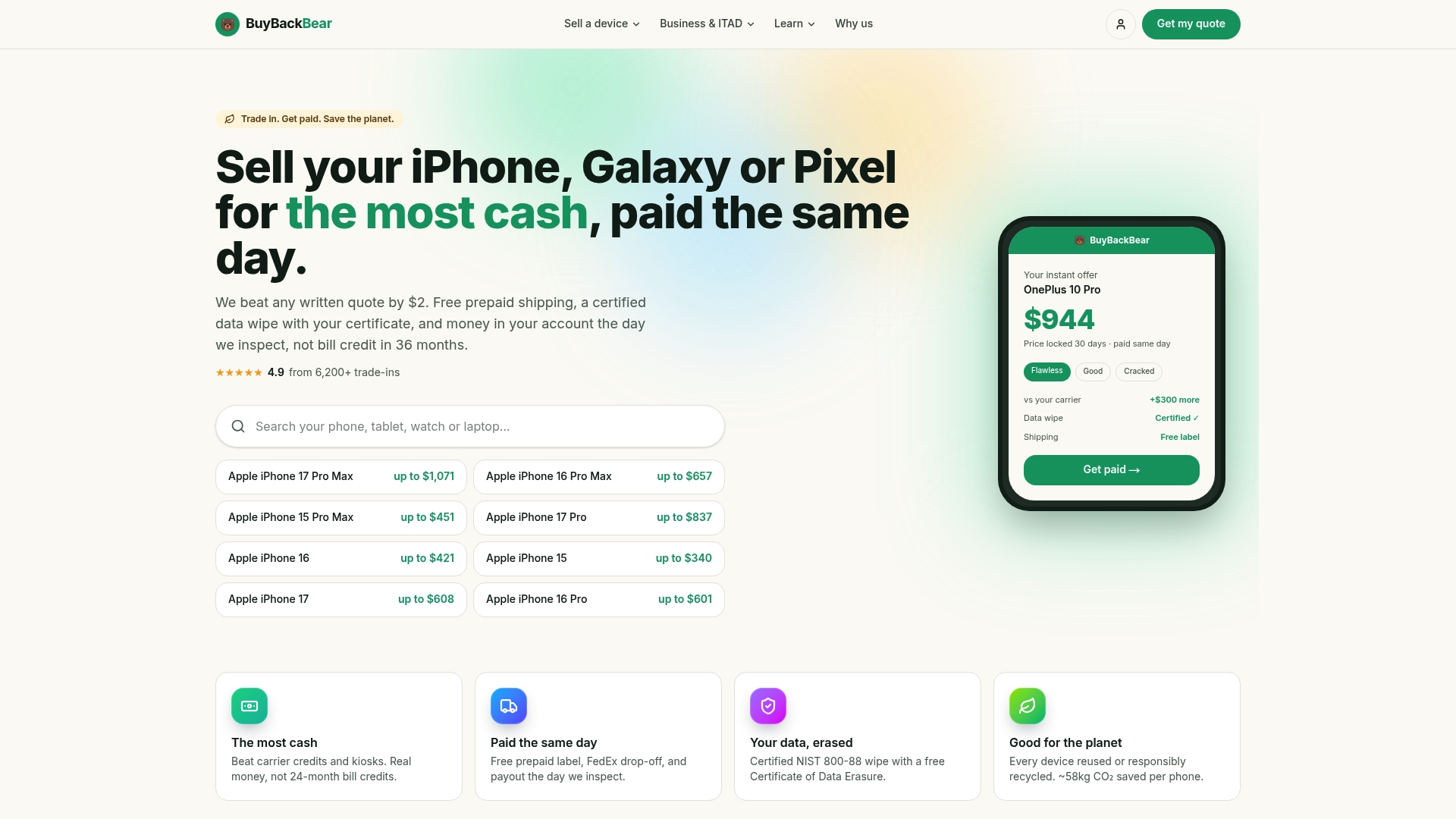
Get an instant quote on your device and see what you’d actually take home compared to a marketplace listing. For bulk business devices, Buybackbear’s business buyback program handles the entire process in one transaction.
Useful sources and further reading
- The Best Way to Sell Used Electronics. Consumer Reports: Practical guidance on when buyback services, local sales, and marketplaces each make sense; includes sample price comparisons for common devices.
- Where to Sell Used Electronics: Best Platforms 2026: Covers fee structures, payout timelines, and the true-net framework for comparing marketplace and buyback offers.
- Is a Phone Buyback Service the Best Way to Sell Your Phone?: Examines the convenience and speed advantages of buyback services and how niche platforms serve category-specific sellers.
- Sell a Used Phone: Marketplace vs Buyback vs Trade-In: Detailed breakdown of the true-net calculation methodology and how time cost affects the comparison between marketplace listings and instant-quote services.
- Certified Data Destruction (NIST 800-88). Buybackbear: Explains the NIST 800-88 standard and what certified data destruction means for business sellers disposing of company devices.
Platform fee schedules change frequently. Before listing on any marketplace, check its current seller help center for the most up-to-date rates and policies.
Recommended
Ready to sell?
Get an instant quote, free prepaid shipping, and fast cash that beats carrier trade-in credit.
Selling your device here, at a glance
Get my instant quote →- Instant quote in about 30 seconds, price locked while you decide
- Cash by PayPal, Zelle, Venmo or check after inspection, no fees
- Free prepaid label both ways, free return shipping if you decline
- We beat any competitor's written quote by $2
- Cracked screen, broken or won't power on? Still worth real money
- Certified NIST 800-88 data wipe with an emailed certificate
- Trade-in value paid in cash, not a 24-36 month carrier bill credit
- Every model priced: unlocked or carrier-locked, any storage size