Sell a Financed Phone Safely: 5 Steps to Cash Without Paying It Off
August 31, 2026
You can sell a financed phone, but the financing agreement stays attached to your name, not the device, until the balance hits zero. That means you’re on the hook for every remaining payment even after the phone leaves your hands. The single safest move is paying off the balance before you list it. Short of that, check your payoff amount and the phone’s IMEI status before you do anything else.
TL;DR:
- Paying off the remaining balance before resale ensures the device is unlocked and avoids carrier re-flagging or blacklisting issues.
- Using a reputable buyback service provides same-day cash, a certified data wipe, and an inspection that protects against IMEI blacklisting and unpaid debt risks.
- Transfer of ownership or account assumption may be possible with certain carriers, but most still require official payoff and unlocking processes.
- Selling without disclosing the remaining balance exposes you to collection calls, credit damage, and potential fraud liability if the buyer discovers the debt later.
- Checking IMEI status and confirming payoff in writing are crucial steps to avoid losing the device or facing legal complications after sale.
Table of Contents
- Is Financed Phone Resale Legal? Your Safest Options Ranked
- What Your Financing Contract Actually Says About Resale
- Carrier Rules That Determine Whether You Can Even Unlock the Phone
- What Happens if You Sell Before Clearing the Balance
- The Safe Selling Checklist: Five Steps Before You List
- Which Route Actually Fits Your Situation
- Why BuyBackBear’s Process Protects Sellers With Financed Devices
- The Part Nobody Tells You About Financed Phone Resale
- Sell Your Financed Phone for Cash Without the Guesswork
- Sources
- FAQ
Is Financed Phone Resale Legal? Your Safest Options Ranked
Selling a phone you’re still paying off is legal in the sense that no federal law bans the transaction itself. What matters is what happens to your remaining balance and whether the carrier can flag the device afterward. Some routes protect you completely. Others leave you exposed if the buyer stops caring about your account the moment the deal closes.
Here’s how the main options stack up, ranked from safest to riskiest:
- Pay off the balance and unlock the phone first. This erases the carrier’s financial claim on the device entirely, and you keep full resale value since buyers pay more for unlocked, debt-free phones.
- Use a carrier trade-in or switch-buyout offer. The carrier handles the payoff internally, though reimbursement often arrives as bill credit over months rather than cash in hand.
- Sell through a vetted buyback service like BuyBackBear. You get same-day cash after inspection, and the service can often work with financed devices depending on payoff status and unlock eligibility.
- Transfer the line or account where the carrier allows it. Less common, but some carriers let a buyer assume the remaining installment plan directly.
- Sell privately with full disclosure of the remaining balance. This carries the highest risk because enforcement of financing obligations still falls on you, not the buyer, if anything goes wrong.
Notice the pattern: the closer you get to zero balance before the sale, the less that transaction can come back to bite you. A private sale without disclosure sits at the bottom of this list for a reason. If the account defaults after the sale, you’re the one collections calls, not the person who bought the phone from you on Facebook Marketplace.
What Your Financing Contract Actually Says About Resale
Not all “financed” phones work the same way legally, and the fine print matters more than most sellers realize. Carriers use three different structures: outright purchase (you own it immediately, no restrictions), installment sale (you own it but owe a balance), and lease (the carrier owns it until you exercise a purchase option). Each one treats resale differently.
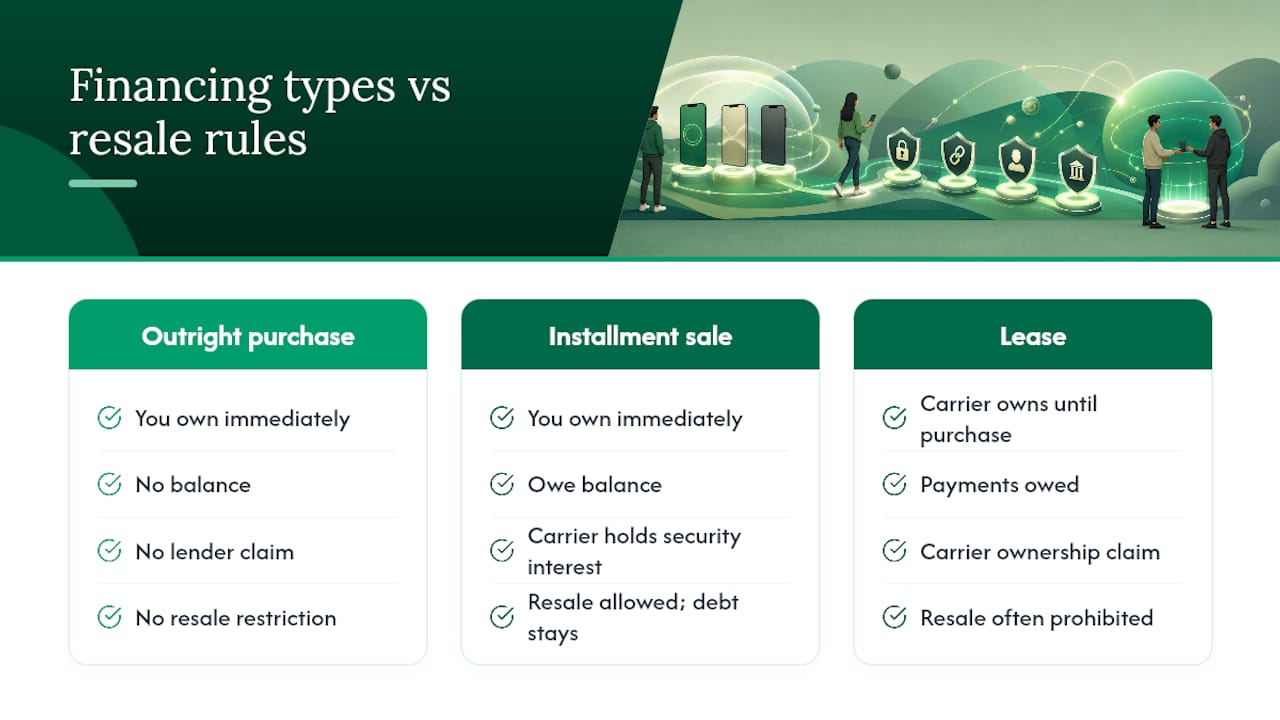
Installment plans are the most common setup, and they typically function through what’s called a purchase-money security interest. The carrier or lender retains a legal claim on the device as collateral until the loan is paid off, similar to how a bank holds a lien on a financed car. AT&T’s device installment plan terms spell this out explicitly: the balance follows the account holder, and the security interest stays attached to the hardware until payment completes.
Here’s the part sellers miss: handing someone your phone doesn’t hand them your debt. Possession and financial obligation are two separate things under these agreements. You can physically transfer a device in five minutes at a coffee shop. You cannot transfer the legal responsibility to keep making payments, because the contract was signed by you, not the phone.
Lease agreements go a step further and often prohibit resale outright until you exercise the purchase option at the end of the term. A federal appellate case, Sprint Nextel Corporation v. Wireless Buybacks Holdings, examined exactly this kind of dispute, where a carrier challenged a resale business over devices still under active financing or lease terms. The opinion illustrates something worth understanding: courts have found “no resale” clauses can be ambiguous depending on how the contract is written, and enforceability tends to be fact-specific rather than a blanket rule. In practice, carriers rarely chase individual sellers through litigation. They rely on a blunter tool instead, which the next section covers.
Carrier Rules That Determine Whether You Can Even Unlock the Phone
Before you can sell a financed phone with a clean conscience, you need to clear your carrier’s specific hurdles. These vary by provider, but the underlying logic is consistent: carriers want their money back before they let go of any use over the device.
Start with unlock eligibility. Most carriers require the device to be fully paid off, or at minimum current on payments and active for a set period, before they’ll unlock it. Even after you satisfy those conditions, the unlock itself often doesn’t happen instantly.
- Expect a processing delay of anywhere from a few days to a couple of weeks after payoff before the unlock actually clears.
- Switch-buyout offers, where a new carrier pays off your old device to win your business, typically reimburse you through bill credits or prepaid cards rather than immediate cash.
- Those buyout reimbursements usually come with plan commitments attached, so read the fine print on how long you need to stay before the credit fully vests.
- Some carriers keep a device tied to your account even after the balance clears, particularly if you haven’t formally requested the unlock or closed out the installment plan in their system.
The most overlooked step is simply reading your own installment agreement. It’s usually buried in your carrier’s online account portal under billing or device details, and it will tell you exactly when your security interest clears and what documentation you need to prove payoff. Don’t assume a a competitive amount balance automatically means you’re clear to sell. Confirm the account status directly, in writing if possible.
What Happens if You Sell Before Clearing the Balance
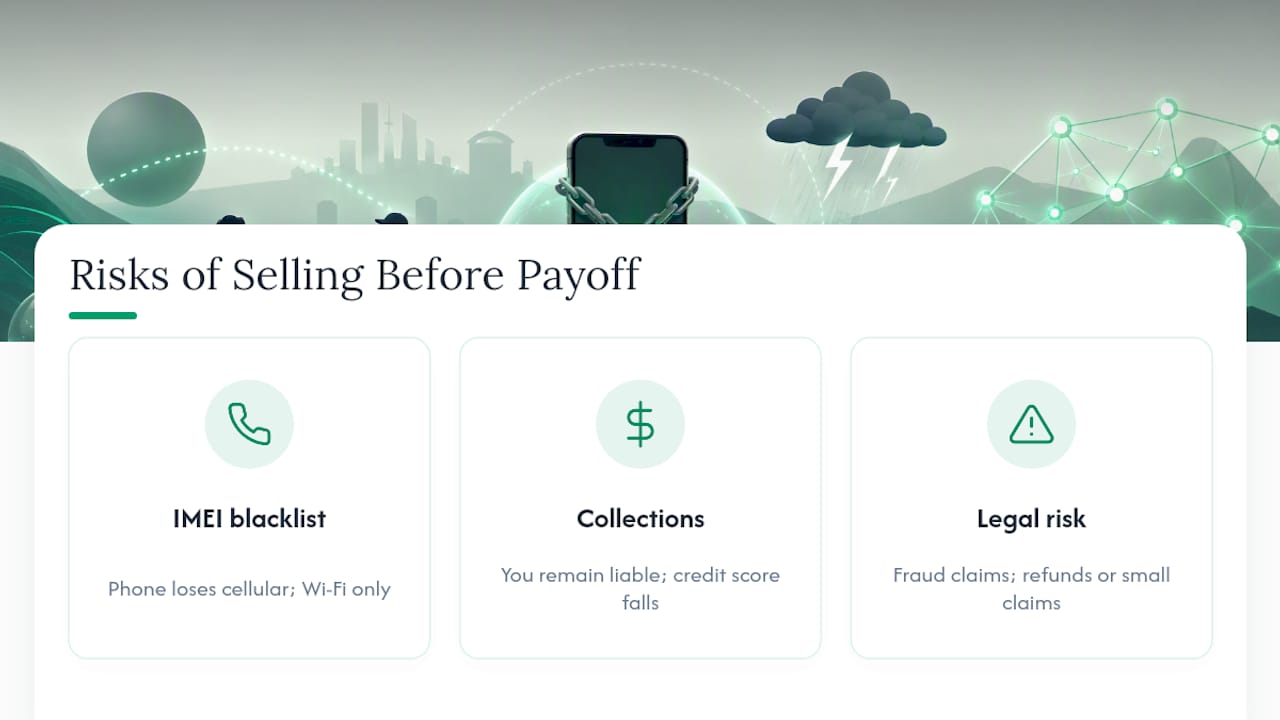
The most immediate risk is IMEI blacklisting. Every phone has a unique IMEI number, and when an account tied to a financed device falls into default, carriers can report that IMEI to shared blacklist databases. Once that happens, the phone becomes largely useless for cellular service on any major network, turning what your buyer thought was a working smartphone into an expensive paperweight that only connects to Wi-Fi.
Pro Tip: Run an IMEI check before you list any phone, financed or not, and save a screenshot of the clean result. If a dispute comes up later, that screenshot is your proof the device was clear at the time of sale.
Collections is the second risk, and it’s the one that actually hits your wallet. If you sell the phone and then stop paying, the carrier doesn’t care that someone else has the hardware. They come after the account holder, meaning you. Missed payments get reported to credit bureaus, and a delinquent installment account can knock down your credit score the same way any other defaulted loan would.
There’s also civil exposure if you misrepresent the payoff status to a buyer. Telling someone a phone is “paid off” when it isn’t can expose you to fraud claims, and buyers have real remedies available, including refund demands, small-claims court filings, and complaints through consumer protection channels. Roughly a majority of resale disputes tracked in legal guidance on financed devices trace back to sellers who didn’t disclose an outstanding balance at the time of sale.
The Safe Selling Checklist: Five Steps Before You List
Selling a financed phone doesn’t have to be a gamble if you work through it in order. Skipping steps is where sellers get burned.
- Pull your exact payoff amount from your carrier account and get written confirmation. Don’t rely on a phone rep’s verbal quote. Screenshot or download the payoff statement directly from your account dashboard so you have a record with a date on it.
- Check the IMEI and blacklist status before doing anything else. A free IMEI checker tells you in seconds whether the device is clean, and you should keep that result on file.
- Decide your route and confirm the timeline. Paying off and unlocking gives you the highest resale value but takes the longest. A carrier trade-in is convenient but slower to pay out. A reputable buyback service can move faster if you’re working with a tight deadline.
- Document everything and disclose it to your buyer. If any balance remains at the time of sale, put it in writing. A simple bill of sale that states the payoff status protects both sides and gives the buyer something concrete if a dispute ever comes up. If you’re selling privately, it’s also worth reviewing basic vendor fraud warning signs so you’re not the one getting scammed by a fake payment or chargeback scheme.
- Wipe the device to NIST 800-88 standards, or use a service that provides a certificate. Factory reset alone isn’t the same as a certified wipe. If you’re not confident doing this yourself, a pre-shipping checklist walks through exactly what to clear and confirm before the phone leaves your hands.
Follow these five steps in order and you eliminate almost every risk this article covers. Skip step one or two and you’re selling blind.
Which Route Actually Fits Your Situation
The right choice depends on how much cash you need right now versus how much you’re willing to wait, and how comfortable you are with a paper trail.
- A carrier trade-in makes sense if you’re already staying with the same provider and don’t mind waiting for bill credit instead of cash in your bank account.
- A switch-buyout works well if you were planning to change carriers anyway and can meet the new plan’s activation requirements without friction.
- BuyBackBear fits when you need real cash quickly and want a transparent inspection process rather than a multi-month credit drip. Depending on your payoff and unlock status, it’s often the fastest way to convert a financed phone into usable money without waiting on a new phone plan’s fine print.
- A private sale should only happen if you’ve either fully paid off the device or you’re disclosing the exact remaining balance to the buyer in writing, no exceptions.
Why BuyBackBear’s Process Protects Sellers With Financed Devices
Paying off a device before selling remains the cleanest path, full stop. But not everyone can wait weeks for a payoff to clear or an unlock to process, and that’s where a transparent buyback process earns its keep.
Selling a financed phone the right way isn’t about hiding the balance. It’s about proving, on paper, that the device and the data on it are clean before money changes hands. That’s the gap most private sales fail to close, and it’s exactly what a documented inspection and certified wipe are built to fix.
BuyBackBear runs every device through an instant online quote, free prepaid shipping, and a physical inspection before confirming the final offer, with same-day payment once that inspection wraps up. Every phone also gets wiped to the NIST 800-88 standard with a free Certificate of Data Erasure, which matters enormously if you’re worried about lingering account access on a device that was tied to your name. For sellers who can’t or won’t wait on a payoff cycle, that combination of speed and documentation beats gambling on a private buyer.
The Part Nobody Tells You About Financed Phone Resale
Most advice on this topic treats “can I sell it” as a yes-or-no legal question when it’s really a risk-management question. You can almost always sell a financed phone. Whether you should sell it that way is a different matter entirely.
Conventional advice tends to stop at “pay it off first,” which is correct but incomplete. It ignores the reality that plenty of sellers need cash faster than a payoff-and-unlock cycle allows, and it leaves them with no vetted alternative besides a risky private sale. The court record in Sprint v. Wireless Buybacks backs this up: even carriers can’t always predict how a resale dispute will resolve, because contract language and enforcement vary case by case.
What I’d prioritize first isn’t the sale itself. It’s the documentation. Get your payoff number, check your IMEI, and if you can’t clear the balance in time, use a service that puts the inspection and data wipe on paper instead of a handshake. That paper trail is what separates a clean transaction from a phone call you don’t want to get in three months.
, Andy
Sell Your Financed Phone for Cash Without the Guesswork
If you’ve made it this far, you already know paying off your balance first is the gold standard. But when that’s not realistic on your timeline, BuyBackBear gives you a documented, same-day alternative instead of a risky private listing. You get an instant online quote, a free prepaid shipping label, a real inspection against that quote, and payment the same day the phone checks out, all with a NIST 800-88 certified wipe so nothing tied to your old account lingers on the device.
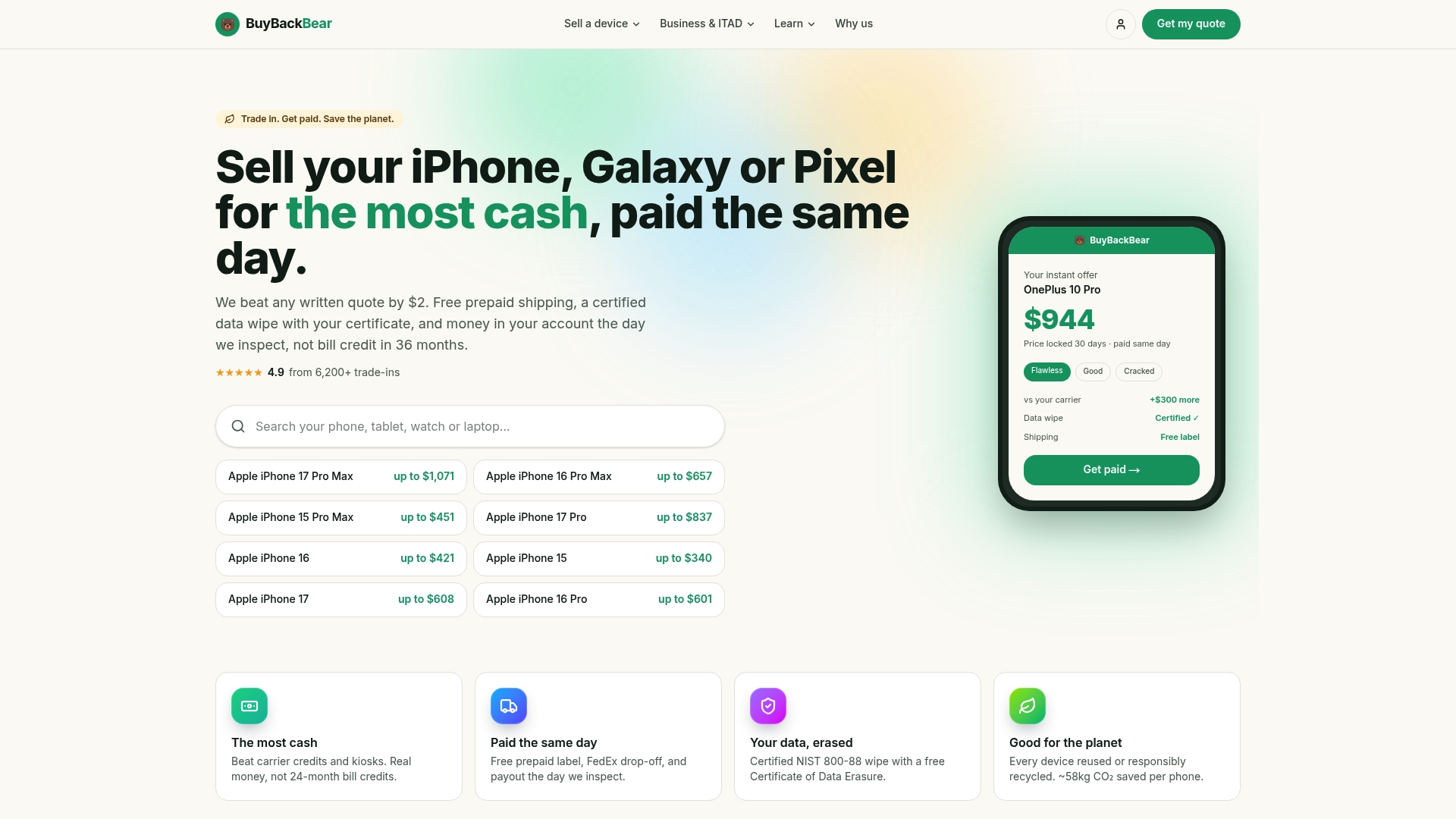
That last part matters specifically for financed phones. A private buyer has no way to verify your data was wiped properly or that your payoff claim is accurate. BuyBackBear’s inspection and certificate close that gap for both sides. If you’re ready to see what your device is worth right now, get an instant quote and compare it against what your carrier’s trade-in program would actually pay out before you decide which route to take.
Sources
Before you list a financed phone anywhere, verify these directly rather than trusting secondhand summaries:
- Sprint Nextel Corporation v. Wireless Buybacks Holdings. U.S. Court of Appeals, 4th Circuit
- AT&T device installment plan terms (example)
FAQ
Is it illegal to sell a financed phone?
No federal law makes it illegal, but you remain legally responsible for the remaining balance after the sale, and misrepresenting the payoff status to a buyer can expose you to fraud claims.
Can you sell financed phones?
Yes, you can sell a financed phone, though the safest approach is paying off the remaining balance first so the carrier’s security interest clears and the device can be unlocked.
Can I return my financed phone?
Return policies depend on your carrier’s specific terms and the timing of your purchase, so check your installment agreement or contact your carrier directly rather than assuming a standard return window applies.
What happens if you sell a financed phone to ecoATM?
Kiosk-style buyback machines typically run an IMEI check during the transaction, and a device still owing a balance or flagged in a blacklist database can be rejected or valued far lower than an unlocked, paid-off phone. A service with a full inspection process, like BuyBackBear, gives you more visibility into that outcome before you ship anything.
Recommended
Ready to sell?
Get an instant quote, free prepaid shipping, and fast cash that beats carrier trade-in credit.
Selling your device here, at a glance
Get my instant quote →- Instant quote in about 30 seconds, price locked while you decide
- Cash by PayPal, Zelle, Venmo or check after inspection, no fees
- Free prepaid label both ways, free return shipping if you decline
- We beat any competitor's written quote by $2
- Cracked screen, broken or won't power on? Still worth real money
- Certified NIST 800-88 data wipe with an emailed certificate
- Trade-in value paid in cash, not a 24-36 month carrier bill credit
- Every model priced: unlocked or carrier-locked, any storage size