NIST 800-88 Laptop Selling Checklist: Secure Erase & Certificate
October 4, 2026

Before you hand over a laptop, back up your data, unlink accounts and Find My or Activation Lock, securely erase the storage using the method your operating system recommends, check and clean the hardware, then reinstall the OS and verify the wipe. The NIST SP 800-88 Rev. 2 guidelines and the official reset tools from Microsoft, Apple and Google back every step here, and a certificate of data erasure gives you proof it was done right.
TL;DR:
- Use NIST guidelines and official tools to securely erase data, preferably with a purge-level method like cryptographic erase for SSDs.
- Deauthorize all accounts, including Apple, Google, and Microsoft, and remove device management profiles before wiping.
- Verify the hardware is clean, check battery health, test ports, and document any damage with photographs to maximize resale value.
- Reinstall the operating system or leave the device at the setup screen, confirming no accounts or activation locks remain.
- Consider certified data wiping services and request a certificate of erasure for added proof and peace of mind.
Table of Contents
- Your pre-sale checklist at a glance
- Back up your data and confirm you can restore it
- Deauthorize accounts and move your two-factor codes
- Secure erase: the right method for each operating system
- Check the hardware and clean it before you sell
- Reinstall the OS and verify the laptop is actually clean
- Getting a fair price: photos, specs and where to list it
- Donate, recycle or responsibly dispose of what you can’t sell
- Why I push sellers toward a documented wipe
- A convenient certified option worth knowing about
- FAQ
- Sources
Your pre-sale checklist at a glance
Work through these in order. Most sellers finish in a reasonable amount of time, not counting the time a full backup or cloud upload takes in the background.
- Back up everything you need and confirm you can restore it (30 to 90 minutes, longer with a slow upload).
- Sign out of and remove the laptop from your Apple ID, Google account, Microsoft account, and any work or school profile.
- Move two-factor authentication to a new device and save your backup codes somewhere safe.
- Run the OS-specific secure erase: Reset this PC on Windows, Erase Assistant on Mac, Powerwash on a Chromebook, or a secure-erase command on Linux.
- Confirm to erase worked: no accounts, no personal files, no Activation Lock, no BitLocker prompt.
- Clean the laptop, check the battery and ports, and photograph any damage.
- Reinstall the OS or stop at the welcome screen, then package the laptop with its charger for sale or shipping.
Ask for a written certificate of erasure if you are selling in bulk, handing off a work laptop, or simply want a paper trail. It costs you nothing to request one and it protects you if a buyer later claims the drive wasn’t clean.
Back up your data and confirm you can restore it
Skipping backup is the single most common regret sellers report after a laptop is gone. The FTC’s guidance on clearing personal information warns that devices often hold personal data in places people forget to check, including browser autofill, cached app data and local mail archives that cloud sync doesn’t always capture.
Pick a method based on how much you’re moving:
- An external drive gives you a fast, offline copy, ideal for large photo or video libraries.
- Time Machine (Mac) or File History (Windows) automates the process but needs enough free space on the backup drive.
- Cloud sync through iCloud, OneDrive or Google Drive is convenient but can miss app-specific data that lives only on the device.
Before you erase anything, restore a few files from your backup to confirm it actually worked. Then export your password manager vault, save any software license keys, and check for documents stored only in local folders rather than synced ones.
Pro Tip: Move your two-factor authenticator app to your new device and print or save your backup codes before you touch the old laptop. Losing authenticator access along with the laptop can lock you out of your own accounts.
Deauthorize accounts and move your two-factor codes
A laptop that’s still linked to your accounts isn’t ready to sell, no matter how clean the drive looks. The next owner needs a device free of Activation Lock, remote management profiles and saved logins, or they may not be able to use it at all.
- Remove the Mac from your Apple ID and Find My before erasing, following Apple’s own pre-sale guidance, since a factory reset alone does not clear Activation Lock.
- Sign out of your Google account and remove the device from your account’s device list.
- Remove the laptop from your Microsoft account and unlink OneDrive.
- Sign out of any work or school account separately. Managed enrollment can block the next owner from setting up the laptop even after a full reset.
- Clear saved passwords and autofill data from every browser profile, not just the default one.
Work laptops often need IT to deprovision the device from company management before a personal reset will stick.
Secure erase: the right method for each operating system
This is where NIST SP 800-88 Rev. 2 actually matters, and it’s worth understanding the three categories it defines: clear (a standard overwrite or reset, fine for low-risk data), purge (methods that resist advanced recovery, recommended for sensitive data) and destroy (physical destruction, used when media can’t be reused at all). For a personal laptop you’re selling, purge-level sanitization is the target, and the right tool depends on your drive type and OS.
Windows: Go to Settings, then Recovery, then Reset this PC, and choose Remove everything. Select the Clean data option if offered, since Microsoft’s reset documentation notes this writes over the drive more thoroughly than a quick reset. If BitLocker is on, make sure you have the recovery key saved somewhere other than the laptop itself, in case you need to verify the reset completed. We’ve written a longer walkthrough on wiping a Windows laptop before selling if you want more detail on each screen.
macOS: Use Erase All Content and Settings, sometimes called Erase Assistant, found under System Settings on Macs with Apple silicon or a T2 chip. Apple’s support page for erasing a Mac walks through this and stresses signing out of Apple ID and Find My first. Our own guide to erasing a MacBook before selling covers the Activation Lock removal step in more depth, since skipping it is the most common reason a sale falls through.
ChromeOS: Powerwash, found in Settings under Advanced, then Reset settings, clears local data on a Chromebook. Google’s support documentation notes that managed Chromebooks, the kind issued by a school or employer, may need an administrator to deprovision the device first, or the next owner will hit a forced re-enrollment screen that locks them out.
Linux: Secure-erase utilities vary by distribution, but most let you run a wipe command against the drive directly, and if the disk uses LUKS encryption, destroying the encryption header through cryptsetup can make the data unrecoverable almost instantly.
On SSDs specifically, a single pass of the right tool beats repeated overwriting. NIST SP 800-88 Rev. 2 recognizes cryptographic erase, which discards the encryption key rather than rewriting every sector, as an effective sanitization method for modern solid-state drives, and notes that older overwrite-based techniques built for spinning hard drives can be unreliable on SSD controllers. If your laptop’s drive was encrypted the whole time, a correctly executed cryptographic erase is often the fastest and most dependable option. Our breakdown of NIST-aligned data wipe guidance goes further into which method fits which drive type.

Check the hardware and clean it before you sell
A laptop that works perfectly but looks neglected sells for less than one that’s merely clean. Buyers read condition as a signal of how the machine was treated.
- Check battery health through the OS battery report and note the cycle count or health percentage for your listing.
- Test every port, the keyboard, trackpad and webcam, and listen for fan noise under load.
- Wipe the screen and keyboard with a microfiber cloth and a little isopropyl alcohol, never anything abrasive or soaked.
- Pack the original charger, any dongles and the box if you kept it.
Photograph scratches, dents or a cracked hinge honestly rather than cropping them out. A buyer who discovers a hidden flaw after paying is far more likely to file a dispute than one who saw it upfront.
Pro Tip: List the exact battery cycle count instead of a vague “good condition.” Specific numbers build trust faster than adjectives do.
Reinstall the OS and verify the laptop is actually clean
Once the wipe is done, decide whether to reinstall the OS fully or leave the laptop sitting at the setup screen. Either is fine for most buyers, but stop before signing in to any account yourself.
- Reinstall Windows, macOS or ChromeOS fresh, or simply let the reset process leave the laptop at its out-of-box welcome screen.
- Boot the laptop once more and confirm there’s no Apple ID, Google account, Microsoft account or saved Wi-Fi network still attached.
- Remove any firmware or BIOS password you set, since a locked firmware can make the laptop unusable for the buyer.
- Check that the drive shows its full expected capacity, confirming no hidden partition or recovery data survived.
- If you want extra assurance for a business sale or bulk lot, request or generate a certificate of erasure to hand over with the device.
A buyer who receives proof of a clean wipe alongside the laptop is far less likely to come back with questions later.
Getting a fair price: photos, specs and where to list it
Specs sell laptops, but accurate ones do it faster. List the processor, RAM, storage size and type, screen resolution, and battery health up front, and mention the exact defects you photographed earlier rather than letting a buyer find them during inspection.
- Take photos in natural light from multiple angles, including the ports, the underside and any damage.
- Include a photo of the laptop powered on to prove it boots and show the screen is free of dead pixels.
- A private sale through a local marketplace can net the highest price but takes longer and carries more risk of a canceled deal.
- A general resale marketplace moves faster and handles payment protection, usually for a lower final payout.
- A buyback or trade-in service trades some top-dollar potential for speed, a fixed offer and no listing effort at all.
Choose based on how much your time is worth against the extra amount a patient private sale might bring.
Donate, recycle or responsibly dispose of what you can’t sell
If the laptop is too old or damaged to sell, donation or certified recycling is still better than a drawer or a landfill. The EPA’s guidance on electronics donation and recycling points sellers toward refurbishers and certified recyclers rather than general disposal, and reuse is generally the better outcome when the hardware still works.
- Look for recyclers certified under R2 or e-Stewards standards before handing off a device.
- Ask what sanitization method the recycler uses and whether they’ll provide documentation.
- For bulk business equipment, request a written record matching the sanitization outcome, whether that’s clear, purge or destroy, to what the hardware actually needed.
Our guide on recycling electronics responsibly covers what documentation to ask for when you can’t verify a recycler’s claims yourself.
Why I push sellers toward a documented wipe
Working around laptop buybacks for years taught me that the sellers who regret the sale almost always skipped verification, not the wipe itself. A NIST-aligned certificate turns “I’m pretty sure I erased it” into something you can actually point to later. I’ll always recommend a certified buyer over a DIY wipe for a work laptop or anything holding financial records, and a careful DIY pass for everything else.
, Andy
A convenient certified option worth knowing about
If reinstalling an OS and chasing down Activation Lock sounds like more than you want to handle, there are services that offer an instant online quote, free prepaid shipping, and same-day payment by PayPal, Venmo, debit card or bank transfer, with no contract involved.
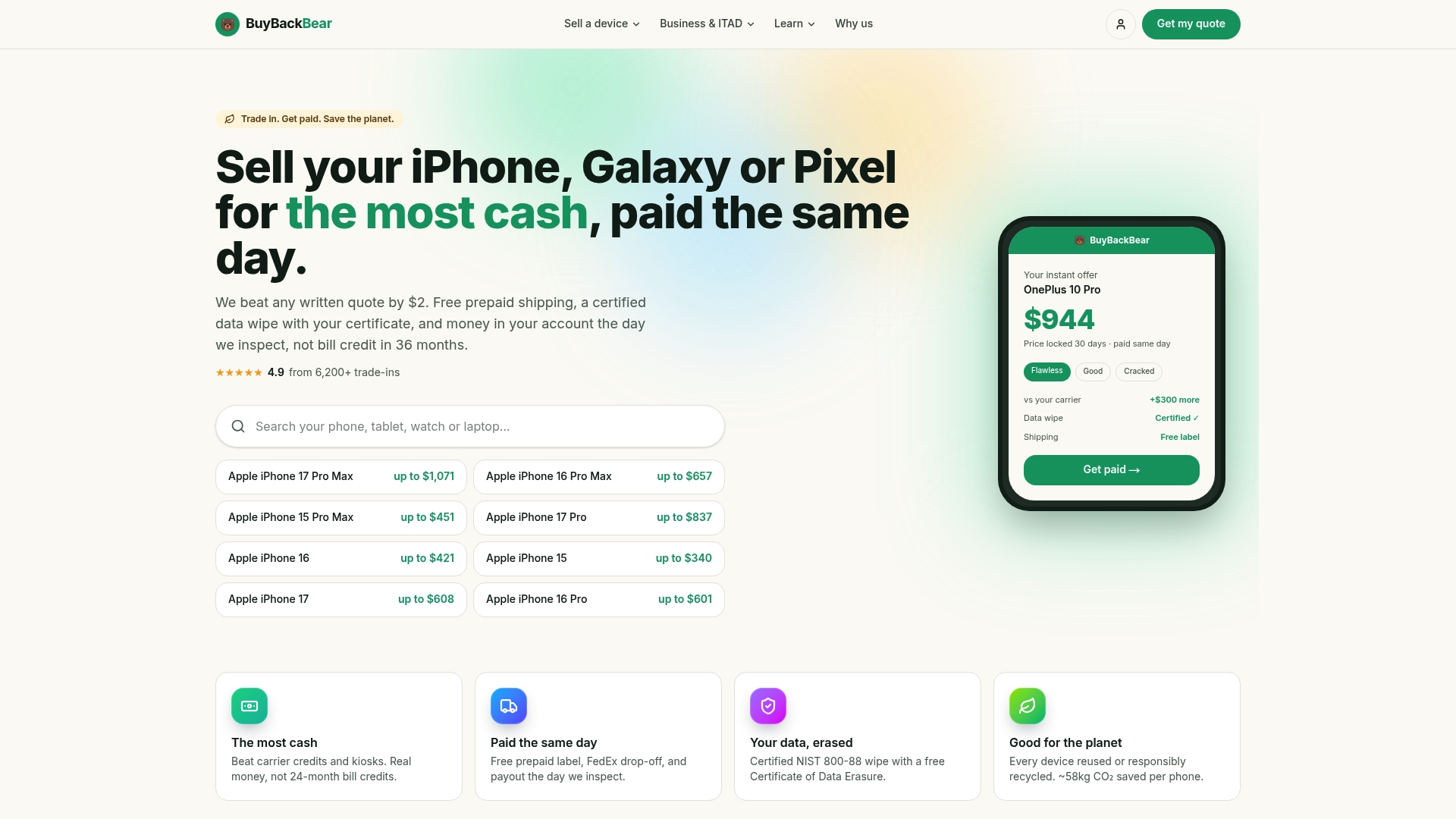
Laptops received by some services are wiped to the NIST 800-88 standard and come with a Certificate of Data Erasure, providing documentation a business disposal might require, without you having to do the wipe yourself. Some services track competitor buyback prices daily and may offer to beat any written quote by a competitive amount. If you’d rather hand off the data-wipe part and get paid soon, get an instant quote on your laptop and see what it’s worth.
FAQ
What do I need to do before I sell my laptop?
Back up your files and confirm the backup restores correctly, sign out of and remove the laptop from every linked account, then run the OS’s secure erase tool and check the hardware before listing it. Finish by reinstalling the OS or leaving it at the welcome screen, and package it with its original charger.
How do I completely wipe my laptop before selling it?
Use the method built for your operating system: Reset this PC with Remove everything on Windows, Erase Assistant on a Mac, Powerwash on a Chromebook, or a secure-erase command on Linux. For SSDs, a cryptographic erase is often more reliable than a traditional overwrite, a method NIST SP 800-88 Rev. 2 recognizes as effective for modern drives.
What should I check right after buying a used laptop?
Confirm the previous owner’s accounts are fully removed, including any Apple ID, Google account or Microsoft account, and that there’s no Activation Lock or firmware password blocking setup. Check battery health, test every port, and update the OS before you start using it day to day.
How can I sell a laptop quickly without listing it myself?
A buyback service skips the listing, photography and back-and-forth with buyers in exchange for a fixed, fast offer. Services like BuyBackBear’s sell page give an instant quote, ship with a prepaid label, and pay the same day the laptop is inspected.
Sources
- NIST Special Publication 800-88 Rev. 2, Guidelines for Media Sanitization
- FTC. How to remove your personal information when you get rid of your computer
- Microsoft Support. Reset your PC
- Google support. Wipe ChromeOS device data
Recommended
Ready to sell?
Get an instant quote, free prepaid shipping, and fast cash that beats carrier trade-in credit.
Selling your device here, at a glance
Get my instant quote →- Instant quote in about 30 seconds, price locked while you decide
- Cash by PayPal, Zelle, Venmo or check after inspection, no fees
- Free prepaid label both ways, free return shipping if you decline
- We beat any competitor's written quote by $2
- Cracked screen, broken or won't power on? Still worth real money
- Certified NIST 800-88 data wipe with an emailed certificate
- Trade-in value paid in cash, not a 24-36 month carrier bill credit
- Every model priced: unlocked or carrier-locked, any storage size