U.S. Missing Accessories Policy: Document the Gap or Sell the Device
October 11, 2026

Contact the seller the same day you notice the problem and tell them exactly what you want: the missing part, a full refund, or an exchange. Photograph the box, the packing slip, and everything you did receive before you throw anything away. If the seller stalls or refuses, you still have options: a credit card dispute, a complaint with a federal agency, or small claims court.
TL;DR:
- Return windows commonly run 30 to 90 days from delivery; without the original box or receipt, retailers may limit refunds to store credit.
- Even after the seller’s return window closes, a manufacturer warranty may cover the missing part, and direct shipment can avoid returning the whole device.
- File a credit card dispute within roughly two months of the statement date showing the charge if the seller has not resolved the issue.
- A replacement part may arrive within days, while a full return can take two to three weeks; get the remedy and delivery date in writing.
- Device buyback offers can fall when chargers, cables, or core parts are missing; generic cases and screen protectors usually do not affect valuation.
Table of Contents
- Step 1: How to contact the seller and what documentation to collect
- Step 2: Read and interpret the seller’s return policy and product warranty
- Step 3: Choosing replacement parts, exchange, or full return
- Step 4: Escalation paths: credit card disputes, payment processors, and government complaints
- Practical checklist and timeline for resolving a missing-parts order
- Manufacturer support: when to contact the maker for replacement parts or repairs
- What a missing accessories policy means in a device buyback program
- How missing accessories affect trade-in offers and valuations
- Common accessories considered essential: chargers, cables, and earbuds
- How BuyBackBear’s missing accessories policy works
- Steps to take if accessories are missing before shipping a device
- How missing accessories affect payment timing and amounts
- Why some people skip the dispute and sell or recycle instead
- Sell your device instead of waiting on a replacement part
- FAQ
- Sources
- Authoritative consumer resources and where to file complaints
Step 1: How to contact the seller and what documentation to collect
Before you write a single message, pull together your order number, the product’s SKU or serial number, and the seller’s support contact, whether that’s email, live chat, or a phone line. Sellers move faster when you hand them everything they need to look up the order in one message instead of three.
Photograph the shipping box from all sides, the packing slip, and the contents you actually received, laid out so the missing item is obvious. Do this before you move anything or throw out packaging. If a charger, cable, or manual is missing from a bundle, a clear photo showing the empty slot in the packaging insert is often more convincing than a written description.
- Write down the order number, SKU or serial number, and purchase date before contacting support.
- Photograph the package, packing slip, and contents from multiple angles the day you open it.
- State your desired remedy clearly: replacement part, full refund, or exchange, not just “there’s a problem.”
- Ask for a response by a specific date, such as five business days, and save every email, chat transcript, and call log.
A short message works best: state what you ordered, what arrived, what’s missing, and what you want done about it. According to Consumer Advice from the FTC, your first move should be contacting the seller directly, with your receipt and documentation ready, and a clearly stated resolution in mind rather than a vague complaint.
Pro Tip: Send your first message through a channel that creates a written record, like email or chat, even if you also call. A phone call is easy for a seller to forget; a timestamped email is not.
Step 2: Read and interpret the seller’s return policy and product warranty
Before you escalate anything, find out what the seller actually promised. Return policies usually live in three places: the receipt or order confirmation email, the seller’s website footer, and sometimes the product page itself. Retailers commonly set return windows somewhere in the 30 to 90 day range, and that window typically starts on the delivery date, not the order date, according to FTC guidance on gift returns.
What the policy says about packaging matters more than most buyers expect. If you no longer have the original box or proof of purchase, many retailers will only offer store credit, sometimes calculated at the lowest price the item has sold for recently rather than what you paid, per the same FTC consumer alert. That’s a meaningfully worse outcome than a cash refund, so it’s worth keeping packaging intact until you’re sure the order is complete and correct.
- Check your receipt or confirmation email first; many return windows are printed right there.
- Search the seller’s website for “returns” or “warranty” in the footer or help center.
- Expect reduced remedies, like store credit, if you lack the original packaging or receipt.
- Confirm whether the warranty is handled by the seller or routed through the manufacturer.
Separately, a manufacturer’s warranty may cover the missing or defective part even if the seller’s own return window has closed. Warranties can limit which repairs or replacements are covered, and manufacturers sometimes require you to contact them directly rather than the store where you bought the item, as the FTC’s warranty guidance explains.
Step 3: Choosing replacement parts, exchange, or full return
Once you know the policy, the next decision is practical: fix the gap, swap the whole item, or send it back. Weigh the cost and wait time of each path before you commit.
- Compare timelines first. A replacement charger or cable might ship in a few days, while a full return and reorder can take two to three weeks round trip.
- Request written confirmation for whatever remedy the seller agrees to, including the shipping method and an expected delivery date, before you do anything else.
- Evaluate store credit or partial refund offers on their own merits. A partial refund can make sense if the missing accessory is inexpensive and you can replace it cheaply elsewhere; store credit makes less sense if you don’t plan to shop with that seller again.
- Get the agreement in writing, even if it’s just a follow-up email summarizing what was discussed on a call, with the date and the name of whoever you spoke with.
If the seller offers a replacement part, ask whether it ships separately or requires you to send the whole unit back first. Manufacturers often prefer to ship a missing component directly rather than process a full return, which is usually the faster route for both sides, per FTC enforcement resources on refunds.
Step 4: Escalation paths: credit card disputes, payment processors, and government complaints
If the seller ignores you, drags its feet past a reasonable deadline, or flatly refuses to help, you have formal channels left. Each one does something different, so pick based on what you actually need: your money back, or a record that forces accountability.
A credit card dispute is usually the fastest route to recovering your money. Card networks generally expect you to report a billing problem, including never receiving an item or receiving one that’s materially different from what you ordered, within roughly two months of the statement date showing the charge, according to CFPB guidance on credit card refunds. Save your statement showing the charge date before you file.
Companies responding to consumer complaints typically send an initial response within about 15 days, though a final resolution can take up to 60 days in some cases. That gap matters when you’re deciding how long to wait before filing a dispute or a government complaint.
- File a credit card dispute with your issuer if a charge is on your statement and the seller hasn’t resolved the issue.
- Submit a complaint through the CFPB’s complaint portal if the seller or a financial product is involved; the Bureau forwards it to the company and requires a response.
- Keep in mind that the CFPB and FTC gather complaints to spot patterns and pursue broader enforcement rather than resolve your individual case on the spot.
- If you used a payment processor or escrow service, contact them directly. They typically ask for the same evidence: order confirmation, photos, and your communication log with the seller.
Selling merchandise that’s different from what was ordered, or that arrives defective, can count as an unfair or deceptive practice under FTC penalty-offense guidance, particularly when a seller does this as a pattern rather than a one-off mistake. A single complaint to the FTC won’t fix your order, but it adds to the record that can trigger a closer look at a seller who does this repeatedly.
Practical checklist and timeline for resolving a missing-parts order
Here’s a compact sequence to follow, with deadlines tied to the windows that actually matter.
- Day 1: Photograph the box, packing slip, and contents. Contact the seller the same day and state the remedy you want. Keep all original packaging.
- Within two weeks: If you haven’t heard back, follow up in writing with your original message attached. Check whether the manufacturer offers a faster part-replacement path. Start gathering evidence (receipts, photos, message threads) in case you need to dispute the charge.
- Before 60 days from the statement date: If the seller still hasn’t resolved it and a charge is sitting on your card statement, file a credit card dispute before that window closes, per CFPB guidance.
Pro Tip: Set calendar reminders the day you first contact a seller, one for a week out and one near the 60-day mark. Missing-parts disputes drag on mostly because people forget to follow up on time, not because sellers are impossible to reach.
Retailers are generally motivated to fix documented, well-presented complaints quickly, since unresolved ones often turn into chargebacks, negative reviews, or regulatory attention, according to FTC guidance on solving problems with a business. A calm, evidence-backed message tends to move faster than an angry one.
Manufacturer support: when to contact the maker for replacement parts or repairs
If the seller’s return window has closed or the seller is unresponsive, the manufacturer is often your next stop, especially for anything still under warranty. Locate the manufacturer’s support line or warranty page using the model and serial number printed on the device or its original box.
- Have the serial number, model number, and proof of purchase ready before you call or submit a support ticket.
- Expect one of three outcomes: the manufacturer ships a replacement part directly, schedules a repair, or asks you to send the full unit in for inspection.
- Ask specifically whether a missing accessory, like a charging cable or stylus, can be shipped alone rather than requiring you to send the whole device back.
- If a technician visit or in-person repair is involved, a resource like this Apple repair checklist for Mac users walks through what to prepare before a hardware appointment.
Manufacturers typically prefer shipping a part when the fix is simple and the unit itself works fine. Full-unit returns usually only come into play when the manufacturer needs to inspect the device itself, such as for a suspected manufacturing defect, or when the missing part is tied to the activation or security of the whole unit. If a company fails to resolve things after a direct request, the FTC recommends documenting your escalation in writing, including certified mail if needed, since a manufacturer may have the right to attempt a repair before offering a refund, per its warranty guidance.
What a missing accessories policy means in a device buyback program
A missing accessories policy is the set of rules a buyback or trade-in service uses to decide how a device’s offer changes when it arrives without its original charger, cable, box, or other included parts. Instead of a flat refund-or-replace decision like a retail return, buyback programs usually apply a price adjustment: the device is still purchased, but the quoted amount may be reduced to reflect what’s missing.
This matters because buyback and retail returns work on different logic. A retailer is reversing a sale; a buyback service is making a new purchase based on the condition and completeness of what shows up. That’s why the same missing charger that gets you a replacement part from a retailer might just mean a smaller payout from a buyback service, rather than a rejected shipment.

Most programs spell out which accessories count toward the quoted price and which don’t affect it at all. A missing screen protector or a generic case rarely changes anything, while a missing charging cable or original box sometimes does, depending on the device category and the program’s own terms. Reading that policy before you ship anything saves you from an unexpected deduction once your device has already been inspected.
How missing accessories affect trade-in offers and valuations
When a device shows up for trade-in without accessories the listing assumed were included, the inspection stage is where the adjustment happens. Most programs quote an initial offer based on the condition and model you describe, then confirm or revise that number once the device and its accessories are physically inspected.
A missing charger or cable is the most common reason for a small downward adjustment, since the buyer may need to source a replacement to resell the device at full value. A missing original box rarely moves the price much for phones or tablets, since most resale channels don’t require retail packaging, but it can matter more for higher-end laptops or collectible devices where packaging affects resale value.
The size of the adjustment depends on how essential the missing piece actually is to the device functioning or reselling well, not just whether something came in the original bundle. A reputable program will tell you upfront what it deducts for, rather than leaving you to find out after your device has already shipped.
Common accessories considered essential: chargers, cables, and earbuds
Not every accessory carries the same weight when a buyback or warranty program evaluates your device. A few tend to matter most across nearly every program:
- Chargers and charging cables, since a device without its charger often can’t be resold or tested without the buyer sourcing a replacement first.
- Earbuds and their charging case, for wearables like true wireless earbuds, since the case and buds are usually valued as a single unit rather than separately.
- Styluses and detachable keyboards, for tablets and 2-in-1 laptops where the accessory is part of the device’s core function, not an add-on.
- SIM trays and battery covers, for phones and some laptops, since a missing tray can affect whether the device is considered complete.
Generic accessories like third-party cases, screen protectors, or extra cables usually don’t affect a valuation at all, since they’re not part of what makes the device itself functional or resellable. Knowing which category your missing item falls into is the fastest way to predict whether it will actually change your offer.
How BuyBackBear’s missing accessories policy works
Our missing accessories policy is designed to be transparent rather than punitive: if a device arrives without its charger, cable, or another accessory expected based on the quote, the service tells you exactly how that affects the offer before finalizing payment, rather than silently adjusting the amount or rejecting the shipment outright. You’ll see the reason for any change when we confirm your final offer after inspection.
That’s a different approach from programs that either reject incomplete shipments outright or apply vague, unexplained deductions. We’d rather pay you a fair, adjusted amount for exactly what we received than send your device back and cost you another shipping cycle. If you’re unsure whether something you’re missing will matter, you can check before you ship by visiting our sell your device page or reading more about how our buyback guarantee works.
Steps to take if accessories are missing before shipping a device
If you already know an accessory is missing before you package your device for a return, a repair, or a trade-in, a little preparation now avoids a surprise later.
- Check the program’s or seller’s policy first to see which accessories actually affect the offer or the remedy, rather than assuming every missing item is a problem.
- Note what’s missing in your own records, including a photo, before you seal the box.
- If a buyback or trade-in program offers an instant quote, mention the missing item during that step rather than letting inspection be the first time it’s flagged.
- Keep any accessory you do have, even if you’re missing others. Partial accessories often still count toward a smaller deduction rather than the maximum one.
This kind of upfront disclosure tends to produce a smoother outcome than shipping first and hoping nobody notices, since most reputable programs confirm your final offer after inspection anyway.
How missing accessories affect payment timing and amounts
Missing accessories can change both how much you’re paid and how long it takes to get paid, depending on the program. Most buyback services quote an initial estimate, then confirm the final payout after physically inspecting the device, which is the point where a missing accessory typically gets factored in.
If the adjustment is straightforward, like a missing charger with a known, published deduction, payment usually still happens on the same inspection timeline as a complete device. If the missing item raises a question the program needs to resolve with you directly, that can add a short delay while they confirm the adjusted offer before releasing payment. Programs that publish their accessory deduction amounts upfront tend to avoid this delay entirely, since there’s nothing to clarify once inspection is done.
Why some people skip the dispute and sell or recycle instead
Not every missing-parts situation is worth the back-and-forth. If the missing accessory is inexpensive to replace on its own, or the seller’s return window has already closed, chasing a formal resolution can cost more time than it’s worth. For a device that’s otherwise working fine, selling or recycling it, missing part and all, is often the faster path.
Certified data erasure and responsible recycling matter here too. A device you’re letting go of, even an incomplete one, still holds personal data worth wiping properly before it leaves your hands. This isn’t a substitute for pursuing a refund when that’s the better fit for your situation, just a practical option worth weighing against the time a dispute takes.
, Andy
Sell your device instead of waiting on a replacement part
If chasing a missing charger or cable through a seller feels like more hassle than it’s worth, selling the device outright is a real alternative, not a consolation prize. The service provides an instant online quote, ships a free prepaid label, inspects the device, and confirms the offer before paying the same day, without waiting on a manufacturer’s part to ship or a retailer’s return window to process.
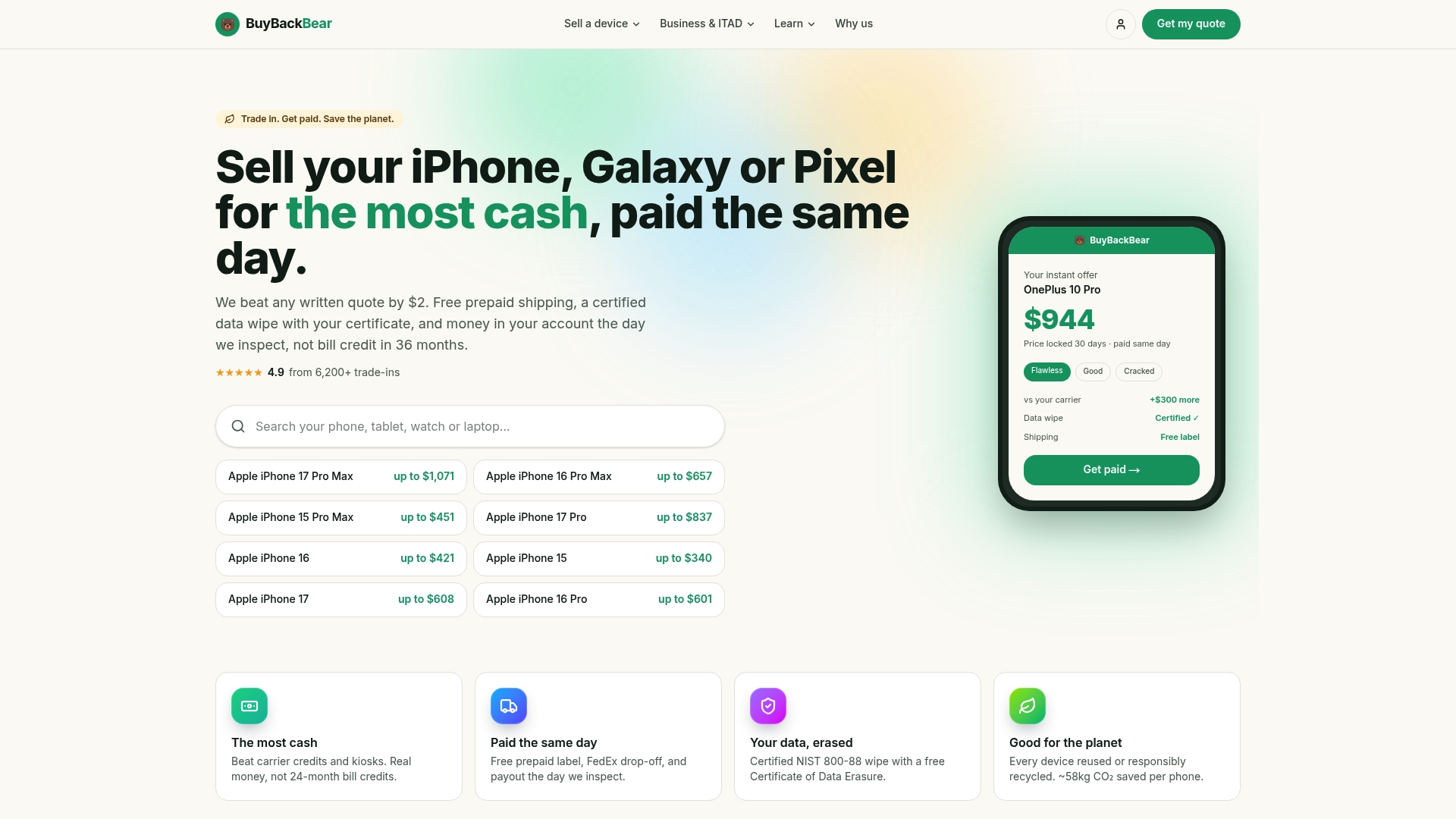
- Get an instant online quote and ship free with a prepaid label, no cost to you upfront.
- Every device gets a certified NIST 800-88 data wipe with a Certificate of Data Erasure, removing personal data before the device changes hands.
- Anything that can’t be resold is recycled responsibly rather than thrown away.
This route makes the most sense if you’d rather have cash in hand now than wait on a replacement part or argue with a seller over store credit. Head to our sell your device page to see what your device is worth today, missing accessory and all.
FAQ
What happens if you return something to Amazon with missing parts?
Amazon and most major retailers will typically ask you to contact support before returning an item with missing parts, since a visibly incomplete return can lead to a reduced refund or a request for additional information. Keep your photos and order details ready, since the retailer’s own return policy, not a universal rule, determines whether you get a full refund, a partial one, or store credit.
How long do you have to return a defective product?
Return windows for defective products commonly range from 30 to 90 days depending on the retailer, though a manufacturer’s warranty may extend coverage well beyond that window. Check your receipt or the seller’s website for the specific policy that applies to your purchase.
Can I keep an item if a company sends me the wrong one?
Generally, if a company ships you the wrong item, you should still contact them to resolve it rather than assume you can keep it, since the seller may ask for its return or offer a replacement. Document what you received and reach out promptly; a seller’s own policy, along with the specifics of your order, determines the correct resolution.
Can I take something back if I don’t have the box?
In many cases, yes, though you may receive store credit instead of a full refund if you lack the original packaging or receipt, since retailers often tie full cash refunds to proof of purchase. Checking the seller’s posted return policy before you attempt the return tells you exactly what to expect.
Authoritative consumer resources and where to file complaints
For official guidance beyond this article, the FTC’s consumer advice hub covers what to do about defective or misrepresented merchandise, while the CFPB’s complaint portal is where to submit a formal complaint involving a payment dispute or financial product tied to your purchase.
Recommended
Ready to sell?
Get an instant quote, free prepaid shipping, and fast cash that beats carrier trade-in credit.
Selling your device here, at a glance
Get my instant quote →- Instant quote in about 30 seconds, price locked while you decide
- Cash by PayPal, Zelle, Venmo or check after inspection, no fees
- Free prepaid label both ways, free return shipping if you decline
- We beat any competitor's written quote by $2
- Cracked screen, broken or won't power on? Still worth real money
- Certified NIST 800-88 data wipe with an emailed certificate
- Trade-in value paid in cash, not a 24-36 month carrier bill credit
- Every model priced: unlocked or carrier-locked, any storage size