U.S.: Repair or Sell First, Then Recycle Broken Earbuds Under EPA Rules
September 20, 2026
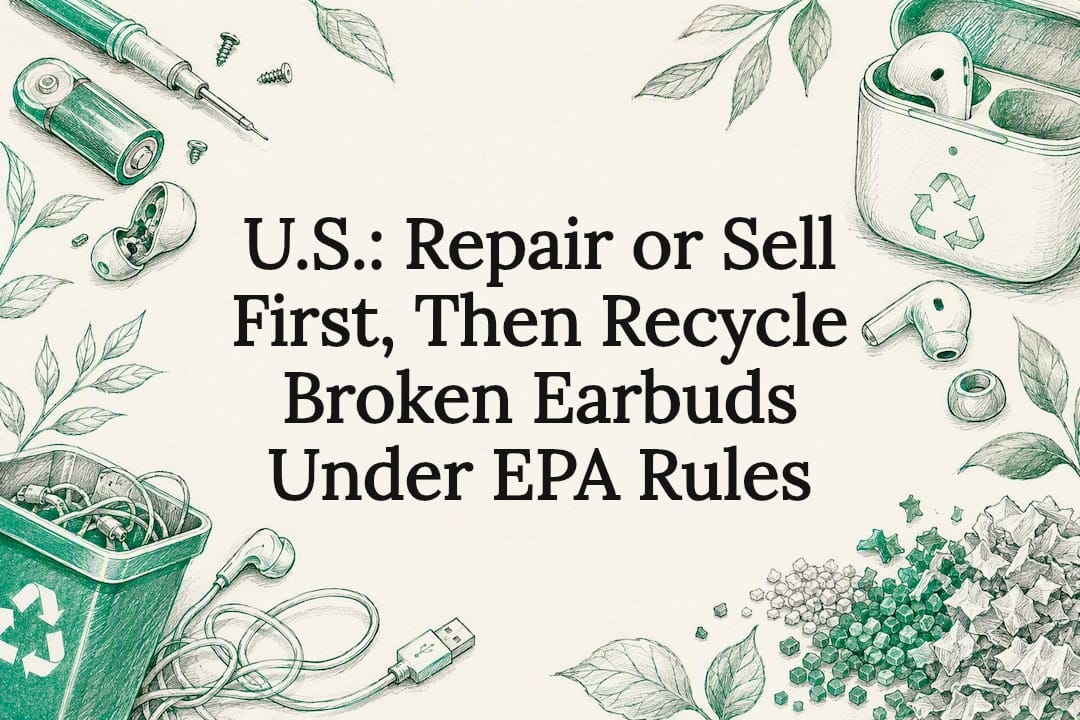
Take broken earbuds to a retailer take-back bin, a municipal e-waste drop-off, or a certified mail-in recycler, and keep the charging case with them at every step. Do not throw earbuds or their cases in household trash or curbside recycling. The lithium-ion cells inside can ignite when crushed or punctured in a garbage truck. If the earbuds still power on, selling or donating them beats recycling every time.
TL;DR:
- Recycle earbuds only through certified or official drop-off points, mail-in programs, or municipal e-waste centers to avoid fire hazards from lithium-ion batteries.
- Prepare earbuds by unpairing, resetting, taping battery terminals, and packing in separate, non-conductive bags before shipping or dropping them off.
- Repair or donate functional earbuds to extend their lifespan and reduce environmental impact before considering recycling.
- Certified recyclers adhere to strict standards ensuring proper material processing and safe handling of hazardous components, unlike unverified “recyclers.”
- Use locator tools like Earth911 or Call2Recycle to find nearby certified drop-off locations and verify item acceptance and specific drop-off procedures.
Table of Contents
- Where Can You Recycle Broken Earbuds?
- How Do You Prepare Earbuds for Recycling or Shipping?
- Why Do R2 and e-Stewards Certifications Matter?
- How Do You Find a Drop-Off Point or Mail-In Program?
- The Order I’d Actually Recommend
- Sell Broken Earbuds for Cash Instead of Just Recycling Them
- Sources
- FAQ
Where Can You Recycle Broken Earbuds?
Four legitimate paths exist for getting rid of broken earbuds responsibly, and which one makes sense depends on how much time you have and whether the case still holds a charge.
Retailer drop-off is usually the fastest option. Most big-box electronics stores and some mobile carriers accept small electronics and batteries at customer service counters, often at no charge. Some retailers cap how many items a household can drop off per visit, and a handful charge a small fee for items without a working trade-in value. Call ahead or check the store’s website before you make a special trip, as some retailers may have item limits or fees based on their policies.
Municipal e-waste centers and community collection events are the backbone of local recycling for most people. Counties and cities frequently run permanent drop-off centers or host seasonal collection days at libraries, fire stations, or parking lots. Bring the earbuds, the charging case, and any loose cables. Some municipalities lump earbuds under “household batteries,” others under general e-waste, so it helps to check the local program’s accepted-items list first.
Mail-in and manufacturer take-back programs solve the problem for anyone without a nearby drop-off point, which describes a lot of rural and suburban America. This route matters most when the nearest certified facility is an hour away and the local municipal program only runs twice a year.
Certified recycler collection covers everything from scheduled business pickups to consumer mail-in services run by R2 or e-Stewards certified operators. These programs guarantee the materials get processed to a documented standard rather than dumped or shipped overseas illegally.
Before any of that, ask whether the earbuds are actually dead. A cracked case or a dead battery doesn’t always mean the electronics inside are junk:
- If one earbud still connects and plays audio, it may be worth selling as a single unit or for parts.
- A case that won’t hold a charge sometimes just needs a battery swap at an independent repair shop.
- Functional but outdated earbuds can go to a local shelter, school, or secondhand electronics donation drive.
- Repair and donation keep a device in circulation longer, which does more for the environment than recycling ever can.
Recycling is the right call once none of those options apply. It’s the last resort, not the first move.
How Do You Prepare Earbuds for Recycling or Shipping?
Preparation is where most people get careless, and it’s also where fire risk actually starts; understanding vape waste environmental impact highlights why careful battery handling and packing are crucial for safety. A punctured or shorted lithium-ion cell can heat up fast inside a mail truck or a collection bin, so a few extra minutes of prep protects everyone who handles the package after you.
- Unpair the earbuds from your phone or laptop and, if the model supports it, run a factory reset to clear stored connection data.
- Remove any linked accounts, such as an app login tied to the case, especially on earbuds with onboard storage or voice assistant integration.
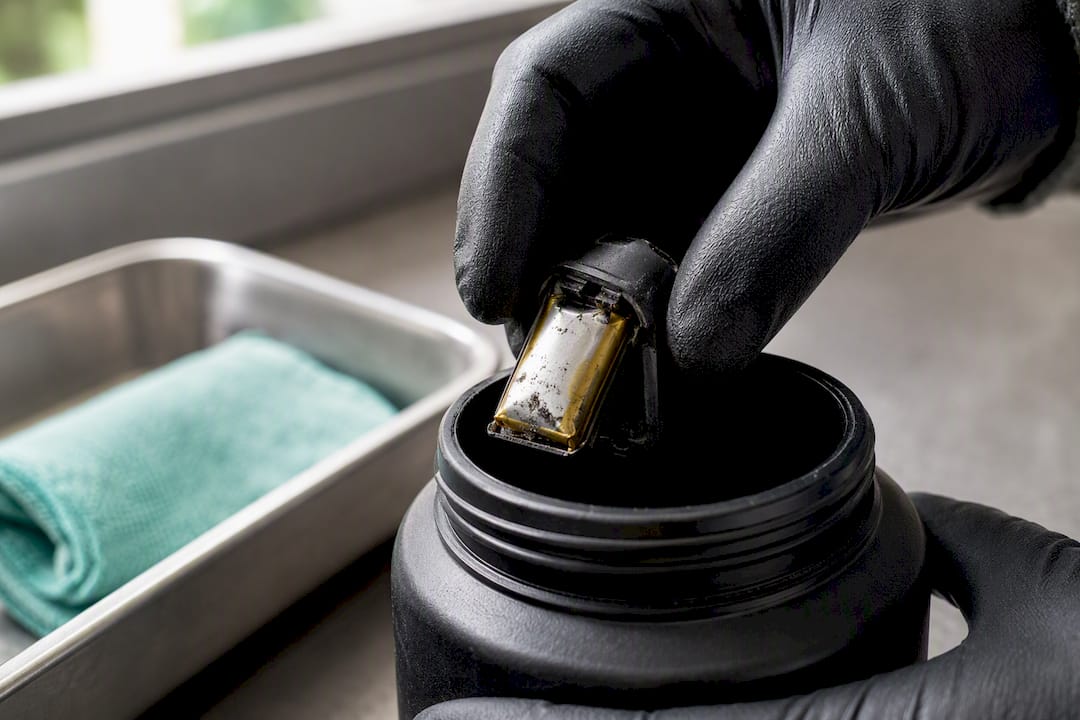
- Cover any exposed metal battery terminals with non-conductive tape, like electrical or packing tape, so they can’t short against loose change or keys.
- Place the earbuds and the case in separate plastic bags before boxing them, following the same isolation principle EPA recommends for any lithium-ion battery.
- Always include the charging case. Small lithium cells left behind in the trash are a documented cause of collection-truck fires, and a case tossed separately defeats the purpose of recycling the earbuds correctly.
- Check your retailer’s or municipality’s per-visit item limits and confirm whether a swollen or physically damaged battery needs a different drop-off process than an intact one.
Pro Tip: Keep model labels facing up and legible in the bag. Recyclers sort faster when they can identify the battery type on sight, and that speeds up processing for everyone in line behind you.
If the case is cracked open, swollen, or visibly leaking, do not ship it by any method that involves air transport. DOT and EPA rules restrict how damaged batteries can be shipped, and a compromised cell is exactly the scenario those rules exist for. Take it directly to a municipal hazardous waste facility or a certified recycler that accepts walk-in damaged batteries instead.
Why Do R2 and e-Stewards Certifications Matter?
They matter because an uncertified “recycler” can legally ship your old earbuds to a landfill overseas and call it recycling. Nothing stops them without independent verification.
The EPA classifies most lithium-ion batteries in consumer electronics as hazardous at end-of-life, carrying waste codes tied to ignitability and reactivity. That’s not a marketing detail. It’s the reason curbside bins and household trash are off-limits for earbuds and their charging cases in the first place.
R2 and e-Stewards certifications exist to close the gap between “we recycle electronics” and actual accountability. A certified recycler has to prove:
- Materials get processed through documented, auditable chains of custody rather than disappearing into unverified export markets.
- Workers handling hazardous components follow safety protocols that limit exposure to toxic materials.
- Data-bearing devices get sanitized or destroyed rather than resold with personal information intact.
- Batteries meet packaging and storage standards designed to prevent the fires that untrained handling can trigger.
Shipping damaged batteries carries its own federal layer. DOT packaging rules under 49 CFR 173.185(f) govern how a battery that’s crushed, punctured, or otherwise compromised can move through the mail, and mail-in recycling programs build their intake process around those restrictions. That’s precisely why a legitimate mail-in program asks you to describe the battery’s condition before it ships you a label.
Choosing a certified partner isn’t about following a rule for its own sake. It’s the difference between your old AirPods getting properly recovered for cobalt and lithium, or getting quietly landfilled in a country with no oversight at all.

How Do You Find a Drop-Off Point or Mail-In Program?
Finding a legitimate option takes about five minutes if you know where to look. Locator tools built specifically for this purpose beat a generic search every time.
Earth911 and Call2Recycle both maintain searchable databases of drop-off locations by zip code, covering everything from big chain retailers to independent battery recyclers. Punch in your address, filter for “electronics” or “batteries,” and you’ll usually get a handful of results within a few miles.
Most retail take-back programs and mail-in services accept small consumer electronics, including wireless earbuds, wired headphones, and charging cases, without much fuss. Limits tend to show up around volume, not item type: a household dropping off two dozen items at once might get asked to schedule a bulk pickup instead of using the walk-in counter.
Run through this before you leave the house:
- Confirm the specific item, “wireless earbuds with charging case,” is listed as accepted, not just “electronics” generally.
- Ask whether the case needs to travel with the earbuds or can be dropped separately.
- Check if a damaged or swollen battery requires a different intake process, since some locations route those to a hazardous materials counter.
- Verify any per-visit item cap so you’re not turned away with a bag full of old gear.
For mail-in shipping, request the prepaid label through the program’s website, declare the battery’s condition honestly on the shipping form, and choose ground transport when it’s offered. Ground shipment is standard practice for lithium battery shipments precisely because of the air transport restrictions built into federal packaging rules.
The Order I’d Actually Recommend
Repair or donate first. That’s not a hedge. A pair of earbuds with one dead earpiece or a case that won’t charge past 20 percent is often a five-minute fix at an independent repair shop, and a device that still works has more environmental value staying in someone’s pocket than sitting in a recycling stream.
If repair doesn’t make sense but the earbuds still function, sell or trade them in before you recycle them. Selling captures value that recycling simply destroys, and I’d rather see a functional AirPods case go through a certified buyback process with a real data wipe than get shredded for parts. That’s where I’d point anyone weighing a paid option against a straight drop-off: certified recyclers still deserve your business when a device is genuinely dead, but buyback should get first crack at anything with life left in it.
Certified recycling is the right move once repair and resale are both off the table, and it’s non-negotiable at that point given what’s inside the battery.
, Andy
Sell Broken Earbuds for Cash Instead of Just Recycling Them
Recycling keeps hazardous materials out of a landfill, but it doesn’t put money in your pocket, and that’s the gap Buybackbear fills for earbuds that still have resale value left in them.
You get an instant online quote, a free prepaid shipping label, and payment shortly after your device passes inspection, sent by electronic payment methods with no contract attached. If your earbuds or charging case do turn out to be beyond resale, Buybackbear recycles them responsibly instead of shipping them to a bargain landfill overseas. Any device with account data or personal information gets wiped according to recognized data destruction standards, with a Certificate of Data Erasure provided for confirmation. It’s worth checking a quote before you assume a cracked case or a dead earbud is only worth recycling. Start by getting an instant quote on your device and see what it’s actually worth before you box it up for a drop-off bin.
FAQ
How Do I Dispose of Broken AirPods?
Take broken AirPods, including the charging case, to a retailer take-back bin, a municipal e-waste drop-off, or a certified mail-in recycler. Never put them in household trash, since the lithium-ion battery inside the case is classified as hazardous waste at end-of-life. If one earpiece still works, check whether a trade-in service or a repair shop can get more value out of it than recycling would.
What Can I Do With Broken Headphones?
Wired headphones without a battery usually go into general e-waste bins at a municipal drop-off or retailer collection point. Wireless models with a battery need the same terminal-taping and drop-off precautions as earbuds, and the battery itself should never go in curbside recycling.
Can I Just Throw Broken Earbuds in the Trash?
No. Earbud batteries carry hazard codes for ignitability and reactivity under EPA guidance, and crushed cells inside garbage trucks are a documented fire risk. Use a retailer, municipal, or certified mail-in program instead.
Do I Need to Wipe Data From Broken Earbuds Before Recycling?
Basic wired or wireless earbuds without accounts don’t carry personal data, but unpairing them from your phone is still a good habit. Devices with app logins or voice assistant integration should be unpaired first, and if you’re sending a device to Buybackbear for buyback, it receives a NIST 800-88 certified data wipe automatically.
What Happens to Earbuds After They’re Recycled?
Certified recyclers under R2 or e-Stewards standards strip the plastic housing, recover metals like copper and cobalt from the battery, and process the rest through documented, audited channels rather than unverified export markets. That’s a meaningfully different outcome than a device dumped into general electronic scrap with no oversight.
Recommended
Ready to sell?
Get an instant quote, free prepaid shipping, and fast cash that beats carrier trade-in credit.
Selling your device here, at a glance
Get my instant quote →- Instant quote in about 30 seconds, price locked while you decide
- Cash by PayPal, Zelle, Venmo or check after inspection, no fees
- Free prepaid label both ways, free return shipping if you decline
- We beat any competitor's written quote by $2
- Cracked screen, broken or won't power on? Still worth real money
- Certified NIST 800-88 data wipe with an emailed certificate
- Trade-in value paid in cash, not a 24-36 month carrier bill credit
- Every model priced: unlocked or carrier-locked, any storage size