Recycle Corporate Electronics: An IT Manager's Playbook
August 20, 2026
The right way to recycle corporate electronics is to run a certified IT asset disposition (ITAD) program that combines NIST SP 800-88 media sanitization, R2 or e-Stewards certified recycling, and documented chain-of-custody. Anything less leaves your company exposed to a data breach, a compliance gap, or both.
Before you sign a vendor or schedule a pickup, do this:
- Inventory every device by serial number, including phones, laptops, and networking gear sitting in a closet.
- Classify storage media by data sensitivity so you know what needs Purge or Destroy versus Clear.
- Require R2 or e-Stewards certification plus NAID AAA or documented NIST 800-88 methods from any recycler or buyback partner.
- Request a Certificate of Data Erasure and a Certificate of Recycling for every device, not just a summary invoice.
If a vendor can’t produce a per-device certificate with a serial number on it, they can’t prove your data was destroyed. That gap is what auditors and plaintiffs’ attorneys look for first.
Key Takeaways
A compliant corporate electronics recycling program requires NIST SP 800-88 sanitization, R2 or e-Stewards certified handling, and per-device certificates for every unit that leaves your custody.
| Point | Details |
|---|---|
| Sanitize before you ship | Apply NIST SP 800-88 Purge or Destroy to any media leaving your organization’s control. |
| Require facility-level certification | Confirm R2v3 or e-Stewards status directly with the recycler, not just a sales claim. |
| Demand per-device certificates | Collect a Certificate of Data Erasure and Certificate of Recycling tied to each serial number. |
| Flag special materials early | Route CRTs, lithium batteries, and mercury-containing devices to appropriate handling streams. |
| Recover value where possible | A buyback partner like Buybackbear pays for working fleets while still delivering audit-ready wipe certificates. |
Table of Contents
- Why Recycling Corporate Electronics Matters for Your Business
- Which Corporate Electronics Should You Include in Your Recycling Program?
- How Does the Corporate Electronics Recycling Process Actually Work?
- What Data Security Standard Should You Require Before Recycling?
- How Do You Choose a Recycler or ITAD Partner?
- How Do You Start a Corporate Electronics Recycling Program?
- What Legal and Special-Material Rules Apply to E-Waste?
- How Does a Buyback Partner Handle Bulk Corporate Devices?
- Why the Combined Approach Beats Choosing Between Value and Security
- Turn Retired Fleets Into Compliant, Cash-Positive Disposition
- Sources
- FAQ
Why Recycling Corporate Electronics Matters for Your Business
Three things happen when you get corporate electronics recycling wrong: you eat a data breach, you leave cash on the table, and you fail an audit. Getting it right solves all three at once.
The business case breaks down into four measurable wins:
- Data breach risk reduction, retired drives that leave your building unsanitized are a liability sitting in someone else’s warehouse.
- Asset recovery, working laptops and phones retain resale value that a scrap recycler will never pay you.
- Compliance, procurement contracts, insurance policies, and state laws increasingly require documented disposition.
- ESG reporting, diversion rates and certified recycling volumes feed directly into sustainability disclosures.
The EPA recommends prioritizing reuse and refurbishment before material recovery, a sequence that also happens to maximize what you recover financially. Track cost recovery per device, diversion rate, and certificate turnaround time as your core program KPIs.
Which Corporate Electronics Should You Include in Your Recycling Program?
Almost anything with a circuit board or a battery belongs in scope. That means desktops, laptops, servers, monitors, mobile phones, tablets, printers, networking switches and routers, keyboards and peripherals, rechargeable batteries, and increasingly IoT sensors and embedded devices scattered across facilities.
A few categories need special handling before they hit a general recycling stream:
- Lithium batteries, which can ignite if crushed or improperly stored.
- Legacy CRT monitors, which often contain leaded glass.
- Older equipment with mercury switches or PCB-containing capacitors.
Pro Tip: Sort devices into two piles at pickup: units that still power on and have market value, and units that are dead or obsolete. That single triage step is what separates a program that pays you back from one that just costs you a hauling fee.
How Does the Corporate Electronics Recycling Process Actually Work?
A defensible ITAD process follows the same six steps whether you’re retiring ten laptops or ten thousand.
- Collection, gather devices from departments, remote workers, and storage closets on a set schedule.
- Inventory and tagging, log make, model, and serial number for every unit before it leaves your custody.
- Data classification, flag which devices held sensitive data and which held none.
- Sanitization or destruction, apply the appropriate NIST 800-88 method per device.
- Refurbish, resell, or recycle, working units go to resale channels; everything else goes to material recovery.
- Final disposition and certification, collect and file your certificates.
Each step needs its own paperwork trail: chain-of-custody forms during transport, tamper-evident packaging for drives awaiting destruction, and signed manifests at handoff.
- Keep transport logs showing who held custody of devices between your office and the recycler’s facility.
- File Certificates of Data Erasure and Certificates of Recycling by serial number, not by batch.
- Retain records for the length of your industry’s audit window, typically several years.
These certificates aren’t paperwork theater. If a former employee’s laptop shows up on a resale site with company files intact, the certificate (or lack of one) determines who’s liable.
What Data Security Standard Should You Require Before Recycling?
Adopt NIST SP 800-88 Rev. 2 and choose Purge or Destroy for any media leaving your organization’s control. Clear alone, the level equivalent to a factory reset, isn’t enough once a device changes hands.
The standard’s three levels matter because the right choice depends on the drive. A traditional hard disk drive can often be sanitized with overwrite-based Purge methods. A solid-state drive behaves differently: NIST notes that SSDs generally require Purge-level techniques like firmware sanitize or cryptographic erase, or physical destruction, because standard overwriting doesn’t reliably reach all storage cells on flash media.
Documentation is non-negotiable. Every sanitized device needs:
- A per-device Certificate of Data Erasure or Certificate of Destruction.
- An audit log showing method used, operator name, and serial number.
Pro Tip: Turn on BitLocker or use self-encrypting drives at the time you provision a device, not at retirement. Full-disk encryption makes cryptographic erase a fast, defensible Purge method later, instead of a scramble to justify your sanitization choice to an auditor.
Deleting files or running a factory reset is not sanitization. Forensic recovery tools can pull data off a “wiped” drive that never underwent a documented NIST-based process.
How Do You Choose a Recycler or ITAD Partner?
Require R2v3 or e-Stewards certification at the facility level, and layer in NAID AAA or documented NIST SP 800-88 adherence for anything involving data-bearing devices. Facility-level matters because a company can hold certification at one location while running an uncertified operation at another.
The EPA’s Certified Electronics Recyclers program exists specifically so buyers don’t have to redo a recycler’s environmental and security due diligence themselves. That said, certification is a floor, not a finish line. An EPA implementation review found R2 and e-Stewards facilities generally perform well, but flagged room for improved transparency, which is exactly why you should still ask for recent audit reports rather than taking a certification logo at face value.
Before signing anything, run through this checklist:
- Confirm certification status directly, not just via a claim on a sales page.
- Request the recycler’s most recent third-party audit or an on-site review.
- Ask for a written no-export or downstream verification policy.
- Get certificate delivery timelines and audit rights written into the contract.
- Confirm indemnity language covering data leakage tied to improper downstream handling.
Pro Tip: A paid buyback partner makes sense when you have working devices at volume, since you recover cash instead of paying a hauling fee. A free municipal drop-off works fine for a handful of dead units, but it rarely offers the same chain-of-custody documentation a business audit requires.
How Do You Start a Corporate Electronics Recycling Program?
Five stages take you from zero to a running program:
- Set policy and scope, define which devices, departments, and locations the program covers.
- Inventory and classify, build your asset register and flag data sensitivity per device type.
- Run a pilot collection, test the workflow on one department before rolling out company-wide.
- Onboard your vendor and finalize contracts, lock in certifications, SLAs, and certificate delivery terms.
- Scale up and report, expand collection cadence and start regular reporting to leadership.
Each phase needs an owner, a timeline, and a defined output, whether that’s a signed policy document or a pilot completion report.
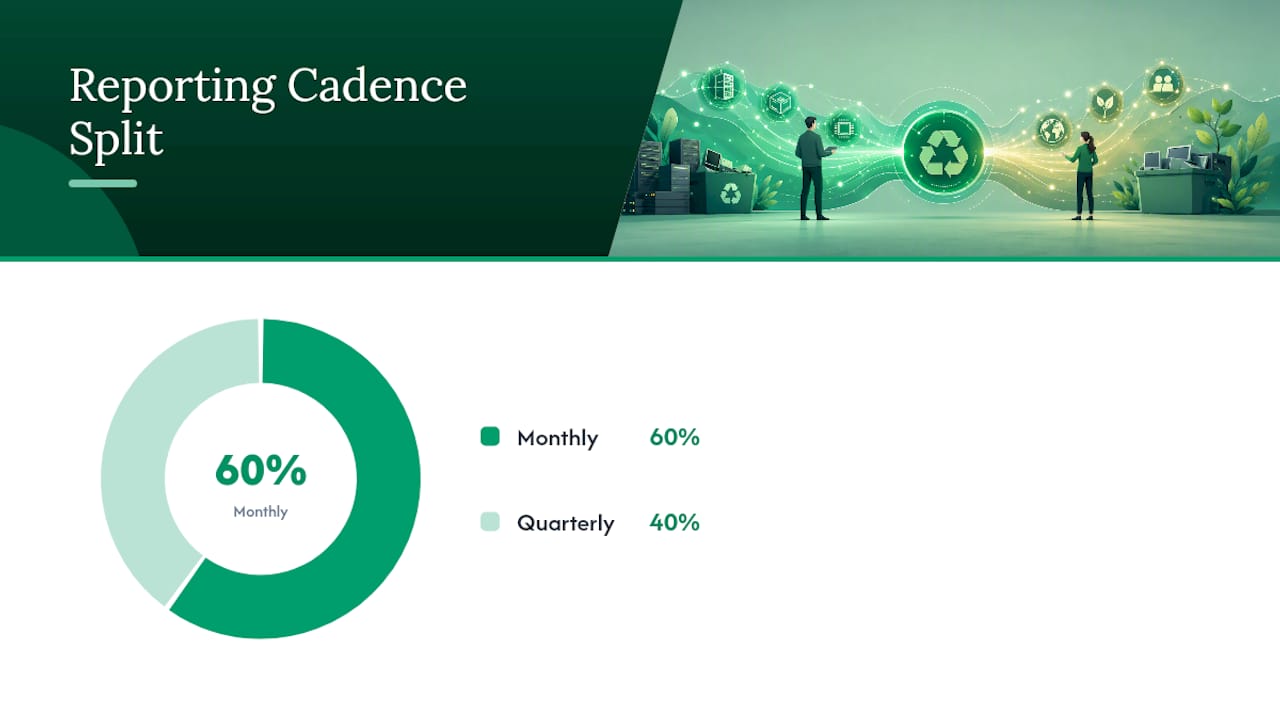
| Metric | Reporting Cadence |
|---|---|
| Units collected and processed | Monthly |
| Total weight recycled | Quarterly |
| Revenue recovered from resale | Monthly |
| Certificates delivered vs. outstanding | Monthly |
| Landfill diversion rate | Quarterly |
What Legal and Special-Material Rules Apply to E-Waste?
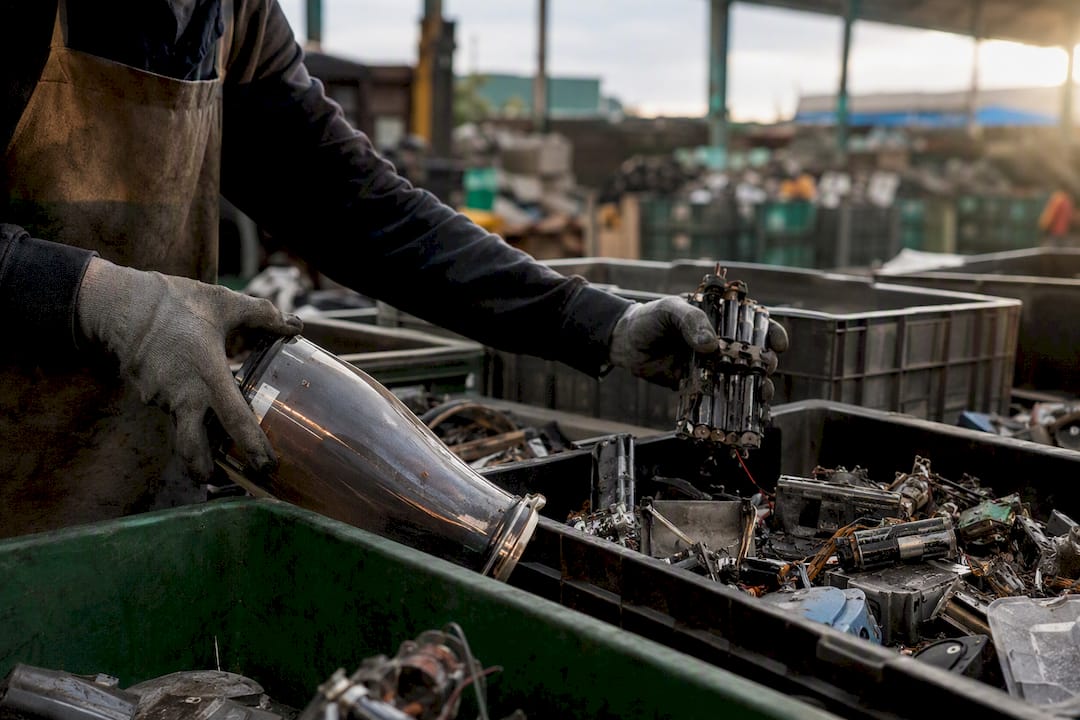
Identify CRTs, lithium batteries, and mercury-containing devices immediately. These don’t move through a standard recycling stream. CRT funnel glass often contains lead, and the EPA notes that shifting recycling markets have left some processors simply stockpiling old CRT glass, which creates its own downstream risk if your recycler isn’t managing it properly.
Roughly 25 states plus Washington, D.C. have their own electronics recycling laws, and requirements vary by state and device category. Check your state’s specific rules before assuming a national policy covers you.
A basic compliance checklist:
- Confirm whether your state requires manifesting for hazardous e-waste streams.
- Ask your recycler for their EPA ID where applicable.
- Keep upstream and downstream documentation on file, not just a certificate summary.
How Does a Buyback Partner Handle Bulk Corporate Devices?
A bulk fleet refresh doesn’t have to mean a net cost. The typical workflow with a buyback and IT asset recovery partner looks like this: get an instant quote on the batch, ship free with a prepaid label or arrange pickup, the devices get inspected, then each one gets wiped to NIST 800-88 with a per-device Certificate of Data Erasure, and payment goes out before anything that can’t be resold moves into responsible recycling.
That last step matters for audit purposes:
- Every device gets its own certificate tied to a serial number, not a batch summary.
- Devices with resale value get refurbished and resold instead of shredded.
- Units past resale still get processed through certified recycling channels.
A fleet of 200 retired laptops isn’t just a liability to dispose of. Handled through a buyback and certified-wipe process, it’s a line item that pays the company back while still closing every compliance loop.
For a company retiring a full office of laptops and phones at once, that combination (audit documentation plus a same-day payment cadence) is what separates a paid disposition path from a straight write-off.
Why the Combined Approach Beats Choosing Between Value and Security
Too many IT teams treat data security and asset value as a trade-off: destroy everything to be safe, or maximize resale and hope for the best. That framing is wrong. NIST-sanctioned sanitization and certified reuse aren’t in tension. A drive that’s been properly wiped to a Purge or Destroy standard is just as sellable as one that was never sanitized at all, and the certificate protects you regardless of what happens to the device next.
Budget and timeline pressure are real, and a full policy rollout across every department won’t happen in a week. Start with your highest-risk category, usually laptops and phones holding sensitive data, and expand from there.
Turn Retired Fleets Into Compliant, Cash-Positive Disposition
Retiring a batch of company laptops or phones doesn’t have to mean choosing between a compliance headache and a hauling invoice. Bulk device buyback at Buybackbear pays out for working devices instead of charging you to dispose of them, and every unit gets wiped to NIST 800-88 with its own Certificate of Data Erasure on file.

What that looks like in practice for a procurement or IT team:
- Audit-ready paperwork delivered per device, not per batch.
- Same-day payment once inspection confirms your quote.
- Free prepaid shipping or pickup for fleet-size drop-offs.
- Responsible recycling for anything that doesn’t qualify for resale.
If your company is planning a hardware refresh, get a bulk quote for your business electronics and see what your retired fleet is actually worth before it goes anywhere near a shredder.
Sources
FAQ
Where can I take old corporate electronics to be recycled for free?
Many manufacturers, retailers, and municipal programs accept small quantities of devices at no cost, though free drop-off rarely includes the chain-of-custody documentation a business audit requires. For working devices, a paid buyback path typically delivers both compliance paperwork and cash instead.
What electronics should businesses never throw in the regular trash?
Anything with a battery, a circuit board, or a CRT screen, including laptops, phones, monitors, printers, and networking equipment. Lithium batteries and CRT glass in particular require special handling under state and federal guidance.
How do I find a certified electronics recycler near my office?
Use the EPA’s Certified Electronics Recyclers directory to confirm R2 or e-Stewards certification at the specific facility level, since certification can vary by location within the same company.
Does deleting files count as data sanitization before recycling?
No. Deleting files or running a factory reset leaves data recoverable through forensic tools. A defensible program follows NIST SP 800-88 and documents the exact method used per device serial number.
Is it better to recycle or sell retired company devices?
If the devices still power on, selling through a certified buyback partner usually beats straight recycling, since you recover value while still getting NIST-compliant wipes and certificates. Devices with no resale value should go directly to certified material recovery.
Recommended
Ready to sell?
Get an instant quote, free prepaid shipping, and fast cash that beats carrier trade-in credit.
Selling your device here, at a glance
Get my instant quote →- Instant quote in about 30 seconds, price locked while you decide
- Cash by PayPal, Zelle, Venmo or check after inspection, no fees
- Free prepaid label both ways, free return shipping if you decline
- We beat any competitor's written quote by $2
- Cracked screen, broken or won't power on? Still worth real money
- Certified NIST 800-88 data wipe with an emailed certificate
- Trade-in value paid in cash, not a 24-36 month carrier bill credit
- Every model priced: unlocked or carrier-locked, any storage size