Phone Sellers: Self Grade in 10–20 Minutes and Get a NIST Data Wipe
October 9, 2026

You can reliably self-grade your phone for trade-in using a simple checklist and five photos: match what you see to the OB, A, B, C or D scale, then confirm it with a quick battery and activation check. Start now by photographing the device and running those two diagnostics. If you’d rather skip the grading guesswork entirely, BuyBackBear gives you an instant quote and pays the same day your device is inspected.
TL;DR:
- A chip you can feel, hairline scratches under direct light, or a camera ring dent can each drop the grade one level.
- A clean exterior does not guarantee a high offer, since noticeably degraded battery health can lower the price even when cosmetic condition appears near mint.
- A triggered moisture indicator can nearly disqualify a phone, even when its exterior looks clean, because buyers treat liquid exposure as a separate risk.
- Turn off Activation Lock and Find My, verify the phone is not carrier locked, and check its IMEI if financing or blacklist status is uncertain.
- Keep dated photos from multiple angles and compare them with any revised offer; they help identify whether an inspector found an undocumented flaw.
Table of Contents
- What OB, A, B, C and D grades actually look like
- A step-by-step checklist to assign your own grade
- Battery, lock status, and moisture: the checks that change your offer
- How to photograph and document your phone’s condition
- Why quotes change after inspection, and how to avoid it
- Protect your data before you ship your phone
- A quick note on honesty and documentation
- Sell your phone now with a certified cash sale
- FAQ
- Sources
What OB, A, B, C and D grades actually look like
Buyback and refurbished-device programs commonly use an OB, A, B, C, and D scale, and reference photos for each grade make self-grading far more accurate than guessing.
- OB (Open Box): no signs of use, original packaging and accessories usually included, screen and body free of marks.
- Grade A: very light wear only visible under close inspection, no cracks or chips, screen free of scratches that catch a fingernail.
- Grade B: light scuffs on the frame or back, maybe one or two small scratches on the screen that are not visible when the screen is on.
- Grade C: noticeable scratches, small chips on corners or edges, visible wear that does not affect function.
- Grade D: cracked glass, significant dents, heavy scratching, or cosmetic damage that affects usability.
The tricky cases are the ones in between. A tiny chip on a corner that you can feel but barely see still counts as cosmetic damage, and most inspectors grade it down a full tier. Hairline scratches that only show under direct light are the number one reason self-graded devices come back lower than expected. A dent in the camera ring, even a small one, almost always drops a phone from A to B because it is one of the first spots a technician checks.
Keep in mind that grading here is strictly cosmetic. A phone can look like a Grade A and still have a degraded battery or a cracked internal component that only shows up in diagnostics, which is a separate category covered below.

A step-by-step checklist to assign your own grade
Set up in a well-lit room, ideally near a window or under a bright overhead light, with a plain dark or white background. You’ll want a flashlight, a microfiber cloth, and a phone or camera for documentation.
- Wipe the device with the microfiber cloth to remove smudges that can look like scratches in photos.
- Inspect the screen powered off first, tilting it at an angle under the flashlight to catch fine scratches that don’t show under flat light.
- Power the phone on and check for dead pixels, discoloration, or touch response issues by dragging your finger across the full screen.
- Run your finger along every edge and corner of the frame, feeling for dents, chips, or paint loss the eye might miss.
- Check the back panel and camera lens for cracks, chips, or scratches, and inspect ports and buttons for lint, corrosion, or looseness.
- Test the speaker, microphone, and charging port with a quick call or voice memo and a charging cable to flag anything beyond cosmetic wear.
Pro Tip: Photograph the screen while it displays a plain gray or white image. Scratches and scuffs show up far more clearly against a solid color than against icons or wallpaper.
Battery, lock status, and moisture: the checks that change your offer
Appearance alone doesn’t tell you whether a phone is in sellable shape. Checks for water damage, battery health, and activation locks catch problems that cosmetic grading never will.
- Check iPhone battery health under Settings, Battery, Battery Health and Charging; Android phones show a similar diagnostic under Settings, Battery. A battery that has noticeably degraded typically lowers the offer even on an otherwise mint device.
- Look for moisture indicators, usually a small dot or strip inside the SIM tray, that permanently change color when exposed to liquid. Most buyback and resale programs treat a triggered moisture indicator as a near-automatic disqualifier.
- Confirm Activation Lock or Find My is turned off and the device shows no carrier lock. Buyers cannot resell a locked phone, so this step has to happen before you ship anything. Our guide to checking Activation Lock walks through the exact menu path.
- If you’re unsure about carrier status, run a quick IMEI check to confirm the device isn’t blacklisted or still tied to a financing plan.
How to photograph and document your phone’s condition
A consistent photo set is what most buyback programs expect, and it is also what protects you if a quote changes after inspection.
- Front of the phone powered off, then powered on showing the home screen.
- A full sweep of every edge, taken slowly so no angle gets skipped.
- The back panel, the camera module, and all ports and buttons in individual shots.
- A close-up of any visible flaw, with a coin placed next to it for scale.
- The IMEI or serial number if it’s visible on the SIM tray or settings screen.
Name each file by date and angle (for example, “iphone-back-0912”) and jot down a short note for anything you notice, like “small chip, bottom left corner, does not affect screen.” Keep the original box and any accessories if you still have them, since that documentation can support a higher grade.
Pro Tip: Take photos in natural daylight rather than indoor lighting. Overhead bulbs often wash out fine scratches, which makes an honest self-grade look better than it is and sets you up for a regrade later.

Why quotes change after inspection, and how to avoid it
Most disputes come down to flaws the inspector caught that the seller didn’t document. A scratch that looks faint in one photo can look obvious from a different angle, so cover the device from multiple sides before you ship.
- Non-genuine replacement parts, like an aftermarket screen or battery, often cause a regrade since Parts and Service History can flag them as “Unknown” on Apple devices.
- Water damage that wasn’t visible externally can surface once a technician checks internal indicators.
- If you get a lower offer than expected, ask what specifically changed and compare it against your dated photos before accepting or disputing it.
- For a phone with real damage, weigh the repair cost against the likely grade bump. A cracked screen repair that costs more than the value it recovers isn’t worth doing before you sell.
Protect your data before you ship your phone
Grading your phone is only half the prep. Before it leaves your hands, back up your photos and files, remove the SIM and any SD card, and sign out of your Apple ID or Google account. The FTC’s guidance on clearing personal data walks through each of these steps in order.
- A standard factory reset clears visible files but doesn’t always meet formal data-sanitization standards.
- A certified wipe under NIST 800-88 overwrites data to a documented government standard and comes with a certificate you can keep on file.
- Businesses and anyone handling sensitive accounts usually want that certificate as proof the device was sanitized properly, not just reset.
When you sell through BuyBackBear, you get an instant online quote, free prepaid shipping, an inspection against your submitted grade, and a certified NIST 800-88 wipe with an emailed Certificate of Data Erasure once the sale is confirmed. Our guide to prepping a phone for trade-in covers the backup and reset steps in more detail, and our ready-to-sell checklist gives you a final pass before shipping.
A quick note on honesty and documentation
Grading your own phone isn’t about talking it up. Accurate, well-photographed self-grades get accepted closer to the original quote and close faster, with fewer back-and-forth messages. Follow the checklist, keep dated photos, and expect the buyer to verify, not guess.
, Andy
Sell your phone now with a certified cash sale
Once you’ve self-graded your phone, you can turn that work straight into cash. The submitted grade is checked against the actual device, the offer confirmed, and payment is made the same day inspection is complete, with no contract and no bill credit spread over years like carrier trade-ins.
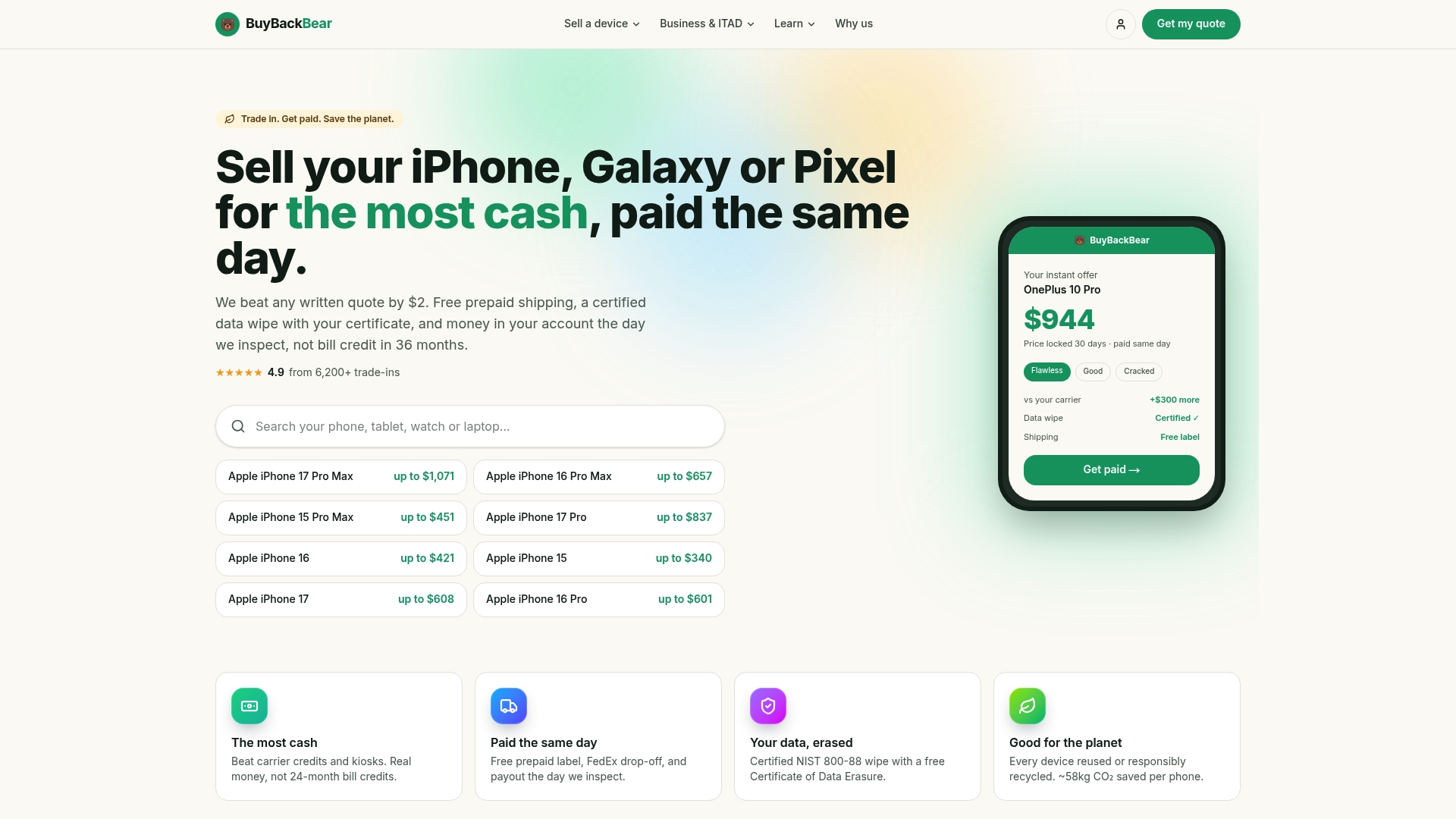
- Get an instant online quote based on your self-assessed grade.
- Ship free with a prepaid label once your quote is confirmed.
- Get a certified NIST 800-88 data wipe with an emailed certificate.
- Get paid the same day we complete your inspection.
| Step | What happens |
|---|---|
| 1. Quote | You enter your phone’s details and grade for an instant online quote |
| 2. Ship | We send a free prepaid shipping label |
| 3. Inspect | We confirm your grade and finalize your offer |
| 4. Paid | You get paid the same day inspection is complete |
Ready to turn your self-graded phone into cash? Get your instant quote and see how the data-wipe certificate works on our buyback guarantee page.
FAQ
What is considered a good condition for a phone?
A phone in good condition typically shows only light, hard-to-notice wear, no cracks or chips, and a screen free of visible scratches. This usually lines up with a Grade A or Grade B on most buyback scales, depending on how closely the wear is inspected.
Is grade C refurbished good?
Grade C generally means noticeable scratches or small chips that don’t affect how the phone works, so it’s a reasonable option if you want a lower price and don’t mind visible cosmetic wear. Certified refurbishing programs that replace batteries and shells can make even a Grade C device a solid value, so ask what parts were replaced.
Which is better, mint or good condition?
Mint condition means the phone looks essentially unused, with no scratches, chips, or scuffs anywhere on the body or screen. Good condition allows for light, barely noticeable wear, so mint will consistently fetch a higher offer than good.
What does a grade mean in phones?
A grade is a shorthand cosmetic rating, commonly OB, A, B, C or D, that tells a buyer how much visible wear a phone has without needing a full description. It covers scratches, chips, and overall appearance, and it’s separate from functional checks like battery health or activation status.
Sources
- How to buy a used smartphone. Consumer Reports
- How to remove your personal information before you get rid of your phone. FTC
- If you want to buy a preowned iPhone. Apple Support
Recommended
Ready to sell?
Get an instant quote, free prepaid shipping, and fast cash that beats carrier trade-in credit.
Selling your device here, at a glance
Get my instant quote →- Instant quote in about 30 seconds, price locked while you decide
- Cash by PayPal, Zelle, Venmo or check after inspection, no fees
- Free prepaid label both ways, free return shipping if you decline
- We beat any competitor's written quote by $2
- Cracked screen, broken or won't power on? Still worth real money
- Certified NIST 800-88 data wipe with an emailed certificate
- Trade-in value paid in cash, not a 24-36 month carrier bill credit
- Every model priced: unlocked or carrier-locked, any storage size