When Trade In Quotes Fall, Model Launches Can Make Waiting Cost More
October 13, 2026

Your trade-in quote likely fell because of a combination of timing (model-year rollovers, manufacturer repricing) and market shifts (wholesale auction swings, condition reclassification during inspection). The right first move is to ask for a specific reason, request a re-inspection if you suspect an error, and get a fresh competing quote before accepting the lower number. The rest of this guide walks through why values move and how to respond for both vehicles and devices.
TL;DR:
- A launch or auction dip may ease within weeks; inspection damage or a permanent credit table cut usually will not, and waiting adds further depreciation.
- Many online vehicle offers expire after seven to ten days, so confirm the deadline and ask whether mileage, inspection results, or market pricing changed.
- Agree on the new vehicle’s price first, then get a written competing appraisal and check financing disclosures for any negative equity rolled into the loan.
- Back up data and remove account locks before a factory reset; private sales may pay more, while buyback services offer faster cash than bill credits.
Table of Contents
- 1. What makes trade-in values fall
- 2. How timing affects your trade-in quote
- 3. Exactly what goes into a trade-in quote
- 4. What to do if your car trade-in quote dropped
- 5. What to do if your phone or tablet trade-in quote dropped
- 6. A checklist that reliably improves your trade-in offer
- 7. How a mail-in buyback service can turn a falling quote into cash
- Deciding whether to wait or act after a drop
- Get cash for your device before the quote drops further
- FAQ
- Sources
1. What makes trade-in values fall
Trade-in values are not fixed numbers. They shift with depreciation curves, inventory cycles, and the buyer’s own pricing tables, and any of those can move a quote lower in a matter of days.
For vehicles, depreciation is front-loaded. New cars typically lose about 30% of their value in the first two years and around 55% within five years, with annual depreciation settling to roughly 8 to 12% after year two, according to Kelley Blue Book. If your car is approaching one of those inflection points, a lower offer may simply reflect where it now sits on that curve rather than anything wrong with your specific vehicle.
New-model releases and year-end inventory compound the effect. When a manufacturer rolls out a new model year, dealers often discount outgoing inventory, which pulls down what a used trade-in of the prior year is worth by comparison. The same pattern plays out with phones and laptops: a new flagship launch increases supply of “previous generation” devices on the resale market, which softens demand for the one you are trying to trade in.

Manufacturers and large buyers also adjust their own credit tables. Apple and other manufacturers have periodically lowered published trade-in credit estimates across entire product lines, which can drop your quoted value even if your device’s condition has not changed at all.
Dealership and buyback economics matter too:
- Dealers price trade-ins against current auction and wholesale data, not sticker price or sentimental value.
- Reconditioning costs (detailing, tires, minor repairs) get subtracted from whatever the vehicle or device is expected to resell for.
- Local demand for your specific model affects how aggressively a buyer bids.
- Buyback services that update pricing daily can show a different number than the one you saw a week ago simply because the underlying market moved.
Wholesale indexes like Manheim’s MUVVI tracked slight year-over-year gains with month-to-month volatility through the end of 2025, according to Cox Automotive’s Q4 2025 report, and that volatility feeds directly into the trade-in offers dealers extend the following week.
2. How timing affects your trade-in quote
A dropped quote can mean two very different things: a temporary dip you can wait out, or a structural shift that will not reverse. Reading the calendar correctly helps you tell which one you are looking at.
Vehicle trade-in values tend to soften around January 1 and whenever the new model year lands in showrooms, typically in late summer or fall. Dealers want outgoing inventory off the lot, so they price trade-ins to make room, not to reward you for the car you are bringing in. Device trade-in values follow a similar rhythm around major launch events; manufacturer trade-in credit tables often get revised downward right after a new phone or tablet ships, since the previous generation instantly becomes “last year’s model” in the eyes of resale buyers.
Wholesale markets add a second layer of timing risk. Lease returns and off-lease vehicles tend to flood auctions in predictable waves, and dealers often respond by setting more conservative trade-in offers the week after a large batch of returns hits the market, per Cox Automotive. Watching for those waves can help you anticipate downward pressure before it hits your own quote.
Other timing effects to watch for:
- Interest rate increases reduce used-car shopping traffic, which can push dealers to lower trade-in offers since fewer buyers are browsing inventory, according to Kelley Blue Book market commentary.
- A software bug, security issue, or bad press cycle around a specific phone model can cause a short-term dip in buyback offers that often recovers once the issue is resolved.
- Seasonal retail demand (tax season, back-to-school, holiday shopping) shifts how aggressively buyers compete for inventory.
- A genuine condition change, like a cracked screen discovered during inspection, is not a timing issue at all and will not reverse on its own.
If your drop lines up with a launch date, a model-year rollover, or a reported market dip, it is likely timing-driven and may ease with a short wait. If it lines up with a physical inspection, assume it is permanent.
3. Exactly what goes into a trade-in quote
Every trade-in number is built from a handful of inputs, and knowing them helps you judge whether a revised quote is reasonable or worth pushing back on.
- Book and wholesale data. Dealers and buyback buyers pull from sources like Kelley Blue Book, Black Book, and recent auction results to set a baseline value before they ever look at your specific item.
- Local and current demand. Buyers adjust the baseline up or down based on how quickly they expect to resell your exact model in their market, factoring in book and auction data alongside reconditioning cost forecasts, as Edmunds notes.
- Physical inspection results. An online estimate is provisional. Once someone physically checks your car or device, scratches, battery health, screen condition, or a mismatched serial number can change the number, often downward.
- Dealer incentives and bundled pricing. Some dealers offer an inflated trade-in number but recover it by raising the price of the new vehicle you are buying, so the “generous” trade-in is not free money.
- Daily price updates. Mail-in buyback services frequently reprice every day based on current resale and component markets, which is why a quote from last week may not match today’s.
The gap between an online estimate and a final offer almost always comes down to step 3. If a buyer cannot explain which inspection finding caused the drop, that is a fair reason to ask for clarification or walk away.
4. What to do if your car trade-in quote dropped
Start by treating the new number as a starting point for a conversation, not a final answer.
- Check whether your original quote had an expiration date. Many online offers are only valid for seven to ten days, and a lapsed quote will simply be re-run at current market pricing.
- Ask the dealer or buyer to specify exactly what changed: mileage, a new inspection finding, or a general market adjustment.
- Request a re-inspection if you believe the drop was based on a factor that no longer applies, such as a repair you completed since the first appraisal.
- Get at least one independent appraisal or online offer from a competing buyer before you negotiate; Consumer Reports notes that firm competing offers put sellers in a stronger negotiating position.
- Gather service records and recent photos. Documentation of maintenance and condition tends to move offers more reliably than any single conversation.
Pro Tip: Lock in the price of the new vehicle you are buying before you discuss your trade-in value, since a generous trade-in can sometimes mask an inflated purchase price elsewhere in the deal.
If you are financing and owe more than your car is worth, be careful about how that negative equity gets handled. Dealers may roll negative equity into your new loan rather than requiring you to pay off the difference separately, and the FTC advises reviewing financing disclosures closely before signing, since rolling it forward increases what you owe on the new loan and extends how long you are paying it off.
5. What to do if your phone or tablet trade-in quote dropped
Before you accept a lower number, figure out whether the drop came from your device’s condition or from the buyer’s pricing table, because the right response is different for each.
First, check whether the buyer reclassified your device’s condition. A quote that assumed “excellent” condition will drop if a re-check finds a cracked screen, swollen battery, or a software lock that was not visible in your initial description. Our guide on why your phone is worth more than you think covers which condition details actually move the number.
If the condition has not changed, the drop may trace back to a manufacturer or carrier updating its trade-in credit table, which can happen without warning and apply across an entire product line.
Quick steps to take right away:
- Photograph your device from multiple angles, including the screen powered on, to document its current condition.
- Perform a factory reset only after you have backed up your data and confirmed the device is unlocked from any account.
- Gather your original receipt and IMEI or serial number, since missing documentation can itself trigger a lower offer.
- Re-run instant quotes from a few sources rather than relying on the first number you saw, since pricing tables update at different speeds.
Compare your options honestly. A carrier or manufacturer trade-in often pays in bill credit spread over many months, a private sale usually pays the most but takes the longest and carries buyer-risk, and a mail-in buyback service sits in between: faster than a private sale and typically paid in cash rather than credit. Our trade-in vs. sell comparison breaks down which route fits different situations. When your device is damaged, when a manufacturer credit table just dropped, or when you need the cash quickly, a mail-in buyback service is often the fastest way to convert a falling quote into money in hand rather than waiting for the market to recover.
6. A checklist that reliably improves your trade-in offer
Not every effort to boost your offer pays off, so it helps to know which actions actually move the number before you spend time or money on them.
- Clean thoroughly inside and out. A detailed car or a wiped, polished phone consistently reads as better-maintained to an inspector, and this costs little relative to the value it can preserve.
- Include everything that came with it. Chargers, cables, original boxes, and extra accessories add real value and cost you nothing to include.
- Show maintenance records. For vehicles, a documented oil-change and service history reduces a buyer’s uncertainty about hidden problems, which translates into a stronger offer.
- Skip expensive repairs before trading in. Dealers typically factor anticipated repair costs into their offer and recondition items themselves at lower internal rates, so owner-paid repairs rarely earn back their cost, according to Consumer Reports.
- Collect multiple firm offers. A dated, written offer from a competing buyer gives you real use, since dealers sometimes match or beat a competitor’s number to win the deal, especially for desirable models.
- Time the sale deliberately. Selling or trading before a new model year or product launch, rather than right after, generally captures more value since the rollover effect has not yet discounted your item.
Pro Tip: If a dealer offers to beat an online quote, ask them to put the new number in writing before you agree to anything else in the deal.
7. How a mail-in buyback service can turn a falling quote into cash
When a quote drops and you want certainty over waiting, a mail-in buyback service offers a straightforward path: we give you an instant online quote, you ship your device free using a prepaid label, we inspect it and confirm the offer, and you get paid the same day that inspection is complete.
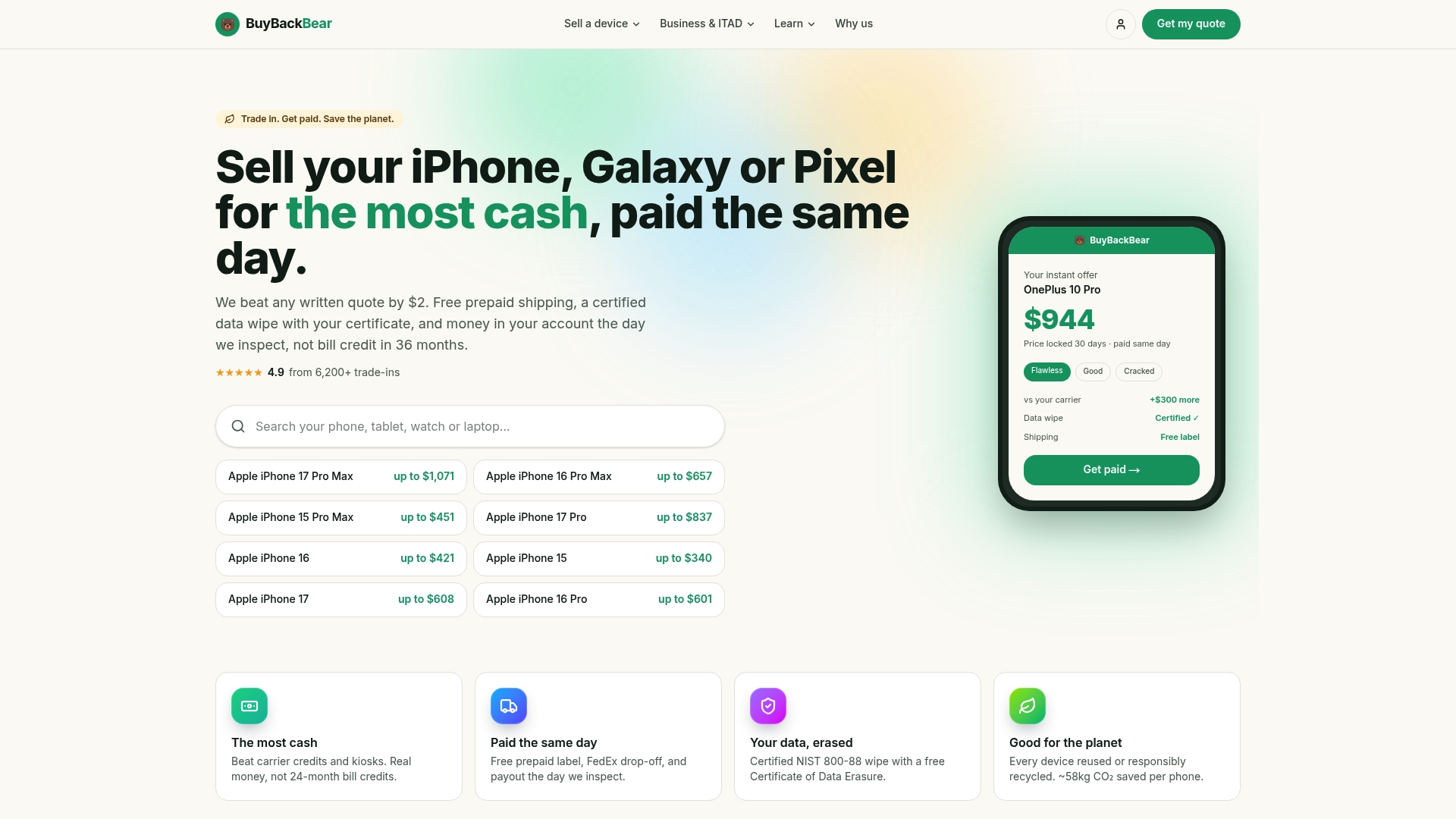
We track competitor buyback prices regularly and aim to offer competitive pricing, which matters when manufacturer or carrier credit tables have just moved against you. Devices are wiped to a certified data erasure standard, and you receive a certificate as proof your data was removed properly, a step covered in more detail in our explanation of our buyback guarantee.
A few reasons this route fits a dropped-quote situation specifically:
- We accept devices in any condition, including cracked screens or devices that no longer power on.
- Payment arrives as cash through PayPal, Venmo, debit card, or bank transfer, not bill credit spread over two to three years.
- There is no contract and no obligation if you decide the offer does not work for you.
If your device still has real resale value and you have time to wait, a private sale may pay more. If you need speed and certainty, or your device is damaged, a mail-in buyback service converts a falling quote into cash today rather than a hope that the market recovers.
Deciding whether to wait or act after a drop
Not every dip deserves a reaction. A small seasonal dip tied to a launch date or a temporary manufacturer repricing often recovers within weeks, so patience can pay off if your item is in good shape and you are not in a hurry. A drop tied to an inspection finding, a large auction-driven wholesale swing, or a permanent credit-table change is a different story: that value is not coming back, and waiting usually just means more depreciation on top of it.
For vehicles, factor in your state’s sales-tax treatment of trade-ins, since in many states a trade-in reduces the taxable amount on your new purchase in a way a private sale cannot. For devices, the real tradeoff is speed against maximum dollar value: a private sale can pay more, but it costs you time and certainty that a mail-in buyback does not ask you to give up.
, Andy
Get cash for your device before the quote drops further
Every day a trade-in sits unaccepted is another day pricing tables can move again, so the steps that convert a quote into cash are worth knowing. Our process stays the same regardless of what caused your number to change: get an instant quote, ship free with a prepaid label, let us inspect the device, and get paid the same day we confirm the offer.
- We beat any written competing quote by a competitive amount so a lower number elsewhere is not the end of the conversation.
- Payment goes out as real cash by PayPal, Venmo, debit card, or bank transfer rather than carrier bill credit.
- Devices past resale are recycled responsibly rather than discarded, and our partner’s e-waste logistics and data destruction services support that process for larger device batches.
- Businesses retiring multiple laptops or phones can use the same IT asset recovery process instead of handling each device individually.
If your trade-in quote just dropped and you would rather have cash in hand than wait on a market that may or may not recover, get an instant quote on our sell page and see what your device is worth right now.
FAQ
Does a trade-in count as money down?
Yes, a vehicle trade-in’s value is typically applied as a credit toward your new purchase, functioning the same way a cash down payment would in reducing what you need to finance. The exact treatment depends on your dealer’s paperwork, so confirm it is listed as a credit rather than folded into other loan terms.
Has the trade deficit decreased?
This question refers to a national economic measure of imports versus exports, which is unrelated to vehicle or device trade-in values. If you are researching why your trade-in offer changed, the relevant factors are depreciation, timing, and inspection results, not the broader trade deficit.
Does Apple trade-in value change?
Yes, manufacturers including Apple periodically revise their published trade-in credit estimates across entire device lines, and these adjustments can lower a quoted value even when your device’s condition has not changed. Checking a current quote against a mail-in buyback service’s same-day pricing can show whether a recent change affected your specific model.
How do I increase my trade-in value?
Cleaning your car or device thoroughly, including original accessories, and providing maintenance records or purchase receipts are the actions most likely to improve an offer. Collecting multiple firm quotes and timing your sale before a new model year or product launch also helps you capture more value, according to Kelley Blue Book.
Sources
- Kelley Blue Book. Car depreciation
- FTC. Auto dealers: back your ad claims
- Cox Automotive. Q4 2025 MUVVI report
Recommended
Ready to sell?
Get an instant quote, free prepaid shipping, and fast cash that beats carrier trade-in credit.
Selling your device here, at a glance
Get my instant quote →- Instant quote in about 30 seconds, price locked while you decide
- Cash by PayPal, Zelle, Venmo or check after inspection, no fees
- Free prepaid label both ways, free return shipping if you decline
- We beat any competitor's written quote by $2
- Cracked screen, broken or won't power on? Still worth real money
- Certified NIST 800-88 data wipe with an emailed certificate
- Trade-in value paid in cash, not a 24-36 month carrier bill credit
- Every model priced: unlocked or carrier-locked, any storage size