Trade In vs Sell: What U.S. Device Sellers Should Know
August 13, 2026
If you need cash fast or you’re clearing out a stack of company phones, a buyback service is almost always the right call. If you have a recent, high-value device in good shape and a few days to spare, a private sale will typically put more money in your pocket. That’s the core tradeoff, and everything else is detail.
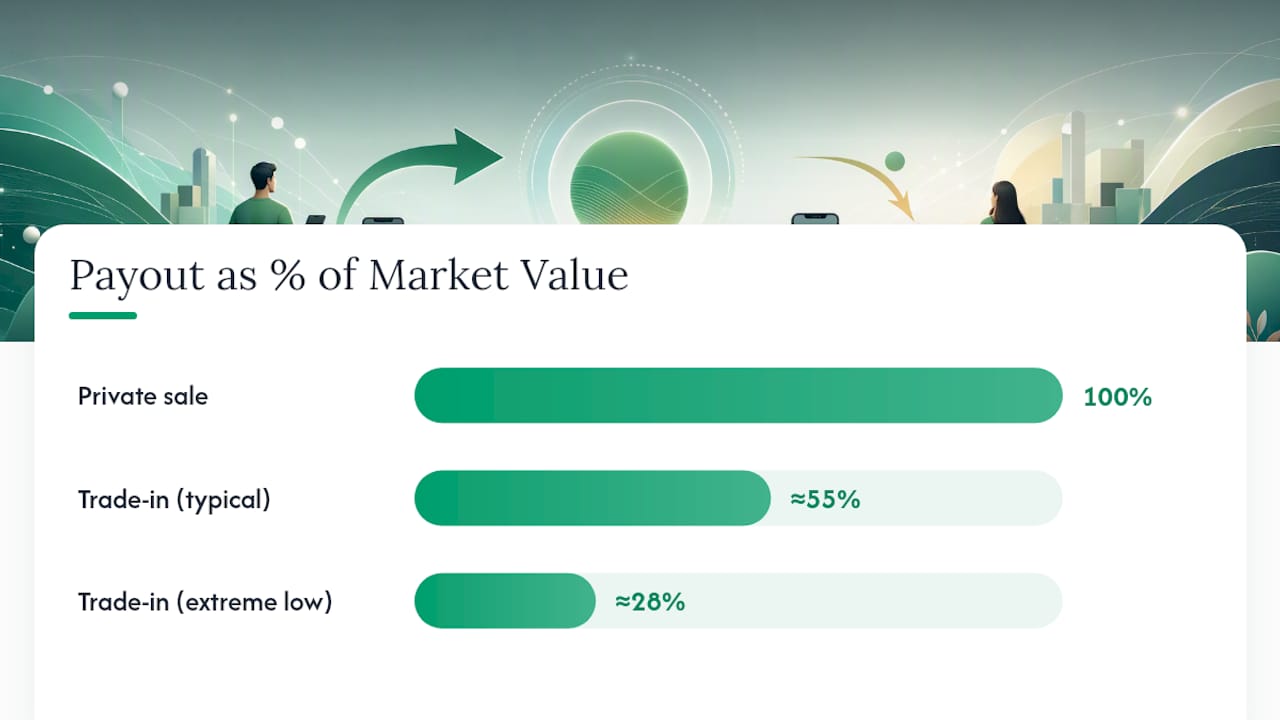
Market analysis shows trade-in offers routinely fall 30–60% below open-market resale prices, and many carrier programs pay in bill credits spread over multiple months rather than immediate cash. Knowing that gap is the starting point for any smart decision.
Quick-check by seller type:
- Single consumer, recent flagship in good condition: Private sale likely returns more cash, especially for devices worth a good amount+.
- Consumer who needs money today: A buyback service with same-day cash payment wins on speed and certainty.
- Business retiring 10+ devices: A buyback service with NIST SP 800-88 certified wipes and a Certificate of Data Erasure per device is the only defensible choice.
- Broken, carrier-locked, or older device: Private buyers are scarce; a buyback service that accepts damaged units is your best option.
Pro Tip: Before you list anywhere, run a quick quote on a buyback platform. If the gap between that quote and the private-market price is under a competitive amount the time and hassle of a private sale rarely pencil out.
Key Takeaways
A buyback service is the right default for speed, security, and bulk disposals; private sale wins on cash when the device is worth a good amount+ and you have time to manage the transaction.
| Point | Details |
|---|---|
| Payout gap is real | Trade-in offers typically fall 30–60% below open-market resale prices. |
| Carrier credits aren’t cash | Bill credits spread over 24–36 months lock you into a plan and reduce net value. |
| Data security requires proof | Businesses should require NIST SP 800-88 wipes and a Certificate of Data Erasure per serial number. |
| Private sale threshold | Devices worth a good amount+ in good condition usually net more through a private sale after fees. |
| Buybackbear’s offer | Same-day cash payment, free prepaid shipping, certified wipes, and a written-quote beat guarantee of a competitive amount. |
Table of Contents
- How trading in compares to selling privately
- What actually moves the price on your device
- Why data security should drive the decision for businesses
- The real tradeoffs, spelled out by scenario
- How to prepare your device and maximize your offer
- How to decide quickly: a checklist for your situation
- When selling privately is worth the extra effort
- A note from Buybackbear on how we approach this tradeoff
- Get your instant quote from Buybackbear
- Sources
- FAQ
How trading in compares to selling privately
| Dimension | Trade-in / Buyback service | Private sale |
|---|---|---|
| Expected cash | 30–60% below resale; some gaps reach 72% | Closest to full market value |
| Time to payment | Same day to a few business days | Days to weeks |
| Data security | Certified NIST 800-88 wipe + Certificate of Data Erasure (with reputable providers) | Your responsibility; no audit trail |
| Volume suitability | Single device to full fleet | Best for one or two devices |
| Fees and costs | Free prepaid shipping (reputable providers); no platform fees | Platform fees (typically 10–15%), shipping, packaging |
| Scam / fraud risk | Low; provider bears inspection risk | Higher; chargebacks, fake payments, no-shows |
| Environmental handling | Responsible recycling for unsellable units | Buyer’s responsibility |
Buyback service pros: Speed, guaranteed payout, no negotiation, bulk handling, certified data wipes, responsible recycling.
Buyback service cons: Lower payout than private market; some programs pay store credit or bill credits instead of cash.
Private sale pros: Highest net cash for devices in good condition; direct control over price.
Private sale cons: Time investment, scam exposure, platform fees, inconsistent data security, packing and shipping risk.
When evaluating a buyback provider, look for: NIST SP 800-88 alignment, a Certificate of Data Erasure per serial number, free prepaid shipping, and prompt cash payment (not store credit).
What actually moves the price on your device
Model and configuration matter most. A 256GB unlocked iPhone 15 Pro commands a meaningfully different price than a 128GB locked variant of the same phone. After that, condition is the biggest lever you control.
The release cycle creates a predictable pricing cliff. A device loses a significant share of its resale value in the weeks after a new flagship launches. If you’re planning to upgrade, selling or trading in before the announcement typically returns more than waiting.
Physical condition, functional issues (cracked screen, bad battery, Face ID failure), and carrier lock status all affect offers. An unlocked device sells faster and for more on every channel. Original accessories and packaging add a modest premium on private marketplaces, less so on buyback platforms.
For private sales, listing quality matters: clear photos, an honest condition description, and a competitive price based on current sold listings (not asking prices) determine how fast you close and whether you face lowball offers or disputes.
A $400 phone might fetch a competitive offer as a direct trade-in quote while selling for closer to a solid amount privately.
Why data security should drive the decision for businesses
Certified sanitization is not optional for business device disposals. NIST SP 800-88 Rev. 2 defines media sanitization as processes that render data access infeasible and distinguishes purge methods (which preserve the device for reuse) from destroy methods (which render it unusable). The standard also requires method selection based on data sensitivity, verification, and documentation.
The NIST Rev. 2 update shifts the emphasis from one-off wipes to documented sanitization programs with audit trails. A reputable buyback or ITAD provider should offer method selection, validation, and a signed certificate per device, not just a verbal assurance that “the phone was wiped.”
A Certificate of Data Erasure records the sanitization method used (purge vs. destroy) per serial number and serves as a recognized audit artifact for compliance reviews, resale marketplaces, and liability protection. Phonecheck’s workflow produces exactly this kind of signed, per-device certificate aligned to NIST SP 800-88 practices.
Operationally, businesses should require: chain-of-custody documentation, a signed certificate per serial number, and a provider that can handle mixed batches (phones, tablets, laptops) under a single program.
Pro Tip: For bulk retirements, ask the provider to deliver certificates in a spreadsheet keyed to serial numbers. That format maps directly to your asset register and makes audit prep straightforward.
The real tradeoffs, spelled out by scenario
Trade-in / buyback service, when it makes sense:
- You need cash within 48 hours.
- The device is broken, carrier-locked, or more than three years old.
- You’re disposing of 10 or more devices and need certified data wipes with documentation.
- You want zero negotiation, zero packaging hassle, and a guaranteed payout.
Private sale, when it makes sense:
- The device is in good condition and worth a good amount or more.
- You can list it within a day or two and respond to buyers promptly.
- You’re comfortable with the payment and shipping process.
Business-specific note: Even when per-device payouts from a buyback service are lower than private-market prices, the certified wipe, Certificate of Data Erasure, and chain-of-custody documentation often justify the difference. A data breach traced to an improperly wiped device costs far more than the payout gap.
Pro Tip: Carrier trade-in credits tied to staying on a plan are not cash. If you’re not certain you’ll remain on that carrier for 24–36 months, a cash buyback is the safer financial choice.
How to prepare your device and maximize your offer
Start here: removing account locks and doing a factory reset (or requesting a certified wipe) protects your data and prevents the offer from being revised downward during inspection.
- Back up your data to iCloud, Google Drive, or a local drive before anything else.
- Sign out of all accounts (Apple ID / Find My, Google Account, Samsung Account) and disable Activation Lock.
- Factory reset the device or, for business units, request a certified NIST 800-88 wipe from your provider.
- Record the IMEI or serial number before shipping; you’ll need it if a dispute arises.
- Clean the device and photograph it honestly from all angles, including any scratches or cracks.
- Include original accessories (charger, box, EarPods) if you have them; they add value on private marketplaces.
- Package securely with bubble wrap or the original box; damage in transit can reduce or void your offer.
- Save all documentation: quote screenshots, tracking numbers, and shipping receipts.
Pro Tip: Test every function before listing or shipping. A battery health check (Settings > Battery > Battery Health on iPhone) and a quick camera and speaker test take two minutes and prevent surprises during inspection.
- Note any cosmetic issues honestly in your listing or when submitting a quote; undisclosed damage often triggers a revised (lower) offer.
- Keep the prepaid shipping label confirmation until payment clears.
How to decide quickly: a checklist for your situation
Run through these questions before you commit to either route.
Route selector:
- Do you need cash within 48 hours? Buyback service.
- Is the device broken, carrier-locked, or more than three years old? Buyback service.
- Are you disposing of more than 10 devices? Buyback service with certified wipes.
- Is the device worth a good amount+ and in good condition? Consider private sale.
- Do you have time to list, communicate with buyers, and ship? Private sale may be worth it.
- Are you a business that needs a Certificate of Data Erasure? Buyback service only.
Questions to ask a buyback provider before shipping:
- How and when do you pay? (Cash via PayPal/Venmo/bank transfer, or store credit?)
- What is your inspection hold window, and what happens if the offer changes?
- Do you provide a Certificate of Data Erasure per serial number?
- Is prepaid shipping included, or do I pay?
- Do you accept broken or carrier-locked devices?
Tax and recordkeeping basics for businesses: Proceeds from device sales are typically reportable income. Keep asset disposition records (original purchase price, sale date, amount received) for depreciation and tax purposes. Consult a tax professional for your specific situation.
When selling privately is worth the extra effort
Private sale wins most clearly when the device is in good condition and worth a good amount or more. At that price point, even after platform fees and shipping, you’ll usually net meaningfully more than a buyback quote.
Practical tips for a successful private listing:
- Research sold prices, not asking prices, on platforms like eBay (filter “Sold Items”) to set a realistic number.
- Use high-quality photos in good lighting; show the screen, back, and any wear honestly.
- Write an accurate condition description that matches what a buyer will receive; disputes and returns kill your time advantage.
- Accept only verified payment methods: PayPal Goods and Services (not Friends and Family), Zelle, or cash in person. Avoid wire transfers and checks.
- Meet in a public place for local cash sales; many police departments offer safe exchange zones.
Pro Tip: Never ship a device before payment clears. For high-value items, require PayPal Goods and Services so both parties have purchase protection. Screenshot the buyer’s payment confirmation before you drop the package.
Safety checklist for private transactions:
- Use tracked, insured shipping and keep the receipt.
- Redact the IMEI/serial number from public listing photos.
- Keep all message threads and payment confirmations in case of a dispute.
A note from Buybackbear on how we approach this tradeoff
Buybackbear was built for sellers who want real cash, not bill credits, and for businesses that need a documented, auditable disposal process. Every device we receive is wiped to the NIST 800-88 standard with a Certificate of Data Erasure issued per serial number, so your compliance team has what it needs without chasing paperwork.
We track competitor buyback prices daily and beat any written quote by a competitive amount. Payment goes out the same day we inspect your device, by PayPal, Venmo, debit card, or bank transfer. For businesses retiring a fleet, our bulk device buyback program handles everything from the prepaid shipping labels to the chain-of-custody certificates.
Get your instant quote from Buybackbear
Buybackbear pays cash for phones, tablets, laptops, and wearables, whether they’re flawless or cracked, unlocked or carrier-locked.
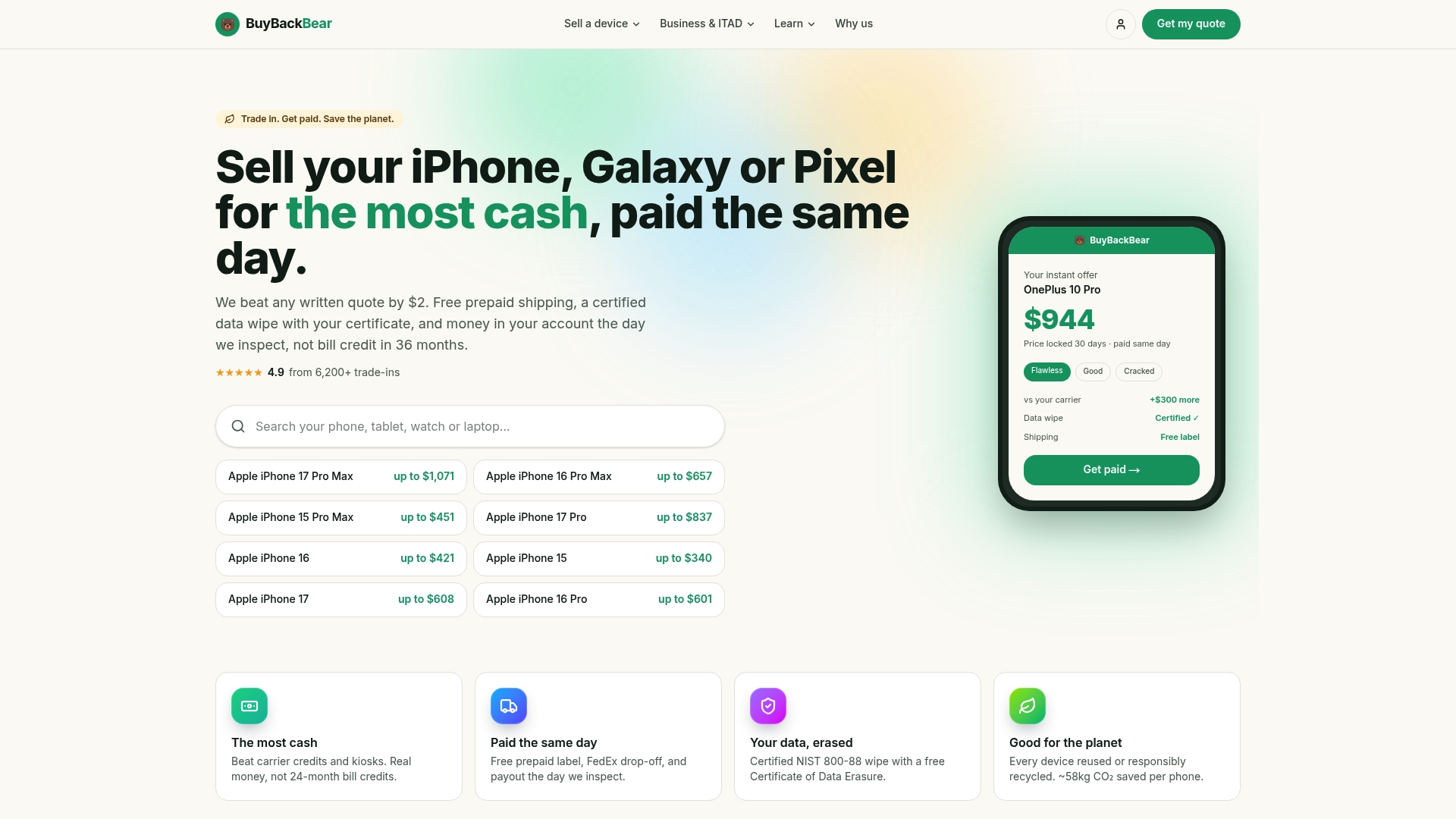
Three steps to get paid:
- Get an instant online quote in under a minute.
- Ship free with a prepaid label; no packaging costs, no guesswork.
- Receive cash by PayPal, Venmo, debit card, or bank transfer the same day we inspect your device.
Buybackbear beats any written quote by a competitive amount and issues a Certificate of Data Erasure with every device. For organizations disposing of bulk IT equipment, the IT equipment disposal page covers the full business workflow.
Sources
- SP 800-88 Rev. 2, Guidelines for Media Sanitization | CSRC
- What NIST SP 800-88 Rev. 2 Means for IT Disposal
- Certificate of Data Destruction: Key Fields | Phonecheck
- Trade-In vs. Sell: How to Get the Most for Your Old Tech – Swappa Blog
FAQ
How much less do you get from a trade-in vs selling privately?
Trade-in offers typically fall 30–60% below open-market resale prices. A phone worth a good amount on the private market might fetch a competitive offer as a trade-in quote.
Do carrier trade-ins pay cash?
Most carrier programs pay in bill credits spread over 24–36 months, not immediate cash, and the credits are usually tied to staying on a specific plan.
What data wipe standard should I require from a buyback service?
Ask for NIST SP 800-88 Rev. 2 compliant sanitization and a Certificate of Data Erasure per serial number. Buybackbear provides both as standard.
Is a private sale worth it for a broken phone?
Rarely. Broken devices attract few private buyers and often sell at steep discounts. A buyback service that accepts damaged units, like Buybackbear, is usually the faster and more reliable option.
Do I owe taxes when I sell a used device?
For individuals, selling personal-use property at a loss (which is common for used electronics) typically generates no taxable gain. Businesses must report proceeds and account for asset disposition. Confirm your situation with a tax professional.
Recommended
Ready to sell?
Get an instant quote, free prepaid shipping, and fast cash that beats carrier trade-in credit.
Selling your device here, at a glance
Get my instant quote →- Instant quote in about 30 seconds, price locked while you decide
- Cash by PayPal, Zelle, Venmo or check after inspection, no fees
- Free prepaid label both ways, free return shipping if you decline
- We beat any competitor's written quote by $2
- Cracked screen, broken or won't power on? Still worth real money
- Certified NIST 800-88 data wipe with an emailed certificate
- Trade-in value paid in cash, not a 24-36 month carrier bill credit
- Every model priced: unlocked or carrier-locked, any storage size